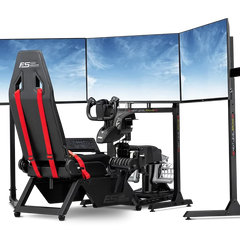
Flight Simulator Controller

56 produits

  • Dernier stock ! Wingflex B777 CDU

    WingFlex Wingflex B777 CDU

    3 en stock Expédié en 1 à 3 jours ouvrables.

    Please note! Shipping of this item may take 7-10 business days! Wingflex B777 CDU brings long-haul flight management onto a dedicated physical interface, combining 1:1 full-scale construction with plug-and-play USB connectivity. The illuminated aircraft-style keypad gives route entries, performance calculations and arrival changes a satisfyingly deliberate rhythm, while the slim enclosure avoids swallowing half the desk. Physical captain and first-officer selection adds useful flexibility, and the adjustable stand keeps the screen readable from several seating positions. It is considerably more convincing than wrestling with a tiny pop-out window somewhere between cruise altitude and dinner service. What Sets the Wingflex B777 CDU apart? Full-Scale Controls for Proper Boeing Workflows The 1:1 layout preserves the spacing, key placement and proportions expected from a Boeing 777 CDU. That makes frequent tasks such as route entry, performance setup and arrival amendments easier to complete through muscle memory. Independent video coverage also shows the unit functioning as a substantial desktop control rather than a reduced keypad, which should please pilots whose fingers have grown tired of negotiating tiny virtual buttons with a mouse. Useful Support Beyond the Boeing 777 Despite its B777-specific face and operating style, the unit supports selected PMDG, iFly, Zibo, LevelUp and IXEG aircraft. This includes several 737 variants and the PMDG 747 V2 alongside the supported 777 family. That broader integration gives Boeing-focused pilots more value from one device, although the physical legends and layout naturally remain best matched to the 777 rather than every aircraft in the compatibility list. One Unit Can Serve Either Cockpit Seat Physical left-and-right selection allows the CDU to represent the captain or first-officer position without requiring a second unit. This is particularly useful for compact home cockpits, shared training stations and desktop layouts where space disappears faster than fuel during a badly planned diversion. The multi-angle stand further improves placement flexibility, letting the display sit below a monitor, beside a throttle quadrant or within a developing cockpit structure. Desktop-Friendly Construction Without a Wiring Project The USB interface combines the display and physical controls into one self-contained unit, avoiding the separate controller boards, video connections and custom wiring common in more elaborate cockpit components. Its 1.25 kg weight provides enough substance to remain planted during data entry, while the slim housing remains portable. Review footage also demonstrates straightforward stand assembly and operation with Microsoft Flight Simulator, making the unit approachable for pilots who prefer flying to cable archaeology. Pros and Cons Pros Cons Full-scale keypad supports familiar Boeing flight-management procedures. Physical layout remains specifically tailored to Boeing aircraft. Backlit keys improve operation in dark cockpit setups. Compatibility is restricted to explicitly supported aircraft packages. Physical switch selects captain or first-officer operation. Adjustable stand provides several practical viewing positions. USB connection reduces separate interface hardware requirements. Specifications Specification Value Product Wingflex B777 CDU Aircraft Style Boeing 777 Control Display Unit Scale 1:1 full scale Construction Aviation-grade materials Interface USB Installation Plug-and-play design Keyboard Aircraft-style internal structure with backlighting Input Behaviour Customisable random entry-delay effect Cockpit Position Selection Physical switching between left and right seats Firmware Supports online firmware upgrades Stand Multi-angle adjustable stand Form Factor Slim, ultra-thin design Length 33 cm Height 24 cm Width 10 cm Weight 1.25 kg Supported Simulator Families Microsoft Flight Simulator, X-Plane 11/12 and Prepar3D Wingflex B777 CDU Compatibility Platform Compatible Aircraft Microsoft Flight Simulator PMDG 737NG 600, 700, 800 and 900; PMDG 777-300ER, 777-200ER and 777-200F; iFly 737 MAX X-Plane 11/12 Zibo 737NG, LevelUp 737NG and IXEG 737-300 Classic Prepar3D PMDG 777, PMDG 737NGXu, PMDG 747 V2, iFly 737NG and iFly 737 MAX The CDU connects through a USB interface and combines its screen, illuminated keypad and seat-selection controls in one enclosure. Its physical captain and first-officer switching allows one device to serve either CDU position, while the multi-angle desktop stand supports several installation positions. No standard cockpit mounting pattern or direct compatibility with third-party CDU frames is specified, so permanent cockpit installation may require a purpose-made bracket or shelf. Software integration covers PMDG, iFly, Zibo, LevelUp and IXEG aircraft, including selected 737, 747 and 777 packages. The B777 layout is naturally best suited to PMDG 777 operations, although supported 737 software can also communicate with the unit. Aircraft not included in the published compatibility table, generic FMC implementations and unrelated Airbus packages should not be considered supported merely because they use a superficially similar flight-management interface. For simulation platforms, the CDU supports Microsoft Flight Simulator on PC, X-Plane 11 and 12 and Prepar3D when used with a listed aircraft package. Independent review footage demonstrates operation in both Microsoft Flight Simulator 2020 and 2024. It is a PC-focused USB peripheral and is not listed for Xbox or PlayStation, so console versions of Microsoft Flight Simulator fall outside its published compatibility.

    3 en stock Expédié en 1 à 3 jours ouvrables.

    €599,00

  • Dernier stock ! Wingflex B737NG CDU

    WingFlex Wingflex B737NG CDU

    3 en stock Expédié en 1 à 3 jours ouvrables.

    Please note! Shipping of this item may take 7-10 business days! Wingflex B737NG CDU gives Boeing flight-deck workflows a proper physical home, combining 1:1 full-scale construction with plug-and-play USB operation. Its backlit keypad, crisp display and aircraft-style key structure make route changes and performance entries satisfyingly deliberate, rather than another round of mouse gymnastics. Left and right CDU positions can be selected through physical controls, while the slim housing and adjustable stand keep it practical for desktop use. It is serious cockpit hardware, but thankfully does not require rebuilding the entire flight deck around it. What Sets the Wingflex B737NG CDU apart? A Full-Scale Interface That Builds Useful Muscle Memory The 1:1 layout preserves the spacing and physical arrangement expected from a Boeing CDU, making repeated FMC procedures easier to perform without constantly checking hand position. Review coverage has particularly valued the full-size format because it feels substantial rather than like a reduced desktop keypad. That matters during departure preparation, when entering a route, checking performance pages and correcting one inevitable discontinuity already provide enough entertainment. Broad Support Beyond a Single Boeing Add-On Many dedicated CDUs are tied closely to one aircraft package, but this unit covers PMDG, iFly, Zibo, LevelUp and IXEG aircraft across three simulator families. It even extends beyond the 737 through selected PMDG 747 and 777 support. That breadth gives Boeing-focused pilots more freedom to change aircraft without leaving an expensive screen and keypad sitting dark on the desk like a very specialised paperweight. Physical Seat Switching for Flexible Cockpit Layouts Dedicated controls allow the CDU to switch between the captain and first-officer positions without rebuilding the installation or relying entirely on software menus. This is useful for single-unit home cockpits, shared training stations and desktop setups where buying two displays would be difficult to justify. The multi-angle stand also helps place the screen at a readable position, whether it sits beneath a monitor or beside a throttle quadrant. Convenient USB Operation With One Initial Software Step The CDU uses a USB connection and accompanying bridge software rather than requiring a collection of separate display, controller and interface boards. Retail documentation notes that PMDG users may need to run the simulator, aircraft and bridge software through one complete initial session before the required parameters are available. After that first configuration, the arrangement is designed for routine use without rebuilding mappings before every flight. Pros and Cons Pros Cons Full-scale keypad supports familiar Boeing FMC workflows. Supported aircraft require dedicated bridge software integration. Backlit keys remain readable in dark cockpits. Initial PMDG configuration requires a complete simulator session. Physical controls switch between left and right seats. Adjustable stand suits varied desktop viewing positions. Firmware updates allow continuing compatibility improvements. Specifications Specification Value Product Wingflex B737NG CDU Scale 1:1 full scale Aircraft Style Boeing 737NG Control Display Unit Construction Aviation-grade materials Interface USB Installation Plug-and-play operation Keypad Backlit aircraft-style keyboard structure Entry Effect Customisable random input delay Cockpit Position Selection Physical switching between left and right seats Firmware Supports online firmware upgrades Stand Multi-angle adjustable stand Form Factor Slim, ultra-thin design Supported Simulator Families Microsoft Flight Simulator, X-Plane 11/12 and Prepar3D Wingflex B737NG CDU Compatibility Platform Compatible Aircraft Microsoft Flight Simulator PMDG 737NG 600, 700, 800 and 900; PMDG 777-300ER, 777-200ER and 777-200F; iFly 737 MAX X-Plane 11/12 Zibo 737NG, LevelUp 737NG and IXEG 737-300 Classic Prepar3D PMDG 737NGXu, PMDG 747 V2, PMDG 777, iFly 737NG and iFly 737 MAX The CDU connects through USB and is designed to work with the manufacturer’s bridge software, so it does not require a separate video interface and controller board. Its physical seat-selection function supports both captain-side and first-officer-side operation, making one unit practical in a compact cockpit. It can sit on the supplied multi-angle desktop stand, although no compatibility with third-party cockpit mounting frames or standardised mounting patterns is specified. Aircraft integration is limited to the explicitly supported add-ons rather than every Boeing or generic FMC simulation. It works with PMDG, iFly, Zibo, LevelUp and IXEG aircraft listed above, but unrelated Boeing products, default aircraft and unsupported avionics packages should not be treated as compatible. PMDG installations may require an initial full simulator session with the aircraft and bridge application running before normal communication begins. For software platforms, the CDU supports Microsoft Flight Simulator on PC, X-Plane 11 and 12 and Prepar3D when paired with a listed aircraft package. It is a PC USB peripheral and is not presented as compatible with Xbox or PlayStation. Console editions of Microsoft Flight Simulator therefore fall outside its stated support, even when the corresponding aircraft family is available on the platform.

    3 en stock Expédié en 1 à 3 jours ouvrables.

    €599,00

  • Dernier stock ! Wingflex A320 MCDU

    WingFlex Wingflex A320 MCDU

    3 en stock Expédié en 1 à 3 jours ouvrables.

    Please note! Shipping of this item may take 7-10 business days! Wingflex A320 MCDU transforms one of the most important cockpit interfaces into a dedicated piece of hardware with a Full HD glass display and 1:1 full-scale Airbus dimensions. From entering flight plans to managing performance data, every key press feels deliberate and satisfying, while the lightweight plug-and-play design makes it equally at home on a permanent cockpit or a portable training setup. The synchronized backlighting and carefully reproduced operating logic make long IFR sessions far more engaging than relying on a virtual CDU alone. What Sets the Wingflex A320 MCDU apart? Built Around Full-Scale Airbus Operation Rather than simply looking like an Airbus MCDU, this unit follows the operational layout and logic pilots expect from the aircraft. The 1:1 dimensions make procedures, button locations and muscle memory feel natural, especially during longer IFR flights. Flight simulation communities frequently point out that using dedicated hardware for FMS programming significantly reduces reliance on mouse interaction and helps maintain a smoother cockpit workflow. Excellent Display Visibility Day and Night The Full HD display produces crisp flight plan pages, performance calculations and system information that remain easy to read from typical seating positions. Combined with the simulated glass panel and synchronized brightness controls, it maintains excellent visibility across changing cockpit lighting conditions. Pilots often praise hardware with bright, sharp displays because they reduce eye strain during extended flights and make data entry noticeably more comfortable. Backlit Line Select Keys That Improve Workflow One standout feature is the illuminated Line Select Keys, making nighttime operations and dimly lit cockpit environments considerably easier to manage. Instead of searching for individual buttons, each selection remains clearly visible while preserving the clean Airbus appearance. Users who regularly fly after dark often regard illuminated controls as one of the small touches that dramatically improves day-to-day usability. Portable Yet Ready for Dedicated Cockpits Its lightweight plug-and-play construction makes the MCDU equally suited to desktop flying and larger cockpit projects. Many builders appreciate hardware that works immediately without complex installation while still fitting neatly into expanding Airbus panels later on. Community discussions frequently highlight this balance between portability and long-term cockpit integration as an important advantage for pilots who gradually build their simulator over time. Pros and Cons Pros Cons Full-scale Airbus layout improves procedural familiarity. Designed primarily for Airbus aircraft families. Full HD display delivers sharp flight management pages. Requires compatible PC flight simulators. Backlit Line Select Keys aid low-light operation. Plug-and-play installation simplifies desktop setup. Specifications Specification Value Product Wingflex A320 MCDU Scale 1:1 Full-scale Airbus A320 dimensions Display Full HD display with simulated glass panel Connection Plug-and-play Construction Aviation-grade materials Key Illumination Backlit Line Select Keys (LSK) Brightness Control Adjustable display and keypad brightness with in-game synchronization Operating Logic Replicates Airbus A320 MCDU operation Primary Use Flight simulation and pilot procedure training Form Factor Ultra-slim, lightweight and portable Wingflex A320 MCDU Compatibility Simulator Supported Aircraft X-Plane ToLiss A319, A320, A330, A340; Laminar A330 Microsoft Flight Simulator Fenix A3xx, FlyByWire A320, iniBuilds A340, Headwind A330 Prepar3D FSLabs A32x The Wingflex A320 MCDU is designed specifically for Airbus simulation and supports an extensive selection of popular aircraft add-ons. It is compatible with Fenix A3xx, FlyByWire A320, ToLiss Airbus aircraft, FSLabs, Headwind A330 and several iniBuilds models. Its standardized plug-and-play design makes it easy to integrate into desktop simulators while also fitting naturally into larger home cockpit projects that use dedicated Airbus hardware. Compatibility is focused on Airbus aircraft rather than universal flight management systems. While it works across multiple simulator platforms, it is not intended for Boeing FMC hardware or aircraft with completely different flight management interfaces. Builders pairing it with Airbus throttle quadrants, FCUs and overhead panels will achieve the most cohesive cockpit workflow, as the hardware follows Airbus operating philosophy throughout. The MCDU is intended for PC-based flight simulation and supports Microsoft Flight Simulator, X-Plane and Prepar3D using compatible Airbus aircraft. It is not compatible with Xbox or PlayStation consoles, since those platforms do not support dedicated USB cockpit peripherals of this type. For PC Airbus enthusiasts, it integrates naturally into both compact desktop setups and complete flight deck builds.

    3 en stock Expédié en 1 à 3 jours ouvrables.

    €599,00

  • Dernier stock ! MOZA MA3F Electronic Flight Control Modules L for sale on FlightSimZone

    Moza MOZA MA3F Electronic Flight Control Modules L (Pre-Order! Shipping Starts mid-to-late-August)

    5 en stock Expédié en 1 à 3 jours ouvrables.

    MOZA MA3F Electronic Flight Control Modules L bring the unmistakable Airbus A320 flight deck to your simulator with controls that make every heading change, altitude adjustment, and approach setup feel deliberate. The dual-rail spring-loaded push/pull mechanism recreates the distinctive operation of Airbus autopilot controls, while custom segmented displays faithfully mirror Airbus-specific character formatting and spacing. From the satisfying click of each selector to the coordinated cockpit lighting, every interaction encourages proper Airbus procedures throughout the entire flight. What Sets the MOZA MA3F Electronic Flight Control Modules L apart? Faithful Airbus Push/Pull Operation – The dual-rail spring-loaded push/pull mechanism delivers a noticeably more convincing feel than conventional encoder-based controls. Airbus enthusiasts often point out that having distinct push and pull actions makes switching between managed and selected modes feel far more intuitive, helping reproduce familiar cockpit workflows without relying on keyboard shortcuts or mouse clicks. Displays That Match Airbus Presentation – Rather than using generic digital readouts, the custom segmented displays reproduce Airbus-style character spacing, typography, and formatting. Builders frequently appreciate these visual details because the modules blend naturally with other Airbus cockpit hardware, creating a clean and cohesive flight deck instead of a collection of mismatched peripherals. Flexible Expansion for Growing Cockpits – Available as an FCU only, FCU with a single EFIS, or a complete Electronic Flight Control Module suite, the system adapts to different cockpit sizes and budgets. The optional extended-function EFIS mode adds further flexibility, allowing additional controls to be accessed without filling the cockpit with extra hardware. Straightforward Installation and Configuration – The included mounting bracket, aluminum-profile compatibility, and standard 75 mm VESA support make installation simple across desktop and full-frame cockpits. Users also appreciate MOZA Cockpit software for its synchronized lighting, streamlined configuration process, and flexible control customization without requiring complicated setup procedures. Pros and Cons Pros Cons Excellent Airbus-style push/pull control mechanism. Designed specifically for Airbus aircraft. Displays closely match Airbus FCU formatting. Requires a Windows PC. Modular configurations support gradual cockpit upgrades. Synchronized lighting creates a cohesive cockpit appearance. Specifications Specification Value Product Type Airbus A320-style FCU and EFIS control system Available Configurations FCU only, FCU + single EFIS, complete EFCM suite Display Type Custom Airbus-style segmented displays Autopilot Control Mechanism Dual-rail spring-loaded push/pull controls Lighting Independent display, character, and status illumination Software Integration MOZA Cockpit Supported Platform PC Mounting Options Included bracket, aluminum profile, 75 mm VESA mount Extended Function Optional EFIS extended-function control mode MOZA MA3F Electronic Flight Control Modules L Compatibility Hardware Compatibility Mounting Systems Included bracket, aluminum-profile rigs, 75 × 75 mm VESA mounts MOZA Cockpit Software Telemetry synchronization and configuration supported Cockpit Configurations FCU only, single EFIS, or complete EFCM suite Flight Simulator Compatibility Microsoft Flight Simulator Default Airbus A320/A330 and supported Airbus add-ons X-Plane Compatible with Airbus aircraft including ToLiss series Third-Party Aircraft Fenix A320, FlightFactor A320, ToLiss series, and other popular Airbus airliners Designed for PC flight simulation, the MA3F Electronic Flight Control Modules L integrate with MOZA Cockpit software for telemetry synchronization, synchronized lighting, and simple configuration. Included bracket mounting, aluminum-profile compatibility, and 75 mm VESA support allow the modules to fit comfortably into desktop cockpits or larger Airbus flight deck projects. The modular design allows builders to begin with a single FCU or expand into a complete Electronic Flight Control Module suite as their simulator grows. Independent adjustment of display brightness, character illumination, and status lighting helps maintain a consistent cockpit appearance during daytime departures and night operations alike. Compatible with Microsoft Flight Simulator and X-Plane, the system supports default Airbus A320 and A330 aircraft together with leading third-party aircraft including Fenix A320, ToLiss, FlightFactor A320, and other popular Airbus airliners. The supported platform is PC; gaming consoles and macOS are not supported.

    5 en stock Expédié en 1 à 3 jours ouvrables.

    €109,00

  • Dernier stock ! MOZA MB7F Flight Computer Display for sale on FlightSimZone

    Moza MOZA MB7F Flight Computer Display (Précommande ! Expédition prévue entre la mi-août et la fin août)

    5 en stock Expédié en 1 à 3 jours ouvrables.

    MOZA MB7F Flight Computer Display reproduit l’apparence et le flux de travail du Boeing 737 CDU, offrant aux constructeurs de cockpits domestiques une manière satisfaisante de gérer les routes, les arrivées et les performances de l’avion. L’écran IPS haute résolution de 5.1 pouces affiche un texte net qui reste facile à lire à chaque phase du vol, tandis que le panneau avant en aluminium moulé sous pression procure une sensation solide à chaque pression sur une touche. De la programmation pré-vol à la planification de la descente, chaque pression de bouton et chaque mise à jour de l’écran renforcent la confiance dans l’expérience sans avoir besoin d’utiliser une souris. Qu’est-ce qui distingue le MOZA MB7F Flight Computer Display ? Conçu autour des flux de travail du Boeing 737 – Plutôt que de servir de clavier générique, le MB7F est conçu autour de la disposition et du fonctionnement du Boeing 737 CDU. Les pilotes qui volent régulièrement avec PMDG et des avions similaires apprécient de disposer d’un matériel dédié qui garde la programmation des routes, les entrées de performance et les modifications FMC à portée de main, au lieu de dépendre de fenêtres contextuelles à l’écran. ``` ``` Excellente sensation mécanique – La combinaison de commutateurs à dôme à forte résistance et de capuchons de touches rigides en silicone donne à chaque pression une réponse franche, positive et rassurante. De nombreux constructeurs de cockpits apprécient un matériel qui communique chaque saisie uniquement par le toucher, ce qui facilite le travail sur de longs plans de vol et des saisies de données tout en gardant l’attention concentrée sur le poste de pilotage. ``` ``` Utile au-delà de la planification de vol – Les pages de checklist intégrées et les trois pages de tableau blanc intégrées transforment le MB7F en bien plus qu’une réplique de CDU. Les fréquences, notes d’autorisation, briefings d’approche et rappels opérationnels peuvent tous être stockés directement sur l’unité, réduisant le besoin de notes papier ou d’écrans supplémentaires lors des vols plus longs. ``` ``` Conçu pour évoluer avec votre cockpit – Le support de bureau inclus offre un point de départ simple, tandis que la compatibilité VESA standard 75 × 75 mm rend l’installation permanente tout aussi facile. Associé à l’éclairage synchronisé via le logiciel MOZA Cockpit, l’écran s’intègre naturellement aussi bien dans les configurations de bureau compactes que dans les cockpits complets de style Boeing. Avantages et inconvénients Avantages Inconvénients Excellentes touches tactiles avec un jeu minimal. Conçu principalement pour les avions Boeing 737. Écran IPS net qui garde le texte facile à lire. Plateforme PC uniquement. Fonctions de checklist et de tableau blanc intégrées. Panneau avant solide en aluminium moulé sous pression. Caractéristiques techniques Caractéristique Valeur Type de produit Boeing 737 Flight Computer Display (CDU) Dimensions 277.9 × 145.5 × 32 mm Poids 646 g Taille de l’écran 5.1 pouces IPS Matériau du boîtier Alliage d’aluminium moulé sous pression, ABS, PC Connexion USB Type-C 2.0 Tension nominale 5 V Courant nominal 900 mA Plateforme prise en charge PC Options de montage Support de bureau, montage VESA 75 × 75 mm Accessoires inclus Câble de données, support de bureau Compatibilité du MOZA MB7F Flight Computer Display Matériel Compatibilité MOZA Cockpit Software Prend en charge l’éclairage synchronisé et la configuration Systèmes de montage Support de bureau et montage VESA 75 × 75 mm Connexion USB Type-C 2.0 Simulateur de vol Compatibilité Microsoft Flight Simulator Prend en charge PMDG et d’autres add-ons Boeing 737 X-Plane Compatible avec les add-ons Boeing 737 pris en charge Conçu pour la simulation de vol sur PC, le MB7F s’intègre au logiciel MOZA Cockpit pour l’éclairage synchronisé et la configuration. Une connexion USB Type-C simplifie l’installation, tandis que le support de bureau inclus et la compatibilité VESA 75 × 75 mm facilitent le passage d’une configuration de bureau à un cockpit dédié. Son format compact et son panneau avant métallique robuste rendent le MB7F parfaitement adapté aux installations multi-panneaux sans imposer une charge excessive aux cadres de montage. Il fonctionne confortablement aux côtés de yokes, manettes des gaz, panneaux radio et autres matériels de cockpit, qu’il soit installé sur un bureau ou sur un châssis de simulateur en profilés d’aluminium. Compatible avec Microsoft Flight Simulator et X-Plane, le MB7F est conçu pour PMDG et d’autres add-ons Boeing 737 de premier plan. PC est la plateforme prise en charge ; les systèmes Mac et les consoles de jeu ne sont pas pris en charge.

    5 en stock Expédié en 1 à 3 jours ouvrables.

    €209,00

  • Honeycomb Echo Aviation Controller for sale on FlightSimZone

    Fly Honeycomb Honeycomb Echo Aviation Controller

    Rupture de stock, Précommandes disponibles. Expédition sous 2 à 2,5 semaines.

    Honeycomb Echo Aviation Controller is one of those devices that makes you rethink how much hardware you actually need to fly properly. Everything sits in your hands—pitch, roll, yaw, throttle, trim—all within reach, anchored by a 16-bit Hall-effect thumbstick that feels smooth and consistent through every movement. Pair that with a complete all-in-one flight control layout, and you’ve got a compact cockpit that works just as well on a desk as it does on the couch. It’s clever, tactile, and surprisingly capable for its size. What Sets the Honeycomb Echo Aviation Controller apart? All-in-One Without Feeling Compromised – Many compact controllers try to do everything and end up feeling like a gamepad with extra buttons. The Echo stands out because each control has a defined purpose and physical identity. Users often mention how the dedicated trim wheel, levers, and rudder system make it feel closer to a proper flight control setup, rather than a simplified alternative. Mechanical Rudder Integration – Instead of relying on twist input or triggers, the Echo uses mechanically linked rudder pedals with Hall-effect sensing. This is something pilots quickly notice, especially during coordinated turns or crosswind landings. The self-centering action gives a consistent feel that’s easier to manage than digital-style inputs found on many compact controllers. Designed for Flexible Flying Spaces – Feedback from users consistently highlights how freeing it is to fly without a fixed rig. Whether sitting at a desk, relaxing on a couch, or traveling, the Echo adapts without needing mounts or external peripherals. It’s particularly appealing for sim pilots who don’t have space for a full yoke, throttle quadrant, and pedal setup. Thoughtful Control Layout for MSFS – The layout feels intentionally designed around Microsoft Flight Simulator workflows. Common functions like gear, flaps, trim, and camera controls are placed where fingers naturally rest. Many users note that once muscle memory develops, cockpit interaction becomes quicker and more fluid compared to mapping everything onto a generic controller. Pros and Cons Pros Cons All flight controls integrated into one compact unit Less tactile separation than full-size hardware setups Hall-effect sensors provide smooth, drift-free input Limited physical range compared to dedicated yokes Wireless operation with long battery life Portable design works without dedicated sim rig Specifications Specification Value Control Type All-in-one flight controller (pitch, roll, yaw, throttle, trim, flaps, gear) Primary Input 16-bit Hall-effect thumbstick Rudder System Mechanically linked Hall-effect rudder pedals Throttle/Sliders Four detented sliders with interchangeable caps Connectivity Wireless (2.4 GHz dongle) or USB-C wired Battery 1200 mAh, up to 15 hours usage System Compatibility PC and Mac Software Compatibility Microsoft Flight Simulator, X-Plane 11/12, Prepar3D Included Accessories Travel case, lever caps, wireless dongle, USB cable Warranty 2-year limited warranty Honeycomb Echo Aviation Controller Compatibility The Echo is built with flexibility in mind. It is compatible with PC and Mac systems and connects either through USB-C wired connection or a 2.4 GHz wireless dongle. Because it operates as a standalone controller, it does not require additional yokes, pedals, or throttle quadrants, making it ideal for compact setups or portable use. It is not designed to integrate directly with traditional hardware ecosystems like separate yokes or external rudder pedals. Its all-in-one design means fewer cables and simpler setups, but it also means less modular expansion compared to full cockpit systems. Pilots who prefer mixing and matching hardware may find it less suited to complex multi-device configurations, as the Echo is intended to replace, rather than complement, those components. On the software side, the controller is fully compatible with Microsoft Flight Simulator and also supports X-Plane 11, X-Plane 12, and Prepar3D. It is not designed for console use, focusing entirely on PC-based simulation platforms where full input mapping and customization are available.

    Rupture de stock, Précommandes disponibles. Expédition sous 2 à 2,5 semaines.

    €150,00

  • WINCTRL URSA MINOR Airline Joystick L

    WINCTRL WINCTRL URSA MINOR Airline Joystick L

    Rupture de stock, Précommandes disponibles. Expédition sous 2 à 2,5 semaines.

    WINCTRL URSA MINOR Airline Joystick L brings airline-style control to the desktop with a clever mix of tactile feedback and thoughtful engineering. The standout feature is the flight-data-linked vibration engine, which adds subtle physical cues during events like flap deployment, airflow changes, and touchdown. Pair that with non-contact magnetic resistance sensors on the X and Y axes, and the stick delivers smooth, stable inputs without the wear issues common in cheaper mechanisms. The result is a joystick that feels lively in hand yet technically grounded under the hood. What Sets the WINCTRL URSA MINOR Airline Joystick L apart? Flight Data Driven Vibration Feedback The URSA MINOR stands out with a vibration motor tied directly to in-sim flight data. Instead of generic rumble, the stick reacts to events like landing contact, airflow changes, or flap movement. Pilots online often mention how this adds subtle physical cues during phases like flare or speed changes, providing a tactile reminder of what the aircraft is doing without constantly glancing at instruments. Robust Gimbal With Magnetic Sensors At the core of the stick is a glass-fiber-reinforced nylon gimbal running on ball bearings, paired with non-contact magnetic sensors for the primary axes. This combination helps maintain smooth motion over time without the jitter common in potentiometer-based designs. Enthusiasts frequently note that the stick movement feels stable across the entire travel range, particularly during small pitch adjustments on final approach. Airliner-Inspired Grip Layout The grip design borrows cues from airline sidestick ergonomics, offering a balanced control layout that includes a PTT trigger, autopilot disconnect switch, and a concealed five-way switch beneath a magnetic cover. Pilots often highlight how practical this arrangement is for everyday flying tasks—radio calls, autopilot overrides, and camera views can all be handled without reaching for the keyboard. Flexible Mounting and Maintenance Design The base includes anti-slip pads for desktop use along with pre-drilled mounting holes for cockpit rigs. A quick-release base cover allows access to internal adjustments without dismantling the entire unit. This detail is frequently appreciated by sim cockpit builders who prefer gear that can be tuned or serviced easily rather than permanently sealed hardware. Pros and Cons Pros Cons Flight-data vibration feedback adds tactile flight cues. Plastic construction compared to metal joystick designs. Magnetic sensors reduce wear and input drift. Limited axis travel compared to extended bases. Good button layout for airliner-style flying tasks. Desk or cockpit mounting options included. Specifications Specification Value Product Model URSA MINOR-Airline-Joystick L Material Industrial ABS plastic (PC + ABS) Controller 32-bit ARM controller X/Y Axis Movement Angle ±15° Z Axis Rotation Angle ±20° X/Y Sensors Non-contact magnetic resistance sensors Gimbal Construction Glass fiber reinforced nylon with ball bearings Operating Force (X/Y) Approximately 6N Rotation Torque (Z) ~4 kgf·cm Throttle Axis Type Long-travel sliding potentiometer Throttle Axis Travel 38 mm Buttons 14 buttons (250gf press force, 0.25 mm travel) Special Controls Hidden 5-way switch, PTT trigger, autopilot disconnect Vibration Feature Adjustable amplitude levels from 0–255 Mounting Options Anti-slip desktop pads and cockpit mounting holes Item Weight 3 kg Included in Box J5-BASE-BLACK + JGRIP-C1-R, Data Cable, Toolkit, Accessories Pack WINCTRL URSA MINOR Airline Joystick L Compatibility Platform Compatibility Connection Type USB plug-and-play connection Software Configuration WW SIMAPP Pro software for button mapping Mounting Desktop use or cockpit mounting The URSA MINOR Airline Joystick L connects via standard USB, allowing it to integrate easily with throttle quadrants, rudder pedals, and other flight hardware from many manufacturers. The base supports both desktop placement with anti-slip pads and cockpit mounting using pre-drilled holes, which is useful for sim rigs or permanent setups. Configuration is handled through WW SIMAPP Pro software, enabling button assignments and vibration adjustments directly from a visual interface. Within a flight setup, the joystick works well alongside external throttles, radio panels, or pedal systems because it behaves as a standard USB HID controller. It does not require proprietary ecosystems and can coexist with other brands in the same cockpit. However, it is intended for PC-based simulation environments and does not integrate directly with console platforms. In terms of simulators, the stick supports Microsoft Flight Simulator 2020, X-Plane, Prepar3D, and also space or combat titles like Star Citizen, Elite Dangerous, and War Thunder. Its plug-and-play USB design allows quick recognition in most PC simulation platforms. It is not designed for Xbox or PlayStation consoles, as those systems typically require licensed hardware and different firmware structures.

    Rupture de stock, Précommandes disponibles. Expédition sous 2 à 2,5 semaines.

    €99,00

  • WINCTRL URSA MINOR Airline Joystick R

    WINCTRL WINCTRL URSA MINOR Airline Joystick R

    Rupture de stock, Précommandes disponibles. Expédition sous 2 à 2,5 semaines.

    WINCTRL URSA MINOR Airline Joystick R brings airline-style control to the desktop with a clever mix of tactile feedback and thoughtful engineering. The standout feature is the flight-data-linked vibration engine, which adds subtle physical cues during events like flap deployment, airflow changes, and touchdown. Pair that with non-contact magnetic resistance sensors on the X and Y axes, and the stick delivers smooth, stable inputs without the wear issues common in cheaper mechanisms. The result is a joystick that feels lively in hand yet technically grounded under the hood. What Sets the WINCTRL URSA MINOR Airline Joystick R apart? Flight Data Driven Vibration Feedback The URSA MINOR stands out with a vibration motor tied directly to in-sim flight data. Instead of generic rumble, the stick reacts to events like landing contact, airflow changes, or flap movement. Pilots online often mention how this adds subtle physical cues during phases like flare or speed changes, providing a tactile reminder of what the aircraft is doing without constantly glancing at instruments. Robust Gimbal With Magnetic Sensors At the core of the stick is a glass-fiber-reinforced nylon gimbal running on ball bearings, paired with non-contact magnetic sensors for the primary axes. This combination helps maintain smooth motion over time without the jitter common in potentiometer-based designs. Enthusiasts frequently note that the stick movement feels stable across the entire travel range, particularly during small pitch adjustments on final approach. Airliner-Inspired Grip Layout The grip design borrows cues from airline sidestick ergonomics, offering a balanced control layout that includes a PTT trigger, autopilot disconnect switch, and a concealed five-way switch beneath a magnetic cover. Pilots often highlight how practical this arrangement is for everyday flying tasks—radio calls, autopilot overrides, and camera views can all be handled without reaching for the keyboard. Flexible Mounting and Maintenance Design The base includes anti-slip pads for desktop use along with pre-drilled mounting holes for cockpit rigs. A quick-release base cover allows access to internal adjustments without dismantling the entire unit. This detail is frequently appreciated by sim cockpit builders who prefer gear that can be tuned or serviced easily rather than permanently sealed hardware. Pros and Cons Pros Cons Flight-data vibration feedback adds tactile flight cues. Plastic construction compared to metal joystick designs. Magnetic sensors reduce wear and input drift. Limited axis travel compared to extended bases. Good button layout for airliner-style flying tasks. Desk or cockpit mounting options included. Specifications Specification Value Product Model URSA MINOR-Airline-Joystick R Material Industrial ABS plastic (PC + ABS) Controller 32-bit ARM controller X/Y Axis Movement Angle ±15° Z Axis Rotation Angle ±20° X/Y Sensors Non-contact magnetic resistance sensors Gimbal Construction Glass fiber reinforced nylon with ball bearings Operating Force (X/Y) Approximately 6N Rotation Torque (Z) ~4 kgf·cm Throttle Axis Type Long-travel sliding potentiometer Throttle Axis Travel 38 mm Buttons 14 buttons (250gf press force, 0.25 mm travel) Special Controls Hidden 5-way switch, PTT trigger, autopilot disconnect Vibration Feature Adjustable amplitude levels from 0–255 Mounting Options Anti-slip desktop pads and cockpit mounting holes Item Weight 3 kg Included in Box J5-BASE-BLACK + JGRIP-C1-R, Data Cable, Toolkit, Accessories Pack WINCTRL URSA MINOR Airline Joystick R Compatibility Platform Compatibility Connection Type USB plug-and-play connection Software Configuration WW SIMAPP Pro software for button mapping Mounting Desktop use or cockpit mounting The URSA MINOR Airline Joystick R connects via standard USB, allowing it to integrate easily with throttle quadrants, rudder pedals, and other flight hardware from many manufacturers. The base supports both desktop placement with anti-slip pads and cockpit mounting using pre-drilled holes, which is useful for sim rigs or permanent setups. Configuration is handled through WW SIMAPP Pro software, enabling button assignments and vibration adjustments directly from a visual interface. Within a flight setup, the joystick works well alongside external throttles, radio panels, or pedal systems because it behaves as a standard USB HID controller. It does not require proprietary ecosystems and can coexist with other brands in the same cockpit. However, it is intended for PC-based simulation environments and does not integrate directly with console platforms. In terms of simulators, the stick supports Microsoft Flight Simulator 2020, X-Plane, Prepar3D, and also space or combat titles like Star Citizen, Elite Dangerous, and War Thunder. Its plug-and-play USB design allows quick recognition in most PC simulation platforms. It is not designed for Xbox or PlayStation consoles, as those systems typically require licensed hardware and different firmware structures.

    Rupture de stock, Précommandes disponibles. Expédition sous 2 à 2,5 semaines.

    €99,00

  • Dernier stock ! Virtual Fly YOKO +

    Virtual Fly Virtual Fly YOKO +

    5 en stock Expédié en 1 à 3 jours ouvrables.

    The Virtual Fly Yoko+ is a meticulously crafted flight yoke designed for pilots who demand superior control and durability. Featuring magnetic Hall sensors for wear-free accuracy and a robust 90% metal construction, this yoke excels in precision and longevity. With a 14.4 cm pitch travel and 180° range of motion, it provides an expansive, fluid control experience. The addition of a POV hat switch ensures seamless camera management, making it a standout choice for serious sim pilots. What sets the Virtual Fly Yoko+ apart? Exceptional Build Quality The Yoko+ is constructed with 90% metal, giving it a rugged yet refined build that stands up to years of intense use. Its weight and solid design provide a dependable, substantial feel, elevating it beyond other yokes that rely heavily on plastic components. Magnetic Hall Sensors Unlike potentiometers found in some yokes, the Yoko+ employs magnetic sensors, offering wear-free operation and consistent input accuracy. These sensors ensure long-lasting performance, making it a reliable choice for extended simulation sessions. Wide Range of Motion With 14.4 cm of pitch travel and a 180° rotational range, the Yoko+ provides nuanced control for even the most demanding flight maneuvers. This extensive movement range mimics real-world yoke behavior, giving pilots an authentic experience. POV Hat Switch The addition of a hat switch enables precise camera control, a feature absent in its predecessor. This improvement streamlines cockpit navigation, ensuring you maintain focus on critical flight controls without interruption. Pros and Cons Pros Cons Solid metal construction ensures durability and stability. Does not include throttle control functionality. Magnetic sensors provide accurate and wear-free operation. Higher price point compared to other yokes. Wide pitch and roll range for realistic input control. POV hat switch simplifies cockpit camera management. Specifications Specification Value Material 90% metal construction Pitch Travel 14.4 cm Roll Range 180° Sensors Magnetic Hall sensors Connectivity USB Virtual Fly Yoko+ Compatibility The Virtual Fly Yoko+ is compatible with a wide range of flight simulators, including Microsoft Flight Simulator (FSX and MSFS), Prepar3D, and X-Plane. Its plug-and-play USB connection ensures easy integration, while tools like FSUIPC allow for advanced customization. However, it is not compatible with console platforms, focusing exclusively on PC setups. In terms of hardware, the Yoko+ connects seamlessly to standard flight sim rigs and complements other Virtual Fly products. The metal build and smooth movement make it suitable for use with professional and enthusiast-grade setups. It is best paired with other high-quality peripherals for a cohesive experience. On the platform side, the Yoko+ excels on PC, working perfectly with major simulation software. However, its USB-only connection means it cannot natively support gaming consoles. For PC users, this yoke delivers an exceptional flying experience across supported titles.

    5 en stock Expédié en 1 à 3 jours ouvrables.

    €1.399,00

  • Dernier stock ! Thrustmaster AVA F/A-18 Super Hornet Flightstick for sale on FlightSimZone

    Thrustmaster AVA F/A-18 Super Hornet Flightstick

    5 en stock Expédié en 1 à 3 jours ouvrables.

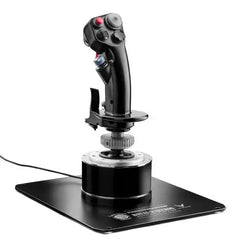
    Le AVA F/A-18 Super Hornet Flightstick est un chef-d'œuvre minutieusement conçu pour les passionnés d’aviation recherchant une adaptabilité et une authenticité inégalées. Avec une réplique à l’échelle 1:1 du manche de vol du F/A-18C Hornet et la base modulaire AVA, il offre une personnalisation exceptionnelle grâce aux courbes d’axes ajustables, à la résistance et à l’amortissement réglables. Que vous soyez en plein combat aérien ou en train de perfectionner vos atterrissages civils, ce manche procure une satisfaction tactile grâce à sa construction entièrement métallique et à ses mécanismes de contrôle précis. Ce n’est pas qu’un simple équipement – c’est votre copilote dans le cockpit, prêt à gérer chaque mission. Qu’est-ce qui distingue l’AVA F/A-18 Super Hornet Flightstick ? Personnalisation inégalée La base AVA vous permet d’ajuster les courbes des axes, la résistance, la course et l’amortissement, vous offrant la possibilité d’adapter chaque détail à votre style de vol. Le changement rapide des cames et des ressorts permet des ajustements fluides en pleine session sans interrompre votre immersion. Réplique officielle à l’échelle 1:1 La poignée du F/A-18C Hornet est une réplique sous licence officielle de Boeing, fabriquée entièrement en métal et intégrant 19 boutons d’action. Cela garantit une disposition authentique pour les simulations militaires de haute précision, séduisant les amateurs de réalisme. Technologie AXY pour un contrôle précis Les capteurs doubles AXY permettent d’affiner la tension du point central et la progressivité du manche, offrant un niveau de contrôle supérieur à celui des concurrents. Idéal pour réaliser des manœuvres cohérentes et reproductibles dans tous les types d’aviation. Écosystème modulaire Conçu pour être évolutif, la plateforme AVA prend en charge les ajouts actuels et futurs, comme des poignées supplémentaires et des amortisseurs, garantissant un investissement à long terme pour les passionnés de simulation de vol. Cette approche modulaire permet à votre configuration de grandir en même temps que vos compétences et vos besoins. Avantages et Inconvénients Avantages Inconvénients Personnalisation avancée pour divers styles de vol. Courbe d’apprentissage abrupte pour la configuration initiale. Construction entièrement métallique garantissant une longue durabilité. Prix élevé qui peut ne pas convenir à tous les budgets. Réplique officielle du F/A-18C Hornet avec disposition authentique. Spécifications Spécification Valeur Largeur 12,8 cm Profondeur 17,0 cm Hauteur 34,1 cm (avec poignée et adaptateur) Poids 3,5 kg Contenu de l’emballage Base AVA, poignée F/A-18C Hornet, adaptateur déporté, plaque de base, cames, ressorts, masques, clés hexagonales, câble USB-C Matériau Construction entièrement métallique Compatibilité de l’AVA F/A-18 Super Hornet Flightstick Le AVA F/A-18 Super Hornet Flightstick est entièrement compatible avec les plateformes PC fonctionnant sous Windows 10/11, offrant une fonctionnalité plug-and-play avec les simulateurs de vol leaders du marché comme DCS, X-Plane 11/12 et Microsoft Flight Simulator 2020. La reconnaissance officielle de ces jeux assure une intégration fluide, permettant aux pilotes de se concentrer sur le vol plutôt que sur la configuration. Cependant, il n’est pas compatible avec les consoles, limitant ainsi son utilisation pour les joueurs multi-plateformes. Son design modulaire prend en charge la compatibilité avec l’écosystème AVA en expansion, permettant d’ajouter des poignées supplémentaires, des amortisseurs et d’autres accessoires pour une expérience de vol sur mesure. La connexion USB-C garantit un transfert de données rapide et fiable, bien qu’un adaptateur puisse être nécessaire pour les anciens ports USB. En ce qui concerne les jeux, le manche fonctionne parfaitement avec la plupart des simulateurs PC, en particulier ceux prenant en charge les configurations HOTAS. Grâce à une large gamme de boutons et une excellente reconnaissance en jeu, l’AVA F/A-18 Flightstick est un choix idéal pour les pilotes de simulation sérieux évoluant sur PC.

    5 en stock Expédié en 1 à 3 jours ouvrables.

    €499,00

  • Dernier stock ! Thrustmaster T16000M FCS for sale on FlightSimzone

    Thrustmaster T16000M FCS

    5 en stock Expédié en 1 à 3 jours ouvrables.

    Le T16000M FCS est un joystick polyvalent conçu pour les pilotes exigeant un contrôle précis et flexible. Doté de la technologie innovante H.E.A.R.T HallEffect AccuRate Technology™, il offre une résolution de 16 000 x 16 000 valeurs pour une précision extrême. Son design ambidextre s’adapte aussi bien aux gauchers qu'aux droitiers, avec des composants amovibles pour une personnalisation avancée. Avec 16 boutons d’action, un hat switch 8 directions et une fonction de gouverne rotative, le T16000M FCS assure un confort optimal et une réactivité maximale. Qu'est-ce qui distingue le T16000M FCS ? Design Ambidextre – Le T16000M FCS est entièrement ambidextre, avec des composants amovibles permettant une adaptation parfaite pour une utilisation à gauche ou à droite. Cela en fait un choix idéal pour les configurations à double joystick et les simulations spatiales complexes. Technologie H.E.A.R.T. – Ses capteurs magntiques sans contact garantissent une précision durable, sans usure comme les systèmes à potentiomètres traditionnels. Avec une résolution de 16 bits, ce joystick offre un contrôle détaillé sur le tangage, le roulis et le lacet. Dispositif de Contrôle Complet – Avec ses 16 boutons dotés de repères tactiles, son hat switch 8 directions et ses multiples axes, le T16000M FCS procure une expérience proche de celle d'un cockpit réel, idéal pour les simulations de combat ou d’exploration spatiale. Intégration avec le logiciel T.A.R.G.E.T. – En combinant le joystick avec le logiciel T.A.R.G.E.T de Thrustmaster, les utilisateurs peuvent créer des profils personnalisés et l'intégrer avec d'autres périphériques Thrustmaster, offrant ainsi une flexibilité inégalée. Avantages et Inconvénients Avantages Inconvénients Design ambidextre pour droitiers et gauchers. Compatibilité limitée aux PC uniquement. Capteurs magntiques assurant une précision durable. Construction en plastique moins robuste que certains modèles haut de gamme. Excellent rapport qualité-prix pour ses fonctionnalités. Caractéristiques Techniques Caractéristique Valeur Technologie H.E.A.R.T. HallEffect AccuRate Technology™ Axes 4 axes indépendants, y compris la gouverne rotative Boutons 16 boutons d'action + hat switch 8 directions Compatibilité PC via USB, Windows 7/8/10 Design Personnalisable Ambidextre avec 3 composants amovibles Compatibilité du T16000M FCS Le T16000M FCS est conçu pour une utilisation sur PC, avec une connectivité USB compatible avec Windows 7, 8 et 10. Il fonctionne parfaitement avec le logiciel T.A.R.G.E.T. de Thrustmaster, permettant une intégration avec d'autres périphériques comme l'accélérateur TWCS Throttle ou les pédales de direction TFRP Rudder Pedals. Bien qu'il ne soit pas compatible avec les consoles comme Xbox ou PlayStation, sa compatibilité avec les jeux PC en fait un choix privilégié pour les simulateurs de vol. Concernant les plateformes de jeu, le T16000M FCS excelle dans les simulateurs de vol et de simulation spatiale, avec une compatibilité totale avec des titres comme Microsoft Flight Simulator, Elite Dangerous et Star Citizen. Il ne prend pas en charge les consoles ou les appareils mobiles, mais son intégration avec les jeux PC est optimisée par sa personnalisation avancée et ses profils programmables, en faisant un choix idéal pour les simulations complexes.

    5 en stock Expédié en 1 à 3 jours ouvrables.

    €69,00

  • Dernier stock ! T.Flight Stick X for sale on FlightSimZone

    Thrustmaster T.Flight Stick X

    5 en stock Expédié en 1 à 3 jours ouvrables.

    Le T.Flight Stick X est un joystick polyvalent et abordable, conçu pour les passionnés de simulation de vol sur PC. Avec 12 boutons d'action programmables et une fonction de gouverne en rotation, ce joystick s'adapte parfaitement à toutes les situations de vol—des combats aériens à l'aviation commerciale. Son design ergonomique assure un confort optimal lors des sessions prolongées, tandis que l'accélérateur intégré et la gouverne verrouillable garantissent un contrôle précis. Que vous naviguiez dans les cieux civils ou engagiez un combat spatial, le T.Flight Stick X offre une expérience intuitive qui vous plonge pleinement dans votre mission. Qu'est-ce qui distingue le T.Flight Stick X ? Commandes programmables pour une personnalisation totale Le T.Flight Stick X dispose de 12 boutons programmables et de 4 axes, permettant aux utilisateurs de configurer le joystick selon leurs préférences exactes. Ce niveau de personnalisation assure une compatibilité avec divers jeux de simulation de vol et permet des ajustements rapides en cours de jeu, convenant aussi bien aux débutants qu'aux pilotes expérimentés. Gouverne en rotation avec mécanisme de verrouillage La fonction de rotation de la gouverne ajoute une couche de contrôle supplémentaire, notamment pour les manœuvres serrées. Pour ceux qui préfèrent des pédales de gouverne traditionnelles ou une expérience plus stable, la poignée verrouillable permet un contrôle en axe fixe, offrant une grande polyvalence. Design ergonomique pour un confort optimal Sa conception ergonomique permet des sessions de jeu prolongées sans fatigue excessive. La prise en main soigneusement profilée et le positionnement intuitif des boutons garantissent un accès facile à toutes les commandes essentielles, améliorant à la fois le confort et la fonctionnalité. Installation simplifiée Plug-and-Play Conçu pour une installation sans tracas, le T.Flight Stick X est entièrement Plug-and-Play sur PC, éliminant ainsi le besoin d'installations complexes. Il fonctionne immédiatement avec la plupart des jeux de simulation de vol populaires, en faisant un excellent choix pour les nouveaux venus dans le genre. Avantages et inconvénients Avantages Inconvénients Boutons programmables permettant une personnalisation avancée. Matériaux de construction moins premium que certains concurrents. Gouverne en rotation verrouillable pour un contrôle adaptatif. Absence d'un module d'accélération séparé. Installation Plug-and-Play facilitée pour les utilisateurs PC. Caractéristiques techniques Caractéristique Valeur Boutons d'action 12 programmables Axes 4 Accélérateur Intégré Gouverne Rotation avec mécanisme de verrouillage Compatibilité PC (Plug-and-Play) Compatibilité du T.Flight Stick X Compatibilité Détails Plateformes PC (Plug-and-Play) Jeux Compatible avec la plupart des simulateurs de vol sur PC Le T.Flight Stick X est conçu pour le PC et fonctionne parfaitement avec une large gamme de jeux de simulation de vol, y compris des titres populaires comme Microsoft Flight Simulator et X-Plane. Sa compatibilité Plug-and-Play signifie qu'aucun pilote ou logiciel spécial n'est requis—il suffit de le connecter et de jouer. Bien qu'il ne prenne pas en charge les consoles, il excelle dans la fourniture d'une compatibilité simple et efficace pour les joueurs sur PC. Avec son accélérateur intégré et ses boutons programmables, le T.Flight Stick X s'adapte aussi bien aux simulateurs de vol modernes que classiques. Bien qu'il ne comprenne pas de matériel supplémentaire comme des pédales de direction, sa gouverne intégrée et son mécanisme de verrouillage garantissent des options de contrôle polyvalentes, en faisant une excellente porte d'entrée pour les pilotes en herbe.

    5 en stock Expédié en 1 à 3 jours ouvrables.

    €49,00

Flight simulator controller for sale at FlightSImZone

Connexion

Vous avez oublié votre mot de passe ?

Vous n'avez pas encore de compte ?
Créer un compte