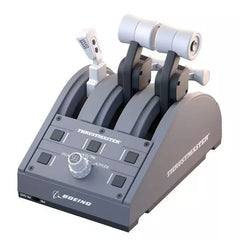
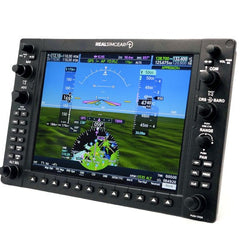
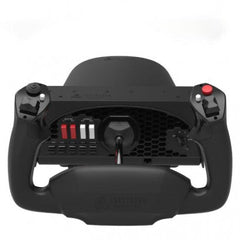
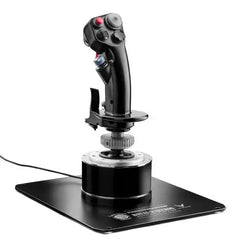
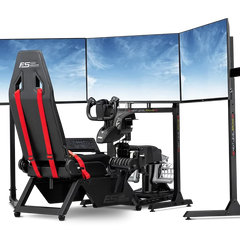
MOZA AY90 Force Feedback Yoke Base została zaprojektowana dla pilotów, którzy chcą czuć każde wznoszenie, wyrównanie i podmuch bezpośrednio w dłoniach, zamiast pozwalać, by te sygnały znikały w mechanizmie sprężynowym. Dzięki momentowi przechylenia 4,2 Nm oraz 90 N siły push-pull Force Feedback, a także osi przechylenia 180° z zakresem ruchu ±90°, zapewnia przekonujące siły sterowania, pozostając jednocześnie wystarczająco kompaktowa do montażu zarówno na biurku, jak i w kokpicie. Dodaj do tego konfigurowalne przełączniki, wyraziste podświetlenie RGB i solidną obudowę z kompozytu, a otrzymasz bazę yoke gotową zarówno do treningu kręgów nadlotniskowych, jak i dłuższych lotów nawigacyjnych.
Co wyróżnia MOZA AY90 Force Feedback Yoke Base?
Force Feedback, który zmienia sposób latania Wiele systemów yoke w tym przedziale cenowym nadal opiera się na sprężynach lub paskach, natomiast AY90 oferuje napędzany silnikami Force Feedback, który pozwala pilotowi odczuwać zmieniające się obciążenia samolotu przez cały lot. Od drgań pasa startowego i zmian trymu po opór aerodynamiczny podczas stromych zakrętów, sterowanie nieustannie przekazuje informacje o zachowaniu maszyny, dzięki czemu ręczne pilotowanie staje się znacznie bardziej angażujące i informacyjne.
Kompaktowy rozmiar bez odczuwalnych kompromisów Pomimo znacznej siły działania AY90 zachowuje kompaktową formę, która równie dobrze sprawdza się na biurku, jak i w dedykowanym kokpicie. Wielu użytkowników docenia fakt, że konstrukcja nie ma dużych gabarytów często kojarzonych ze sprzętem Force Feedback, co ułatwia montaż bez rezygnacji z dużego zakresu ruchu i pewnego, solidnego odczucia podczas wymagających manewrów.
Elementy sterowania kokpitem zintegrowane z bazą Zamiast traktować yoke wyłącznie jako oś sterującą, MOZA integruje bezpośrednio w bazie przełączniki kołyskowe, suwaki, pokrętła oraz pięciokierunkowy hat switch. Te dodatkowe wejścia ograniczają konieczność korzystania z klawiatury i pozwalają utrzymać najczęściej używane funkcje samolotu w zasięgu ręki, co jest szczególnie przydatne podczas latania samolotami general aviation wymagającymi częstych zmian trymu, oświetlenia i awioniki.
Zaprojektowana tak, aby rozwijać się wraz z kokpitem Aluminiowy mechanizm Quick Release oraz punkty montażowe do rozbudowy sprawiają, że AY90 jest znacznie bardziej elastyczna niż systemy yoke ze stałym uchwytem. Umożliwia szybkie zmiany yoke, pozostawiając jednocześnie miejsce na niestandardowe wskaźniki, wyświetlacze i akcesoria montowane za pomocą adapterów firm trzecich. Dla osób stopniowo rozwijających swój kokpit ta elastyczność znacznie ułatwia przyszłe modernizacje bez konieczności wymiany całej bazy.
Zalety i wady
Zalety
Wady
Force Feedback zapewnia przekonujące siły sterowania przez cały lot.
Kompatybilna wyłącznie z PC.
Kompaktowa obudowa pasuje do instalacji biurkowych i kokpitowych.
Wymaga zewnętrznego zasilacza.
Zintegrowane przełączniki ograniczają zależność od klawiatury.
Quick Release umożliwia przyszłe modernizacje yoke.
Specyfikacja
Specyfikacja
Wartość
Produkt
MOZA AY90 Force Feedback Yoke Base
Wymiary
325 × 252 × 111 mm
Waga
4,5 kg
Materiał obudowy
Kompozyt wzmacniany włóknem węglowym
Materiał Quick Release
Stop aluminium
Materiał nakładek przycisków
ABS
Zakres ruchu osi przechylenia
±90° (łącznie 180°)
Moment przechylenia
4,2 Nm
Siła pochylenia
90 N push-pull
Zakres ruchu pochylenia
95 mm
Enkoder silnika
15-bitowy enkoder magnetyczny
Pięciokierunkowy hat switch
1
Przełączniki kołyskowe
4
Przełączniki suwakowe
2
Wejście zasilania
12 V 6 A
Opcje montażu
Zacisk biurkowy, szyna profilowa, profil aluminiowy 80/20
Oprogramowanie konfiguracyjne
MOZA Cockpit
Akcesoria w zestawie
Zasilacz, przewód USB, instrukcja obsługi, naklejka
Kompatybilność MOZA AY90 Force Feedback Yoke Base
Kategoria
Kompatybilność
Platforma
PC
Montaż
Zaciski biurkowe, szyny profilowe, profile aluminiowe 80/20
Oprogramowanie konfiguracyjne
MOZA Cockpit
Połączenie yoke
Aluminiowy system Quick Release MOZA
Rozbudowa o akcesoria
Obsługuje niestandardowe wskaźniki, wyświetlacze i akcesoria firm trzecich
AY90 została zaprojektowana tak, aby łatwo integrować się z szeroką gamą stanowisk do symulacji lotu. Obsługuje montaż na biurku za pomocą dołączonych zacisków, kokpity zbudowane z profili aluminiowych typu 80/20 oraz aluminiowy system Quick Release MOZA, który umożliwia szybką zmianę yoke bez użycia narzędzi. Dedykowane punkty montażowe na górze bazy pozwalają również dodawać kolejne wskaźniki, wyświetlacze i niestandardowe akcesoria wraz z rozbudową kokpitu. Urządzenie nie jest przeznaczone do systemów symulacji lotu na konsolach.
Konfiguracja odbywa się za pomocą oprogramowania MOZA Cockpit, w którym można dostosować każdy przełącznik, pokrętło i funkcję oświetlenia. Programowalne wejścia ułatwiają dopasowanie bazy zarówno do lekkich samolotów general aviation, jak i większych maszyn turbośmigłowych. Ponieważ wszystkie elementy sterujące można dowolnie mapować, AY90 dobrze integruje się zarówno z kompaktowymi stanowiskami biurkowymi, jak i bardziej rozbudowanymi domowymi kokpitami.
MOZA AY90 Force Feedback Yoke Base jest urządzeniem wyłącznie dla PC, kompatybilnym z Microsoft Flight Simulator, Microsoft Flight Simulator 2024, X-Plane, DCS World, War Thunder oraz innymi popularnymi symulatorami lotu na PC obsługującymi sprzęt Force Feedback. Nie jest kompatybilna z konsolami PlayStation ani Xbox, dlatego najlepiej sprawdza się w dedykowanych środowiskach symulacji lotu opartych na PC.
Wingflex A320 EFIS Cube puts Airbus navigation and display management exactly where your hand expects it, combining full-function EFIS and glareshield controls with high-contrast dual-colour displays in a compact 80% scale design. From adjusting barometric pressure to selecting navigation modes, every rotary movement and button press feels deliberate and satisfying. The synchronized backlighting, integrated stand and simple USB connectivity make it an excellent addition to a desktop Airbus cockpit without demanding the space of a full-size flight deck.
What Sets the Wingflex A320 EFIS Cube apart?
More Than Just an EFIS Panel Unlike many desktop EFIS units that focus solely on navigation display controls, the EFIS Cube also integrates important glareshield functions such as Master Warning, Master Caution and CHRONO controls. Having these frequently used functions within easy reach creates a cleaner cockpit workflow and reduces the need to return to the virtual cockpit during busy phases of flight.
Compact Size Without Sacrificing Functionality The 80% scale design makes the panel much easier to accommodate on a typical desktop while preserving the familiar Airbus control layout. Buttons, rotary selectors and push-pull controls remain comfortably spaced, allowing quick adjustments without making the panel feel cramped. It strikes an effective balance between space efficiency and comfortable day-to-day operation.
Consistent Lighting Across Your Cockpit The synchronized brightness system keeps the displays and backlighting aligned with supported simulator lighting, creating a cohesive appearance throughout the cockpit. Combined with Airbus-style fonts and dual-colour displays, important flight information remains crisp and easy to read whether flying during bright daylight or on a dark nighttime arrival.
Built for Modular Cockpit Expansion The EFIS Cube performs perfectly as a standalone controller but is equally suited to growing cockpit projects. It integrates neatly alongside the Wingflex FCU Cube and RMP Combo Cube, allowing sim pilots to expand their Airbus setup gradually while maintaining a consistent appearance, matching lighting and a tidy desktop footprint.
Pros and Cons
Pros
Cons
Integrated glareshield controls reduce additional hardware.
Reduced scale differs from full-size Airbus dimensions.
Dual-colour displays remain easy to read.
Designed specifically for Airbus aircraft.
Synchronized lighting creates consistent cockpit appearance.
Plug-and-play USB connection simplifies installation.
Compact footprint fits comfortably beneath most monitors.
Specifications
Specification
Value
Product
Wingflex A320 EFIS Cube
Scale
80% scale
Primary Function
Airbus Electronic Flight Instrument System control panel
Integrated Functions
EFIS controls and glareshield controls
Display Type
High-contrast dual-colour LCD displays
Display Fonts
Airbus-style fonts
Controls
Buttons, rotary knobs and switches
Lighting
Fully synchronized adjustable backlighting
Connection
USB
Installation
Plug-and-play
Stand
Integrated low-profile desktop stand
Primary Use
Airbus flight simulation
Wingflex A320 EFIS Cube Compatibility
Simulator
Compatible Aircraft
X-Plane
ToLiss A319, A320, A330, A340; Laminar A330
Microsoft Flight Simulator
Fenix A3xx, FlyByWire A320 & A380, iniBuilds A320, A321, A330, A340, A350, Aerosoft A340, Headwind A330
Prepar3D
FSLabs A32x
The Wingflex A320 EFIS Cube connects through USB and can be used either as a standalone Airbus EFIS controller or alongside the Wingflex FCU Cube and Wingflex RMP Combo Cube. Its synchronized brightness allows all compatible Cube modules to maintain a consistent appearance, while the integrated stand provides a comfortable operating angle for desktop cockpits.
The published compatibility list covers a wide selection of Airbus aircraft across the major PC flight simulators. It supports Fenix A3xx, ToLiss Airbus aircraft, FlyByWire A320 and A380, multiple iniBuilds Airbus models, Laminar A330, Aerosoft A340, Headwind A330 and FSLabs A32x. The panel is designed specifically for Airbus aircraft and is not intended for Boeing flight decks or other aircraft with different EFIS layouts.
The EFIS Cube is compatible with Microsoft Flight Simulator 2020 and 2024, X-Plane 11 and 12 and Prepar3D on Windows PCs. It uses a USB connection with plug-and-play operation and is not compatible with Xbox or PlayStation consoles, as dedicated cockpit hardware requires PC-based simulator support.
Wingflex A320 FCU Cube brings Airbus autopilot management into a compact desktop format with full autopilot control functionality and a durable all-aluminum construction. Every heading adjustment, altitude selection and autopilot engagement is handled through tactile knobs and switches that encourage proper cockpit workflows instead of constant mouse clicks. The synchronized dimmer, adjustable backlighting and plug-and-play USB connection make it equally suited to quick evening flights or long IFR sessions, all without demanding the space of a full-size glareshield.
What Sets the Wingflex A320 FCU Cube apart?
Compact Airbus Autopilot Without Sacrificing Core Controls At 80% scale, the FCU Cube preserves the control layout Airbus pilots expect while significantly reducing the space required on a desktop. Independent reviews consistently note that this balance makes it much easier to fit beneath standard monitors than full-size panels, yet the spacing remains comfortable enough for deliberate heading, speed and altitude adjustments during demanding approaches.
Switches That Reward Every Input The AP1, AP2 and A/THR buttons use dedicated axial switches with a 2.5 mm travel, while the remaining controls employ Alps switches with a 2.0 mm stroke. Pilots frequently comment that well-designed tactile controls encourage proper use of the autopilot throughout a flight instead of relying on keyboard shortcuts once the novelty wears off.
Solid Metal Construction Built for Frequent Flying The aluminum housing and matching aluminum control knobs give the FCU Cube a reassuring weight that keeps it planted during repeated adjustments. Reviewers often highlight the rigid construction because it avoids the flex sometimes found in lighter desktop panels, making heading changes and rotary inputs feel consistent throughout longer flying sessions.
Designed to Grow Into a Complete Airbus Cockpit The FCU Cube works well as a standalone autopilot controller, but it is equally at home alongside the Wingflex EFIS Cube and RMP Combo Cube. Shared brightness synchronization creates a unified appearance across the glareshield, allowing cockpit builders to expand their setup gradually instead of replacing hardware every time a new module is added.
Pros and Cons
Pros
Cons
Aluminum housing provides excellent structural rigidity.
Reduced scale differs from full-size Airbus dimensions.
Autopilot switches deliver satisfying tactile feedback.
Designed specifically for Airbus aircraft families.
Plug-and-play USB installation minimizes setup time.
Synchronized lighting complements other Cube modules.
Broad Airbus simulator compatibility across major platforms.
Specifications
Specification
Value
Product
Wingflex A320 FCU Cube
Scale
80% scale
Primary Function
Airbus Flight Control Unit (FCU)
Construction
Aviation-grade aluminum body and knobs
Connection
USB
Installation
Plug-and-play
Autopilot Switches
AP1, AP2 and A/THR axial switches
Autopilot Switch Travel
2.5 mm
Other Button Switches
Japan Alps switches with 2.0 mm travel
Lighting
Adjustable backlighting with synchronized dimmer knob
Primary Use
Airbus flight simulation autopilot control
Wingflex A320 FCU Cube Compatibility
Simulator
Compatible Aircraft
X-Plane
ToLiss A319, A320, A330, A340; Laminar A330
Microsoft Flight Simulator
Fenix A3xx, FlyByWire A320 & A380, iniBuilds A320, A321, A330, A340, A350, Aerosoft A340, Headwind A330
Prepar3D
FSLabs A32x
The FCU Cube connects through USB and operates as either a standalone Airbus autopilot controller or as part of the broader Wingflex Cube ecosystem. It supports brightness synchronization with the Wingflex EFIS Cube and RMP Combo Cube, creating a consistent glareshield appearance. Its compact dimensions also make it easy to integrate into desktop cockpits or modular simulator builds without requiring a full-width Airbus panel.
The published compatibility list covers a broad range of Airbus simulations across the leading platforms. It supports Fenix A3xx, ToLiss Airbus aircraft, FlyByWire A320 and A380, multiple iniBuilds Airbus models, Laminar A330, Aerosoft A340, Headwind A330 and FSLabs A32x. Unlike the RMP Combo Cube, the FCU Cube also supports the FlyByWire A380 and iniBuilds A350, making it one of the most widely compatible Airbus autopilot panels in the Wingflex lineup.
The FCU Cube is designed for Microsoft Flight Simulator, X-Plane and Prepar3D on Windows PCs. It communicates through USB and works with supported Airbus aircraft using Wingflex software integration. It is not compatible with Xbox or PlayStation consoles, as dedicated USB cockpit peripherals of this type require PC-based simulator support.
Wingflex A320 RMP Combo Cube squeezes four useful Airbus control sections into one compact unit, combining RMP, ATC, TCAS and warning-panel functions with high-contrast dual-colour LCD screens. Its physical knobs and illuminated controls give frequency changes and transponder entries a satisfying mechanical rhythm, without consuming the entire desk. The 80% scale and 13-degree tilt keep everything comfortably visible, while USB connectivity makes installation refreshingly direct. Apparently, proper radio management does not require a full cockpit shell and several kilometres of wiring.
What Sets the Wingflex A320 RMP Combo Cube apart?
Four Control Sections Earn Their Desk Space Rather than reproducing only the radio management panel, the unit combines RMP, ATC, TCAS and glareshield warning functions behind one compact face. This gives solo pilots considerably more usable control than a single-purpose radio panel. Hands-on coverage particularly values the integrated radio section because it places communication and surveillance controls beside the Airbus autopilot hardware, where they can be reached without returning to the virtual cockpit.
Compact Dimensions Without Tiny Controls The 80% scale reduces the panel’s footprint while retaining physical rotary controls and readable displays. Review coverage of the complete Cube system found the format notably easier to position beneath a conventional monitor than full-width Airbus hardware. The compromise is sensible for desktop pilots: it saves space without shrinking everything into fiddly miniature controls that require the fingertips of a concert pianist and the patience of an air-traffic controller.
Lighting That Behaves as One Cockpit System The RMP Combo Cube can synchronize its brightness with the Wingflex FCU Cube and EFIS Cube, producing consistent illumination across the complete glareshield arrangement. Independent reporting also notes that each module can still operate separately, so the RMP does not require the complete Cube set. That flexibility is useful for gradual cockpit builds, while synchronized backlighting prevents one panel glowing like a supermarket sign beside two carefully dimmed instruments.
Straightforward Setup, With Aircraft-Specific Boundaries User feedback describes the initial setup as notably simple, and the panel operates through a direct USB connection with Wingflex integration software. However, reports also show that behaviour may vary between aircraft and simulator versions, particularly when a specific function has not yet been implemented. It is therefore far less troublesome than custom wiring, but compatibility should still be checked by aircraft rather than assumed from the presence of an Airbus badge.
Pros and Cons
Pros
Cons
Four integrated sections reduce separate hardware requirements.
Reduced scale differs from full-size cockpit dimensions.
Dual-colour displays provide clear frequency information.
Aircraft support varies between simulator platforms.
Synchronized lighting complements other Wingflex Cube modules.
USB connection keeps desktop installation straightforward.
Angled enclosure improves visibility from seated positions.
Specifications
Specification
Value
Product
Wingflex A320 RMP Combo Cube
Scale
80% scale
Integrated Functions
RMP, ATC, TCAS and glareshield warning panel
Display Type
Dual-colour LCD screens
Display Background
Black
Viewing Angle
13 degrees
Connection
USB
Installation
Plug-and-play
Lighting
Synchronized brightness adjustment
Compatible Lighting Modules
Wingflex A320 FCU Cube and A320 EFIS Cube
Primary Use
Airbus flight simulation cockpit control
Wingflex A320 RMP Combo Cube Compatibility
Simulator
Compatible Aircraft
Status
X-Plane
ToLiss A319, A320, A330 and A340; Laminar A330
Supported
Microsoft Flight Simulator
Fenix A3xx; FlyByWire A320; iniBuilds A320, A321, A330 and A340; Aerosoft A340; Headwind A330
Supported
Prepar3D
FSLabs A32x
Supported
Microsoft Flight Simulator
FlyByWire A380
Not supported
Microsoft Flight Simulator
iniBuilds A350
Not supported
The panel connects through a single USB connection and can be used independently as a desktop controller. It also integrates with the Wingflex A320 FCU Cube and Wingflex A320 EFIS Cube, including synchronized brightness across the modules. Within the optional Cube console, the panels can share an internal USB hub and run to the computer through one external cable. No universal mounting compatibility with third-party cockpit frames is specified.
Aircraft support is integration-specific rather than universal. The panel supports ToLiss, Fenix, FSLabs, FlyByWire A320 and several iniBuilds aircraft, alongside the listed Laminar, Aerosoft and Headwind models. The FlyByWire A380 is not supported, and the iniBuilds A350 is not supported. Reports of differing behaviour between Microsoft Flight Simulator and X-Plane also show why pilots should use the published aircraft list instead of assuming every Airbus add-on will communicate correctly.
For gaming platforms, the RMP Combo Cube is intended for Windows PC flight simulation and works with supported aircraft in Microsoft Flight Simulator, X-Plane and Prepar3D. It relies on PC-side USB communication and Wingflex software for integration and firmware management. It is not listed as compatible with Xbox or PlayStation, so console editions of Microsoft Flight Simulator should not be treated as supported platforms.
Wingflex A320 Combo Cube places the Airbus glareshield essentials into one tidy desktop system, combining EFIS, FCU and multifunction RMP controls with high-contrast dual-colour displays. The knobs click and turn with enough purpose to make heading changes, radio tuning and barometric adjustments feel far better than poking at a virtual cockpit. USB connectivity keeps installation straightforward, while the 13-degree viewing angle brings the panels naturally into sight. It is compact Airbus hardware for pilots whose desks already resemble a mildly concerned electronics workshop.
What Sets the Wingflex A320 Combo Cube apart?
Three Core Panels Without a Full-Size Glareshield The bundle combines an EFIS, FCU and RMP-based multifunction panel in an 80% scale layout, saving roughly eleven centimetres compared with a full-size arrangement. Reviewers have praised that reduction because it preserves practical control spacing while fitting more comfortably beneath ordinary monitors. The result feels substantial enough for deliberate operation without demanding the sort of desk usually reserved for air-traffic control or an exceptionally ambitious accountant.
A Smarter Use of the Right-Hand Position Instead of supplying a second EFIS that a solo pilot may rarely touch, Wingflex fills the right side with a four-in-one panel covering radio management, transponder, TCAS and warning functions. Review feedback identifies this as one of the bundle’s most practical decisions, since it places genuinely useful controls within reach. It sacrifices strict two-seat symmetry, but gains considerably more day-to-day function for single-pilot desktop flying.
Clear Displays and Cohesive Night Lighting Dual-colour screens provide sharp contrast against their dark backgrounds, while synchronized brightness allows the EFIS, FCU and RMP sections to behave like one connected panel. Independent testing found the displays notably crisp and the backlighting pleasant in darker rooms. That matters during evening approaches, when deciphering fuzzy digits is an unnecessary challenge and the weather already has enough creative ways to ruin a carefully prepared arrival.
Simple Assembly With a Stable Optional Console When paired with the Cube Stand, the three modules connect through internal USB-C cables and a built-in hub, leaving a single cable running to the PC. Reviewers found assembly straightforward and noted that the broad base remained firmly planted while pressing buttons and turning encoders. The stand also gives the separate modules a cleaner, unified appearance, although it is an optional bundle choice rather than standard equipment with every configuration.
Pros and Cons
Pros
Cons
Compact layout preserves valuable desktop space.
Reduced scale differs from full-size cockpit dimensions.
Three modules cover major glareshield functions.
Optional console increases the complete setup footprint.
Dual-colour displays remain clear in low light.
RMP module combines four useful control sections.
USB installation requires minimal external interface hardware.
Specifications
Specification
Value
Product
Wingflex A320 Combo Cube
Included Modules
A320 EFIS Cube, A320 FCU Cube and A320 RMP Combo Cube
Scale
80% scale
Interface
USB
Installation
Plug-and-play
Display Type
Dual-colour LCD screens
Viewing Angle
13 degrees
FCU Construction
Aluminium body and knobs
RMP Functions
RMP, ATC, TCAS and side-panel controls
Lighting
Synchronized brightness across compatible Cube modules
Product Dimensions
52.0 × 18.5 × 16.5 cm
Package Dimensions
64.0 × 24.0 × 20.5 cm
Bundle Options
Three-module bundle, or bundle with Cube Stand
Glareshield Housing
Not included with the standard three-module bundle
Wingflex A320 Combo Cube Compatibility
Simulator
Aircraft With Full Bundle Support
Microsoft Flight Simulator
Fenix A3xx, FSLabs A32x, FlyByWire A320, iniBuilds A320, A321, A330 and A340, Aerosoft A340, Headwind A330
X-Plane
ToLiss A319, A320, A330 and A340; Laminar A330
Prepar3D
FSLabs A32x and other listed aircraft where supported through Wingflex Bridge
Aircraft
Compatibility Limitation
FlyByWire A380
EFIS and FCU supported; RMP Combo Cube not supported
iniBuilds A350
EFIS and FCU supported; RMP Combo Cube not supported
The three modules connect through USB and can operate as separate desktop units or within the optional Cube Stand. That stand contains an internal USB hub, allowing its three module connections to exit through one PC cable. The bundle pairs naturally with Airbus throttles, sidesticks, MCDUs and overhead panels, but it does not include a full glareshield enclosure and no standard mounting compatibility with third-party cockpit shells is specified.
Full compatibility depends on all three modules supporting the selected aircraft, because the EFIS and FCU lists are slightly broader than the RMP list. The complete bundle supports Fenix, ToLiss, FlyByWire A320, FSLabs, several iniBuilds aircraft, Aerosoft A340 and Headwind A330. The FlyByWire A380 and iniBuilds A350 are not fully supported because their RMP integration is currently excluded, even though the EFIS and FCU modules list them individually.
For software platforms, the Combo Cube is built for Microsoft Flight Simulator 2020 and 2024, X-Plane 11 and 12 and Prepar3D on Windows PC. It uses Wingflex Bridge for aircraft communication and firmware management. It is not listed as compatible with Xbox or PlayStation, because the required PC-side integration software and dedicated USB panel support are not available on those console platforms.
Please note! Shipping of this item may take 7-10 business days!
Wingflex B777 CDU brings long-haul flight management onto a dedicated physical interface, combining 1:1 full-scale construction with plug-and-play USB connectivity. The illuminated aircraft-style keypad gives route entries, performance calculations and arrival changes a satisfyingly deliberate rhythm, while the slim enclosure avoids swallowing half the desk. Physical captain and first-officer selection adds useful flexibility, and the adjustable stand keeps the screen readable from several seating positions. It is considerably more convincing than wrestling with a tiny pop-out window somewhere between cruise altitude and dinner service.
What Sets the Wingflex B777 CDU apart?
Full-Scale Controls for Proper Boeing Workflows The 1:1 layout preserves the spacing, key placement and proportions expected from a Boeing 777 CDU. That makes frequent tasks such as route entry, performance setup and arrival amendments easier to complete through muscle memory. Independent video coverage also shows the unit functioning as a substantial desktop control rather than a reduced keypad, which should please pilots whose fingers have grown tired of negotiating tiny virtual buttons with a mouse.
Useful Support Beyond the Boeing 777 Despite its B777-specific face and operating style, the unit supports selected PMDG, iFly, Zibo, LevelUp and IXEG aircraft. This includes several 737 variants and the PMDG 747 V2 alongside the supported 777 family. That broader integration gives Boeing-focused pilots more value from one device, although the physical legends and layout naturally remain best matched to the 777 rather than every aircraft in the compatibility list.
One Unit Can Serve Either Cockpit Seat Physical left-and-right selection allows the CDU to represent the captain or first-officer position without requiring a second unit. This is particularly useful for compact home cockpits, shared training stations and desktop layouts where space disappears faster than fuel during a badly planned diversion. The multi-angle stand further improves placement flexibility, letting the display sit below a monitor, beside a throttle quadrant or within a developing cockpit structure.
Desktop-Friendly Construction Without a Wiring Project The USB interface combines the display and physical controls into one self-contained unit, avoiding the separate controller boards, video connections and custom wiring common in more elaborate cockpit components. Its 1.25 kg weight provides enough substance to remain planted during data entry, while the slim housing remains portable. Review footage also demonstrates straightforward stand assembly and operation with Microsoft Flight Simulator, making the unit approachable for pilots who prefer flying to cable archaeology.
Pros and Cons
Pros
Cons
Full-scale keypad supports familiar Boeing flight-management procedures.
Physical layout remains specifically tailored to Boeing aircraft.
Backlit keys improve operation in dark cockpit setups.
Compatibility is restricted to explicitly supported aircraft packages.
Physical switch selects captain or first-officer operation.
Adjustable stand provides several practical viewing positions.
USB connection reduces separate interface hardware requirements.
Specifications
Specification
Value
Product
Wingflex B777 CDU
Aircraft Style
Boeing 777 Control Display Unit
Scale
1:1 full scale
Construction
Aviation-grade materials
Interface
USB
Installation
Plug-and-play design
Keyboard
Aircraft-style internal structure with backlighting
Input Behaviour
Customisable random entry-delay effect
Cockpit Position Selection
Physical switching between left and right seats
Firmware
Supports online firmware upgrades
Stand
Multi-angle adjustable stand
Form Factor
Slim, ultra-thin design
Length
33 cm
Height
24 cm
Width
10 cm
Weight
1.25 kg
Supported Simulator Families
Microsoft Flight Simulator, X-Plane 11/12 and Prepar3D
Wingflex B777 CDU Compatibility
Platform
Compatible Aircraft
Microsoft Flight Simulator
PMDG 737NG 600, 700, 800 and 900; PMDG 777-300ER, 777-200ER and 777-200F; iFly 737 MAX
X-Plane 11/12
Zibo 737NG, LevelUp 737NG and IXEG 737-300 Classic
Prepar3D
PMDG 777, PMDG 737NGXu, PMDG 747 V2, iFly 737NG and iFly 737 MAX
The CDU connects through a USB interface and combines its screen, illuminated keypad and seat-selection controls in one enclosure. Its physical captain and first-officer switching allows one device to serve either CDU position, while the multi-angle desktop stand supports several installation positions. No standard cockpit mounting pattern or direct compatibility with third-party CDU frames is specified, so permanent cockpit installation may require a purpose-made bracket or shelf.
Software integration covers PMDG, iFly, Zibo, LevelUp and IXEG aircraft, including selected 737, 747 and 777 packages. The B777 layout is naturally best suited to PMDG 777 operations, although supported 737 software can also communicate with the unit. Aircraft not included in the published compatibility table, generic FMC implementations and unrelated Airbus packages should not be considered supported merely because they use a superficially similar flight-management interface.
For simulation platforms, the CDU supports Microsoft Flight Simulator on PC, X-Plane 11 and 12 and Prepar3D when used with a listed aircraft package. Independent review footage demonstrates operation in both Microsoft Flight Simulator 2020 and 2024. It is a PC-focused USB peripheral and is not listed for Xbox or PlayStation, so console versions of Microsoft Flight Simulator fall outside its published compatibility.
Uwaga! Wysyłka tego produktu może potrwać od 7 do 10 dni roboczych!
Wingflex B737NG CDU zapewnia procedurom w kokpicie Boeinga dedykowany fizyczny interfejs, łącząc konstrukcję w skali 1:1 z obsługą plug-and-play przez USB. Podświetlana klawiatura, wyraźny wyświetlacz oraz układ klawiszy odwzorowujący rozwiązania stosowane w samolotach sprawiają, że zmiana trasy i wprowadzanie danych dotyczących osiągów są znacznie wygodniejsze niż ciągłe korzystanie z myszy. Za pomocą fizycznych przełączników można wybrać pozycję lewego lub prawego CDU, a smukła obudowa i regulowana podstawka sprawiają, że urządzenie doskonale sprawdza się na biurku. To profesjonalny sprzęt do kokpitu, który na szczęście nie wymaga przebudowy całego flight decku.
Co wyróżnia Wingflex B737NG CDU?
Interfejs w skali 1:1, który rozwija pamięć mięśniową Układ w skali 1:1 zachowuje rozstaw i rozmieszczenie elementów charakterystyczne dla prawdziwego CDU Boeinga, dzięki czemu wielokrotne wykonywanie procedur FMC staje się łatwiejsze bez konieczności ciągłego kontrolowania położenia dłoni. W recenzjach szczególnie chwalony jest pełnowymiarowy format, który daje wrażenie korzystania z rzeczywistego wyposażenia kokpitu, a nie pomniejszonej klawiatury biurkowej. Ma to szczególne znaczenie podczas przygotowania do odlotu, gdy wprowadzanie trasy, sprawdzanie stron z osiągami oraz usuwanie nieuniknionej discontinuity w planie lotu i tak wymagają pełnej koncentracji.
Szeroka kompatybilność wykraczająca poza jeden dodatek do Boeinga Wiele dedykowanych CDU jest przeznaczonych wyłącznie do jednego pakietu samolotów, natomiast ten model obsługuje maszyny PMDG, iFly, Zibo, LevelUp i IXEG na trzech rodzinach symulatorów. Obejmuje również wybrane modele PMDG 747 i 777. Tak szeroka kompatybilność daje miłośnikom Boeinga swobodę zmiany samolotu bez pozostawiania kosztownego wyświetlacza i klawiatury bezużytecznie leżących na biurku.
Fizyczne przełączanie stanowiska dla elastycznych konfiguracji kokpitu Dedykowane elementy sterujące umożliwiają przełączanie między stanowiskiem kapitana i pierwszego oficera bez konieczności przebudowy instalacji lub korzystania wyłącznie z menu oprogramowania. Jest to szczególnie przydatne w domowych kokpitach z jednym CDU, wspólnych stanowiskach szkoleniowych oraz konfiguracjach biurkowych, gdzie zakup dwóch urządzeń byłby trudny do uzasadnienia. Regulowana podstawka z wieloma kątami nachylenia ułatwia również ustawienie wyświetlacza w wygodnej pozycji – zarówno pod monitorem, jak i obok przepustnicy.
Wygodna obsługa przez USB z jednorazową konfiguracją początkową CDU wykorzystuje połączenie USB oraz dedykowane oprogramowanie Bridge zamiast zestawu oddzielnych płytek wyświetlacza, kontrolera i interfejsu. Dokumentacja producenta informuje, że użytkownicy PMDG mogą potrzebować przeprowadzić jedną pełną sesję z uruchomionym symulatorem, samolotem i aplikacją Bridge, aby wszystkie wymagane parametry zostały poprawnie wykryte. Po tej początkowej konfiguracji urządzenie jest gotowe do codziennego użytkowania bez konieczności ponownego mapowania przed każdym lotem.
Zalety i wady
Zalety
Wady
Pełnowymiarowa klawiatura wspiera standardowe procedury Boeing FMC.
Obsługiwane samoloty wymagają integracji z dedykowanym oprogramowaniem Bridge.
Podświetlane klawisze pozostają czytelne w ciemnym kokpicie.
Początkowa konfiguracja PMDG wymaga pełnej sesji w symulatorze.
Fizyczne przełączniki umożliwiają wybór lewego i prawego stanowiska.
Regulowana podstawka pozwala ustawić wygodny kąt na biurku.
Aktualizacje firmware zapewniają dalszą poprawę kompatybilności.
Specyfikacja
Specyfikacja
Wartość
Produkt
Wingflex B737NG CDU
Skala
1:1 w pełnym rozmiarze
Typ urządzenia
Boeing 737NG Control Display Unit
Konstrukcja
Materiały klasy lotniczej
Interfejs
USB
Instalacja
Plug-and-play
Klawiatura
Podświetlana klawiatura w stylu lotniczym
Efekt wprowadzania
Konfigurowalne losowe opóźnienie wprowadzania danych
Wybór pozycji w kokpicie
Fizyczne przełączanie między lewym i prawym stanowiskiem
Firmware
Obsługa aktualizacji firmware online
Podstawka
Regulowana podstawka z wieloma kątami nachylenia
Konstrukcja
Smukła, ultracienka obudowa
Obsługiwane rodziny symulatorów
Microsoft Flight Simulator, X-Plane 11/12 oraz Prepar3D
Kompatybilność Wingflex B737NG CDU
Platforma
Kompatybilne samoloty
Microsoft Flight Simulator
PMDG 737NG 600, 700, 800 i 900; PMDG 777-300ER, 777-200ER i 777-200F; iFly 737 MAX
X-Plane 11/12
Zibo 737NG, LevelUp 737NG oraz IXEG 737-300 Classic
Prepar3D
PMDG 737NGXu, PMDG 747 V2, PMDG 777, iFly 737NG oraz iFly 737 MAX
CDU łączy się przez USB i został zaprojektowany do współpracy z oprogramowaniem Bridge producenta, dzięki czemu nie wymaga oddzielnego interfejsu wideo ani płytki sterującej. Funkcja fizycznego wyboru stanowiska obsługuje zarówno stronę kapitana, jak i pierwszego oficera, dzięki czemu jedno urządzenie doskonale sprawdza się nawet w kompaktowym kokpicie. Może być ustawione na dołączonej regulowanej podstawce biurkowej z wieloma kątami nachylenia, jednak producent nie deklaruje kompatybilności z ramami kokpitów innych firm ani ze standardowymi systemami montażu.
Integracja z samolotami ogranicza się do wyraźnie wymienionych dodatków i nie obejmuje wszystkich Boeingów ani ogólnych symulacji FMC. Urządzenie współpracuje z wymienionymi powyżej samolotami PMDG, iFly, Zibo, LevelUp i IXEG, natomiast inne produkty Boeinga, samoloty domyślne oraz nieobsługiwane pakiety awioniki nie powinny być uznawane za kompatybilne. Instalacje PMDG mogą wymagać przeprowadzenia początkowej pełnej sesji z uruchomionym symulatorem, samolotem i aplikacją Bridge, zanim komunikacja zacznie działać prawidłowo.
Jeśli chodzi o platformy programowe, CDU obsługuje Microsoft Flight Simulator na PC, X-Plane 11 i 12 oraz Prepar3D w połączeniu z obsługiwanym pakietem samolotów. Jest to urządzenie USB przeznaczone dla komputerów PC i nie jest kompatybilne z konsolami Xbox ani PlayStation. Konsolowe wersje Microsoft Flight Simulator znajdują się więc poza zakresem oficjalnie deklarowanej kompatybilności, nawet jeśli dana rodzina samolotów jest dostępna na danej platformie.
Uwaga! Wysyłka tego produktu może potrwać od 7 do 10 dni roboczych!
Wingflex A320 MCDU przekształca jeden z najważniejszych interfejsów kokpitu w dedykowane urządzenie sprzętowe, wyposażone w wyświetlacz Full HD z symulowanym szklanym panelem oraz wymiary Airbusa w skali 1:1. Od wprowadzania planów lotu po zarządzanie danymi dotyczącymi osiągów – każde naciśnięcie przycisku jest precyzyjne i satysfakcjonujące. Lekka konstrukcja typu plug-and-play sprawia, że urządzenie doskonale sprawdzi się zarówno w stałym kokpicie, jak i w przenośnym stanowisku treningowym. Synchronizowane podświetlenie oraz wiernie odwzorowana logika działania sprawiają, że długie loty IFR są znacznie bardziej angażujące niż korzystanie wyłącznie z wirtualnego CDU.
Co wyróżnia Wingflex A320 MCDU?
Zaprojektowany z myślą o obsłudze Airbusa w skali 1:1 To urządzenie nie tylko przypomina Airbus MCDU, ale także odwzorowuje jego układ i logikę działania, których piloci oczekują od prawdziwego samolotu. Wymiary 1:1 sprawiają, że procedury, rozmieszczenie przycisków i pamięć mięśniowa stają się całkowicie naturalne, zwłaszcza podczas długich lotów IFR. Społeczność symulatorów lotu często podkreśla, że korzystanie z dedykowanego sprzętu do programowania FMS znacząco ogranicza konieczność używania myszy i pozwala zachować płynniejszy przebieg pracy w kokpicie.
Doskonała czytelność wyświetlacza w dzień i w nocy Wyświetlacz Full HD prezentuje strony planu lotu, obliczenia osiągów oraz informacje systemowe z wyjątkową ostrością, pozostając łatwy do odczytania z typowej pozycji pilota. W połączeniu z symulowanym szklanym panelem oraz zsynchronizowaną regulacją jasności zapewnia doskonałą widoczność w zmieniających się warunkach oświetleniowych kokpitu. Piloci często chwalą jasne i wyraźne wyświetlacze, ponieważ zmniejszają zmęczenie wzroku podczas długich lotów i sprawiają, że wprowadzanie danych jest znacznie wygodniejsze.
Podświetlane Line Select Keys usprawniają pracę Jedną z najbardziej wyróżniających się cech są podświetlane przyciski Line Select Keys, które znacznie ułatwiają operacje nocne oraz loty w słabo oświetlonym kokpicie. Zamiast szukać poszczególnych przycisków, wszystkie opcje pozostają wyraźnie widoczne, zachowując jednocześnie charakterystyczny, minimalistyczny wygląd Airbusa. Użytkownicy regularnie latający po zmroku często uznają podświetlane elementy sterujące za jeden z tych drobnych detali, które znacząco poprawiają codzienny komfort użytkowania.
Przenośny, a jednocześnie gotowy do rozbudowanego kokpitu Lekka konstrukcja typu plug-and-play sprawia, że MCDU równie dobrze nadaje się do symulacji na biurku, jak i do większych projektów budowy kokpitów. Wielu konstruktorów docenia sprzęt, który działa od razu po podłączeniu bez skomplikowanej instalacji, a jednocześnie można go łatwo zintegrować z rozbudowywanym kokpitem Airbusa. Dyskusje w społeczności często wskazują tę równowagę między mobilnością a możliwością długoterminowej integracji jako ważną zaletę dla pilotów rozwijających swój symulator etapami.
Zalety i wady
Zalety
Wady
Układ Airbusa w skali 1:1 zwiększa znajomość procedur.
Zaprojektowany przede wszystkim dla rodziny samolotów Airbus.
Wyświetlacz Full HD zapewnia wyjątkowo czytelne strony systemu zarządzania lotem.
Wymaga kompatybilnych symulatorów lotu na PC.
Podświetlane Line Select Keys ułatwiają obsługę przy słabym oświetleniu.
Instalacja plug-and-play upraszcza konfigurację stanowiska.
Specyfikacja
Specyfikacja
Wartość
Produkt
Wingflex A320 MCDU
Skala
Wymiary Airbusa A320 w skali 1:1
Wyświetlacz
Wyświetlacz Full HD z symulowanym szklanym panelem
Połączenie
Plug-and-play
Konstrukcja
Materiały klasy lotniczej
Podświetlenie przycisków
Podświetlane Line Select Keys (LSK)
Regulacja jasności
Regulowana jasność wyświetlacza i klawiatury z synchronizacją w symulatorze
Logika działania
Odwzorowuje sposób działania MCDU Airbusa A320
Główne zastosowanie
Symulacja lotu i szkolenie z procedur pilotażowych
Konstrukcja
Ultracienka, lekka i przenośna
Kompatybilność Wingflex A320 MCDU
Symulator
Obsługiwane samoloty
X-Plane
ToLiss A319, A320, A330, A340; Laminar A330
Microsoft Flight Simulator
Fenix A3xx, FlyByWire A320, iniBuilds A340, Headwind A330
Prepar3D
FSLabs A32x
Wingflex A320 MCDU został zaprojektowany specjalnie z myślą o symulacji Airbusa i obsługuje szeroką gamę najpopularniejszych dodatków do samolotów. Jest kompatybilny z Fenix A3xx, FlyByWire A320, samolotami Airbus od ToLiss, FSLabs, Headwind A330 oraz wieloma modelami iniBuilds. Standardowa konstrukcja plug-and-play umożliwia łatwą integrację z symulatorami desktopowymi, a jednocześnie doskonale sprawdza się w większych projektach domowych kokpitów wykorzystujących dedykowany sprzęt Airbusa.
Kompatybilność została świadomie skoncentrowana na samolotach Airbus, a nie na uniwersalnych systemach zarządzania lotem. Chociaż urządzenie współpracuje z wieloma platformami symulatorów, nie jest przeznaczone do sprzętu Boeing FMC ani samolotów wykorzystujących całkowicie odmienne interfejsy zarządzania lotem. Konstruktorzy łączący je z przepustnicami Airbusa, panelami FCU i overhead uzyskają najbardziej spójny przepływ pracy w kokpicie, ponieważ cały sprzęt został zaprojektowany zgodnie z filozofią obsługi Airbusa.
MCDU jest przeznaczony do symulacji lotu na komputerach PC i obsługuje Microsoft Flight Simulator, X-Plane oraz Prepar3D z kompatybilnymi samolotami Airbus. Nie jest kompatybilny z konsolami Xbox ani PlayStation, ponieważ platformy te nie obsługują dedykowanych urządzeń USB przeznaczonych do kokpitów symulatorów. Dla entuzjastów Airbusa korzystających z komputerów PC MCDU doskonale integruje się zarówno z kompaktowymi stanowiskami desktopowymi, jak i kompletnymi projektami flight decków.
MOZA MB7F Flight Computer Display oddaje wygląd i sposób pracy Boeing 737 CDU, dając budowniczym domowych kokpitów satysfakcjonujący sposób zarządzania trasami, przylotami i osiągami samolotu. 5.1-inch wysokiej rozdzielczości wyświetlacz IPS prezentuje wyraźny tekst, który pozostaje łatwy do odczytania na każdym etapie lotu, a przedni panel z odlewanego ciśnieniowo aluminium zapewnia solidne odczucie przy każdym naciśnięciu klawisza. Od programowania przed lotem po planowanie zniżania, każde naciśnięcie przycisku i aktualizacja wyświetlacza dodają pewności do całego doświadczenia bez konieczności sięgania po mysz.
Co wyróżnia MOZA MB7F Flight Computer Display?
Zbudowany wokół procedur Boeing 737 – Zamiast pełnić funkcję uniwersalnej klawiatury, MB7F został zaprojektowany wokół układu i sposobu obsługi Boeing 737 CDU. Piloci regularnie latający PMDG i podobnymi samolotami doceniają dedykowany sprzęt, który utrzymuje programowanie trasy, wpisy osiągów i zmiany FMC w zasięgu ręki, zamiast polegać na ekranowych oknach wyskakujących.
```
``` Doskonałe odczucie mechaniczne – Połączenie kopułkowych przełączników o dużej sile aktywacji i sztywnych silikonowych nakładek klawiszy zapewnia każdemu naciśnięciu pewną, wyraźną reakcję. Wielu budowniczych kokpitów ceni sprzęt, który przekazuje każdą komendę samym dotykiem, ułatwiając pracę z długimi planami lotu i wprowadzaniem danych przy jednoczesnym skupieniu uwagi na flight decku.
```
``` Przydatny nie tylko do planowania lotu – Zintegrowane strony checklist i trzy wbudowane strony tablicy zmieniają MB7F w coś więcej niż replikę CDU. Częstotliwości, notatki z zezwoleń, briefingi podejścia i przypomnienia operacyjne można przechowywać bezpośrednio na jednostce, ograniczając potrzebę używania papierowych notatek lub dodatkowych wyświetlaczy podczas dłuższych lotów.
```
``` Zaprojektowany, aby rozwijać się wraz z kokpitem – Dołączony stojak biurkowy stanowi łatwy punkt startowy, a standardowa kompatybilność z VESA 75 × 75 mm sprawia, że stała instalacja jest równie prosta. W połączeniu ze zsynchronizowanym oświetleniem przez MOZA Cockpit software wyświetlacz naturalnie pasuje zarówno do kompaktowych konfiguracji biurkowych, jak i pełnych kokpitów w stylu Boeing.
Zalety i wady
Zalety
Wady
Doskonałe klawisze dotykowe z minimalnym luzem.
Zaprojektowany głównie dla samolotów Boeing 737.
Ostry wyświetlacz IPS utrzymuje tekst łatwy do odczytania.
Tylko platforma PC.
Zintegrowane funkcje checklist i tablicy.
Solidny przedni panel z odlewanego ciśnieniowo aluminium.
Specyfikacja
Specyfikacja
Wartość
Typ produktu
Boeing 737 Flight Computer Display (CDU)
Wymiary
277.9 × 145.5 × 32 mm
Waga
646 g
Rozmiar wyświetlacza
5.1-inch IPS
Materiał obudowy
Stop aluminium odlewany ciśnieniowo, ABS, PC
Połączenie
USB Type-C 2.0
Napięcie znamionowe
5 V
Prąd znamionowy
900 mA
Obsługiwana platforma
PC
Opcje montażu
Stojak biurkowy, mocowanie VESA 75 × 75 mm
Dołączone akcesoria
Kabel danych, stojak biurkowy
Kompatybilność MOZA MB7F Flight Computer Display
Sprzęt
Kompatybilność
MOZA Cockpit Software
Obsługuje zsynchronizowane oświetlenie i konfigurację
Systemy montażowe
Stojak biurkowy i mocowanie VESA 75 × 75 mm
Połączenie
USB Type-C 2.0
Symulator lotu
Kompatybilność
Microsoft Flight Simulator
Obsługuje PMDG i inne dodatki Boeing 737
X-Plane
Kompatybilny z obsługiwanymi dodatkami Boeing 737
Zaprojektowany do symulacji lotu na PC, MB7F integruje się z MOZA Cockpit software w celu zsynchronizowanego oświetlenia i konfiguracji. Połączenie USB Type-C ułatwia instalację, a dołączony stojak biurkowy i kompatybilność z VESA 75 × 75 mm pozwalają łatwo przechodzić między konfiguracją biurkową a dedykowanym kokpitem.
Kompaktowe rozmiary i solidny metalowy panel przedni sprawiają, że MB7F dobrze nadaje się do instalacji wielopanelowych bez nadmiernego obciążania ram montażowych. Wygodnie współpracuje z wolantami, przepustnicami, panelami radiowymi i innym sprzętem kokpitowym, niezależnie od tego, czy jest zainstalowany na biurku, czy na ramie symulatora z profili aluminiowych.
Kompatybilny z Microsoft Flight Simulator i X-Plane, MB7F został zaprojektowany dla PMDG i innych wiodących dodatków Boeing 737. PC jest obsługiwaną platformą; systemy Mac i konsole do gier nie są obsługiwane.
Brak w magazynie,
Zamówienia w przedsprzedaży dostępne. Wysyłka w ciągu 2-2,5 tygodnia.
Honeycomb Echo Aviation Controller is one of those devices that makes you rethink how much hardware you actually need to fly properly. Everything sits in your hands—pitch, roll, yaw, throttle, trim—all within reach, anchored by a 16-bit Hall-effect thumbstick that feels smooth and consistent through every movement. Pair that with a complete all-in-one flight control layout, and you’ve got a compact cockpit that works just as well on a desk as it does on the couch. It’s clever, tactile, and surprisingly capable for its size.
What Sets the Honeycomb Echo Aviation Controller apart?
All-in-One Without Feeling Compromised – Many compact controllers try to do everything and end up feeling like a gamepad with extra buttons. The Echo stands out because each control has a defined purpose and physical identity. Users often mention how the dedicated trim wheel, levers, and rudder system make it feel closer to a proper flight control setup, rather than a simplified alternative.
Mechanical Rudder Integration – Instead of relying on twist input or triggers, the Echo uses mechanically linked rudder pedals with Hall-effect sensing. This is something pilots quickly notice, especially during coordinated turns or crosswind landings. The self-centering action gives a consistent feel that’s easier to manage than digital-style inputs found on many compact controllers.
Designed for Flexible Flying Spaces – Feedback from users consistently highlights how freeing it is to fly without a fixed rig. Whether sitting at a desk, relaxing on a couch, or traveling, the Echo adapts without needing mounts or external peripherals. It’s particularly appealing for sim pilots who don’t have space for a full yoke, throttle quadrant, and pedal setup.
Thoughtful Control Layout for MSFS – The layout feels intentionally designed around Microsoft Flight Simulator workflows. Common functions like gear, flaps, trim, and camera controls are placed where fingers naturally rest. Many users note that once muscle memory develops, cockpit interaction becomes quicker and more fluid compared to mapping everything onto a generic controller.
Pros and Cons
Pros
Cons
All flight controls integrated into one compact unit
Less tactile separation than full-size hardware setups
Hall-effect sensors provide smooth, drift-free input
Limited physical range compared to dedicated yokes
Wireless operation with long battery life
Portable design works without dedicated sim rig
Specifications
Specification
Value
Control Type
All-in-one flight controller (pitch, roll, yaw, throttle, trim, flaps, gear)
Primary Input
16-bit Hall-effect thumbstick
Rudder System
Mechanically linked Hall-effect rudder pedals
Throttle/Sliders
Four detented sliders with interchangeable caps
Connectivity
Wireless (2.4 GHz dongle) or USB-C wired
Battery
1200 mAh, up to 15 hours usage
System Compatibility
PC and Mac
Software Compatibility
Microsoft Flight Simulator, X-Plane 11/12, Prepar3D
Included Accessories
Travel case, lever caps, wireless dongle, USB cable
Warranty
2-year limited warranty
Honeycomb Echo Aviation Controller Compatibility
The Echo is built with flexibility in mind. It is compatible with PC and Mac systems and connects either through USB-C wired connection or a 2.4 GHz wireless dongle. Because it operates as a standalone controller, it does not require additional yokes, pedals, or throttle quadrants, making it ideal for compact setups or portable use. It is not designed to integrate directly with traditional hardware ecosystems like separate yokes or external rudder pedals.
Its all-in-one design means fewer cables and simpler setups, but it also means less modular expansion compared to full cockpit systems. Pilots who prefer mixing and matching hardware may find it less suited to complex multi-device configurations, as the Echo is intended to replace, rather than complement, those components.
On the software side, the controller is fully compatible with Microsoft Flight Simulator and also supports X-Plane 11, X-Plane 12, and Prepar3D. It is not designed for console use, focusing entirely on PC-based simulation platforms where full input mapping and customization are available.
Brak w magazynie,
Zamówienia w przedsprzedaży dostępne. Wysyłka w ciągu 2-2,5 tygodnia.
WINCTRL URSA MINOR Airline Joystick L brings airline-style control to the desktop with a clever mix of tactile feedback and thoughtful engineering. The standout feature is the flight-data-linked vibration engine, which adds subtle physical cues during events like flap deployment, airflow changes, and touchdown. Pair that with non-contact magnetic resistance sensors on the X and Y axes, and the stick delivers smooth, stable inputs without the wear issues common in cheaper mechanisms. The result is a joystick that feels lively in hand yet technically grounded under the hood.
What Sets the WINCTRL URSA MINOR Airline Joystick L apart?
Flight Data Driven Vibration Feedback The URSA MINOR stands out with a vibration motor tied directly to in-sim flight data. Instead of generic rumble, the stick reacts to events like landing contact, airflow changes, or flap movement. Pilots online often mention how this adds subtle physical cues during phases like flare or speed changes, providing a tactile reminder of what the aircraft is doing without constantly glancing at instruments.
Robust Gimbal With Magnetic Sensors At the core of the stick is a glass-fiber-reinforced nylon gimbal running on ball bearings, paired with non-contact magnetic sensors for the primary axes. This combination helps maintain smooth motion over time without the jitter common in potentiometer-based designs. Enthusiasts frequently note that the stick movement feels stable across the entire travel range, particularly during small pitch adjustments on final approach.
Airliner-Inspired Grip Layout The grip design borrows cues from airline sidestick ergonomics, offering a balanced control layout that includes a PTT trigger, autopilot disconnect switch, and a concealed five-way switch beneath a magnetic cover. Pilots often highlight how practical this arrangement is for everyday flying tasks—radio calls, autopilot overrides, and camera views can all be handled without reaching for the keyboard.
Flexible Mounting and Maintenance Design The base includes anti-slip pads for desktop use along with pre-drilled mounting holes for cockpit rigs. A quick-release base cover allows access to internal adjustments without dismantling the entire unit. This detail is frequently appreciated by sim cockpit builders who prefer gear that can be tuned or serviced easily rather than permanently sealed hardware.
Pros and Cons
Pros
Cons
Flight-data vibration feedback adds tactile flight cues.
Plastic construction compared to metal joystick designs.
Magnetic sensors reduce wear and input drift.
Limited axis travel compared to extended bases.
Good button layout for airliner-style flying tasks.
Desk or cockpit mounting options included.
Specifications
Specification
Value
Product Model
URSA MINOR-Airline-Joystick L
Material
Industrial ABS plastic (PC + ABS)
Controller
32-bit ARM controller
X/Y Axis Movement Angle
±15°
Z Axis Rotation Angle
±20°
X/Y Sensors
Non-contact magnetic resistance sensors
Gimbal Construction
Glass fiber reinforced nylon with ball bearings
Operating Force (X/Y)
Approximately 6N
Rotation Torque (Z)
~4 kgf·cm
Throttle Axis Type
Long-travel sliding potentiometer
Throttle Axis Travel
38 mm
Buttons
14 buttons (250gf press force, 0.25 mm travel)
Special Controls
Hidden 5-way switch, PTT trigger, autopilot disconnect
Vibration Feature
Adjustable amplitude levels from 0–255
Mounting Options
Anti-slip desktop pads and cockpit mounting holes
Item Weight
3 kg
Included in Box
J5-BASE-BLACK + JGRIP-C1-R, Data Cable, Toolkit, Accessories Pack
WINCTRL URSA MINOR Airline Joystick L Compatibility
Platform
Compatibility
Connection Type
USB plug-and-play connection
Software Configuration
WW SIMAPP Pro software for button mapping
Mounting
Desktop use or cockpit mounting
The URSA MINOR Airline Joystick L connects via standard USB, allowing it to integrate easily with throttle quadrants, rudder pedals, and other flight hardware from many manufacturers. The base supports both desktop placement with anti-slip pads and cockpit mounting using pre-drilled holes, which is useful for sim rigs or permanent setups. Configuration is handled through WW SIMAPP Pro software, enabling button assignments and vibration adjustments directly from a visual interface.
Within a flight setup, the joystick works well alongside external throttles, radio panels, or pedal systems because it behaves as a standard USB HID controller. It does not require proprietary ecosystems and can coexist with other brands in the same cockpit. However, it is intended for PC-based simulation environments and does not integrate directly with console platforms.
In terms of simulators, the stick supports Microsoft Flight Simulator 2020, X-Plane, Prepar3D, and also space or combat titles like Star Citizen, Elite Dangerous, and War Thunder. Its plug-and-play USB design allows quick recognition in most PC simulation platforms. It is not designed for Xbox or PlayStation consoles, as those systems typically require licensed hardware and different firmware structures.
Brak w magazynie,
Zamówienia w przedsprzedaży dostępne. Wysyłka w ciągu 2-2,5 tygodnia.
WINCTRL URSA MINOR Airline Joystick R brings airline-style control to the desktop with a clever mix of tactile feedback and thoughtful engineering. The standout feature is the flight-data-linked vibration engine, which adds subtle physical cues during events like flap deployment, airflow changes, and touchdown. Pair that with non-contact magnetic resistance sensors on the X and Y axes, and the stick delivers smooth, stable inputs without the wear issues common in cheaper mechanisms. The result is a joystick that feels lively in hand yet technically grounded under the hood.
What Sets the WINCTRL URSA MINOR Airline Joystick R apart?
Flight Data Driven Vibration Feedback The URSA MINOR stands out with a vibration motor tied directly to in-sim flight data. Instead of generic rumble, the stick reacts to events like landing contact, airflow changes, or flap movement. Pilots online often mention how this adds subtle physical cues during phases like flare or speed changes, providing a tactile reminder of what the aircraft is doing without constantly glancing at instruments.
Robust Gimbal With Magnetic Sensors At the core of the stick is a glass-fiber-reinforced nylon gimbal running on ball bearings, paired with non-contact magnetic sensors for the primary axes. This combination helps maintain smooth motion over time without the jitter common in potentiometer-based designs. Enthusiasts frequently note that the stick movement feels stable across the entire travel range, particularly during small pitch adjustments on final approach.
Airliner-Inspired Grip Layout The grip design borrows cues from airline sidestick ergonomics, offering a balanced control layout that includes a PTT trigger, autopilot disconnect switch, and a concealed five-way switch beneath a magnetic cover. Pilots often highlight how practical this arrangement is for everyday flying tasks—radio calls, autopilot overrides, and camera views can all be handled without reaching for the keyboard.
Flexible Mounting and Maintenance Design The base includes anti-slip pads for desktop use along with pre-drilled mounting holes for cockpit rigs. A quick-release base cover allows access to internal adjustments without dismantling the entire unit. This detail is frequently appreciated by sim cockpit builders who prefer gear that can be tuned or serviced easily rather than permanently sealed hardware.
Pros and Cons
Pros
Cons
Flight-data vibration feedback adds tactile flight cues.
Plastic construction compared to metal joystick designs.
Magnetic sensors reduce wear and input drift.
Limited axis travel compared to extended bases.
Good button layout for airliner-style flying tasks.
Desk or cockpit mounting options included.
Specifications
Specification
Value
Product Model
URSA MINOR-Airline-Joystick R
Material
Industrial ABS plastic (PC + ABS)
Controller
32-bit ARM controller
X/Y Axis Movement Angle
±15°
Z Axis Rotation Angle
±20°
X/Y Sensors
Non-contact magnetic resistance sensors
Gimbal Construction
Glass fiber reinforced nylon with ball bearings
Operating Force (X/Y)
Approximately 6N
Rotation Torque (Z)
~4 kgf·cm
Throttle Axis Type
Long-travel sliding potentiometer
Throttle Axis Travel
38 mm
Buttons
14 buttons (250gf press force, 0.25 mm travel)
Special Controls
Hidden 5-way switch, PTT trigger, autopilot disconnect
Vibration Feature
Adjustable amplitude levels from 0–255
Mounting Options
Anti-slip desktop pads and cockpit mounting holes
Item Weight
3 kg
Included in Box
J5-BASE-BLACK + JGRIP-C1-R, Data Cable, Toolkit, Accessories Pack
WINCTRL URSA MINOR Airline Joystick R Compatibility
Platform
Compatibility
Connection Type
USB plug-and-play connection
Software Configuration
WW SIMAPP Pro software for button mapping
Mounting
Desktop use or cockpit mounting
The URSA MINOR Airline Joystick R connects via standard USB, allowing it to integrate easily with throttle quadrants, rudder pedals, and other flight hardware from many manufacturers. The base supports both desktop placement with anti-slip pads and cockpit mounting using pre-drilled holes, which is useful for sim rigs or permanent setups. Configuration is handled through WW SIMAPP Pro software, enabling button assignments and vibration adjustments directly from a visual interface.
Within a flight setup, the joystick works well alongside external throttles, radio panels, or pedal systems because it behaves as a standard USB HID controller. It does not require proprietary ecosystems and can coexist with other brands in the same cockpit. However, it is intended for PC-based simulation environments and does not integrate directly with console platforms.
In terms of simulators, the stick supports Microsoft Flight Simulator 2020, X-Plane, Prepar3D, and also space or combat titles like Star Citizen, Elite Dangerous, and War Thunder. Its plug-and-play USB design allows quick recognition in most PC simulation platforms. It is not designed for Xbox or PlayStation consoles, as those systems typically require licensed hardware and different firmware structures.