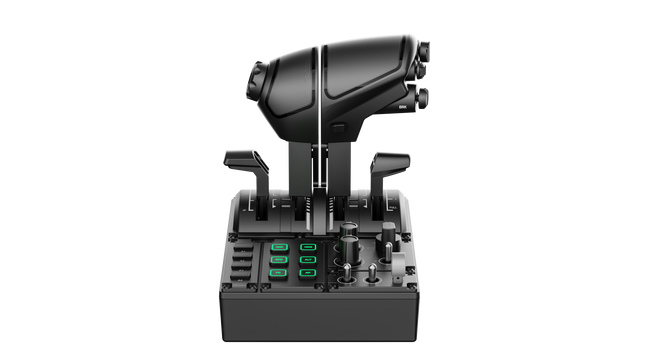
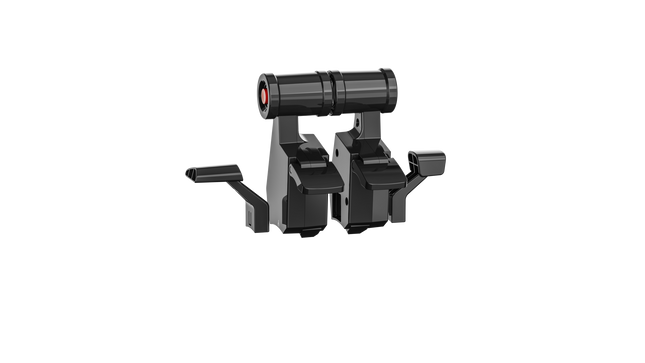
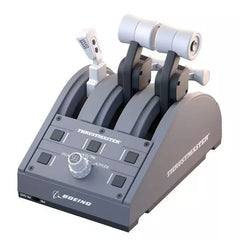
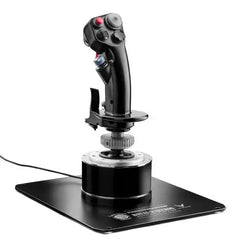
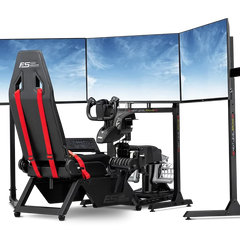
Le MOZA MTQ Throttle Panel est un système de commande de vol modulaire conçu pour les pilotes qui recherchent une interaction tactile et une précision mécanique dans chaque mouvement de manette des gaz. Avec son système de leviers de gaz modulaires et sa disposition de commandes polyvalente, il transforme n’importe quelle configuration de simulateur de vol en une véritable expérience de niveau cockpit. Les crans satisfaisants, la construction en métal et l’éclairage RGB personnalisable donnent à chaque levier une sensation précise et fonctionnelle — que vous mettiez en route les moteurs d’un Airbus ou que vous armiez les postcombustions d’un avion de chasse. C’est la satisfaction mécanique alliée à la polyvalence fonctionnelle.
Ce qui distingue le MOZA MTQ Throttle Panel
Expérience authentique de leviers modulaires — Contrairement aux manettes fixes, le MTQ permet aux pilotes d’alterner entre les styles de leviers Airbus, Boeing et avions de chasse grâce à un système de montage sur rails. Chaque levier offre ses propres crans mécaniques, permettant aux utilisateurs de ressentir les points de transition tels que l’activation de la poussée inverse ou le verrouillage de la postcombustion. La précision tactile de ces crans est largement saluée par les sim-pilotes pour la clarté physique qu’elle apporte au contrôle des gaz.
Disposition ergonomique et design réfléchi — La surface de commande comprend 10 boutons, 3 boutons rotatifs et 3 interrupteurs à bascule, tous placés dans des zones naturelles pour les mains. Les passionnés apprécient sa conception épurée qui offre un accès intuitif aux principales fonctions de vol sans distraire. L’ajout d’un levier de train d’atterrissage dédié ajoute au réalisme et rend les transitions entre les phases de vol plus fluides et instinctives.
Éclairage RGB personnalisable et intégration logicielle — Le logiciel MOZA Cockpit offre un contrôle total de la luminosité RGB, de la logique des couleurs et des effets lumineux basés sur la télémétrie. Les retours des utilisateurs indiquent que l’éclairage, en plus d’être superbe dans un cockpit faiblement éclairé, peut être programmé pour refléter des états de vol comme la position du train d’atterrissage ou les zones de crans de gaz, transformant ainsi la lumière en retour fonctionnel plutôt qu’en simple décoration.
Retour mécanique sur plusieurs axes — Le MTQ comprend quatre axes, chacun offrant des crans tactiles uniques pour des fonctions telles que les volets et les aérofreins. La sensation de chaque axe a été ajustée pour offrir différents niveaux de résistance, et le cran virtuel sur le levier d’aérofrein ajoute un clic satisfaisant lors du déploiement. Les pilotes trouvent que la cohérence entre les axes rend ce panneau parfaitement adapté aussi bien à l’aviation commerciale que militaire ou générale.
Avantages et Inconvénients
Avantages
Inconvénients
Modules de leviers interchangeables offrant des configurations de vol polyvalentes.
Pas de connexion USB autonome ; nécessite une liaison avec une base MOZA.
Crans tactiles excellents sur les axes des gaz et des volets.
Compatibilité limitée avec les écosystèmes tiers.
Disposition intuitive avec personnalisation de l’éclairage RGB.
Conception mécanique durable avec amortissement fluide des mouvements.
Caractéristiques techniques
Spécification
Valeur
Système de leviers
Leviers de gaz modulaires avec mécanisme de glissière sur rail
Styles de manettes inclus
TQF (Avion de chasse), TQA (Airbus), TQB (Boeing)
Axes
Quatre axes indépendants avec crans
Boutons et commandes
10 boutons, 3 boutons rotatifs, 3 interrupteurs à bascule, levier de train d’atterrissage
Éclairage RGB
Six boutons RGB, 16,7 millions d’options de couleurs
Connectivité
Connexion RJ11 aux bases de vol MOZA
Logiciel
MOZA Cockpit avec effets lumineux basés sur la télémétrie
Compatibilité du MOZA MTQ Throttle Panel
Matériel compatible
Détails
Bases de vol MOZA (ex. : AB6)
Connexion RJ11 directe pour une intégration plug-and-play
Composants de l’écosystème MOZA
Fonctionnement fluide via le logiciel MOZA Cockpit
Systèmes tiers
Compatibilité limitée ; peut nécessiter des adaptateurs ou un mappage logiciel
Le MOZA MTQ Throttle Panel se connecte directement aux bases de vol MOZA via RJ11, réduisant l’encombrement des câbles et garantissant une communication à faible latence. Son design de leviers modulaires le rend compatible avec les variantes d’accélérateurs TQF, TQA et TQB, chacune conçue pour un style d’avion spécifique. Bien qu’il soit principalement conçu pour l’écosystème MOZA, les utilisateurs ont noté une compatibilité limitée avec les systèmes tiers, nécessitant souvent des adaptateurs ou des mappages personnalisés. Le MTQ s’intègre parfaitement aux cockpits en aluminium et aux configurations modulaires grâce à sa base stable et facile à monter.
Sur le plan logiciel, le MTQ fonctionne en parfaite synergie avec le logiciel MOZA Cockpit et s’intègre directement aux simulateurs de vol populaires tels que Microsoft Flight Simulator 2020/2024, X-Plane 11/12 et DCS World. Il est entièrement compatible avec les PC Windows, mais n’est pas pris en charge sur les consoles telles que Xbox ou PlayStation. Avec son approche modulaire et sa large compatibilité dans les simulateurs, le MTQ est conçu pour tout pilote sur PC exigeant à la fois flexibilité et raffinement mécanique.
Rupture de stock,
Précommandes disponibles. Expédition sous 2 à 2,5 semaines.
Honeycomb Sierra TPM Module apporte le charme tactile de l’aviation générale classique directement sur votre bureau, avec une manette de gaz vernier en métal verrouillable offrant une sensation mécanique satisfaisante en main et une roue de trim intégrée haute résolution permettant d’ajuster l’assiette avec précision du bout des doigts. Conçu pour les avions monomoteurs à hélice comme le Cessna 172, il associe une construction entièrement métallique, des commandes intégrées de volets et de frein de parking ainsi que des indicateurs LED de train d’atterrissage dans un module compact qui s’intègre parfaitement dans un cockpit domestique exigeant.
Qu’est-ce qui distingue le Honeycomb Sierra TPM Module ?
Sensation Vernier authentique d’aviation générale La manette de gaz vernier en métal verrouillable avec réglages fins d’hélice et de mixture ne se contente pas d’être fidèle visuellement — elle procure cette sensation pousser-tirer et tourner-pour-ajuster que les pilotes associent aux cockpits GA classiques. De nombreux utilisateurs soulignent que le réglage incrémentiel permet des variations de puissance plus fluides en montée et en approche, notamment sur les avions à moteur à pistons, comparé aux manettes à glissière souvent trop brusques pour une gestion moteur précise.
Flux de travail cockpit intégré Au lieu de disperser les commandes sur différents panneaux, le Sierra TPM regroupe trim, volets, frein de parking et train d’atterrissage dans une disposition cohérente. La roue de trim basse hauteur et haute résolution est particulièrement appréciée pour sa rotation fluide et son entrée précise, rendant les ajustements de tangage en croisière ou en approche finale naturels. Elle réduit la dépendance aux raccourcis clavier et maintient les mains là où elles doivent être — sur du matériel dédié.
Construction robuste entièrement métallique Construit avec des composants de qualité Honeycomb et un châssis entièrement métallique durable, ce module offre un poids et une rigidité notables. Les passionnés mentionnent fréquemment sa stabilité sur le bureau, avec une flexion minimale lors de mouvements de gaz énergiques. Comparé aux alternatives plus légères en plastique, le Sierra TPM conserve sa stabilité structurelle dans le temps, un atout particulièrement apprécié dans les installations de cockpit permanentes ou semi-permanentes.
Intégration transparente dans l’écosystème Honeycomb Conçu pour s’associer parfaitement aux yokes Honeycomb et aux systèmes de fixation, la solution de double montage incluse facilite l’alignement et le positionnement. Les utilisateurs disposant déjà des unités Alpha ou Bravo soulignent souvent l’harmonie du design et de l’espacement des commandes, créant un poste de pilotage visuellement cohérent et ergonomiquement homogène, sans modules disparates.
Avantages et Inconvénients
Avantages
Inconvénients
La manette de gaz vernier en métal offre un contrôle incrémentiel précis.
Principalement conçu pour les avions GA monomoteurs.
La roue de trim intégrée assure des ajustements de tangage fluides.
Nécessite de l’espace sur le bureau pour la solution de montage complète.
Le châssis entièrement métallique est stable et durable.
Les indicateurs LED de train offrent un retour visuel clair.
Spécifications
Spécification
Valeur
Product Name
Honeycomb Sierra TPM Module
EAN
4039621003998
Construction
Construction entièrement métallique avec composants de qualité Honeycomb
Throttle Type
Manette de gaz vernier en métal verrouillable avec commandes d’hélice et de mixture
Integrated Controls
Roue de trim, frein de parking, levier de volets, levier de train d’atterrissage avec indicateurs LED
Layout
Style aviation générale pour avions monomoteurs à hélice
Mounting
Solution de double montage incluse
Connection
Câble USB-C vers USB-A
Compatibility
PC et Mac
Drivers
MSFS 2020 Driver, MSFS 2024 Driver
Included in the Box
Sierra TPM Module, Dual Mounting Solution, USB-C to USB-A Cable, Quick Start Guide (EFIGS)
Compatibilité du Honeycomb Sierra TPM Module
Platform
Compatibility
Operating Systems
PC et Mac
Connection Type
USB-C vers USB-A (connexion USB directe)
Primary Ecosystem Pairing
Matériel Honeycomb Alpha et Bravo
Le Sierra TPM Module se connecte via USB direct, ce qui facilite son intégration dans la plupart des configurations de cockpit de bureau. Il s’associe particulièrement bien aux yokes Honeycomb Alpha et aux quadrants de manette des gaz Bravo, partageant la même philosophie de conception et le même écosystème de montage. Grâce à sa solution de double montage, il peut être installé sur le bureau aux côtés d’autres unités Honeycomb pour une disposition harmonisée. Il n’est pas destiné aux configurations console et ne fonctionne pas directement avec du matériel autonome sans PC ou Mac compatible.
Côté logiciel, il prend en charge Microsoft Flight Simulator 2020 et Microsoft Flight Simulator 2024 via des pilotes dédiés, et fonctionne également avec des simulateurs comme X-Plane et Prepar3D sur PC. Il est non compatible avec les consoles Xbox, car il repose sur des pilotes USB standards PC/Mac plutôt que sur un firmware certifié console. Pour les sim pilotes sur PC axés sur l’aviation générale, il s’intègre parfaitement aux plateformes de simulation modernes basées sur PC.
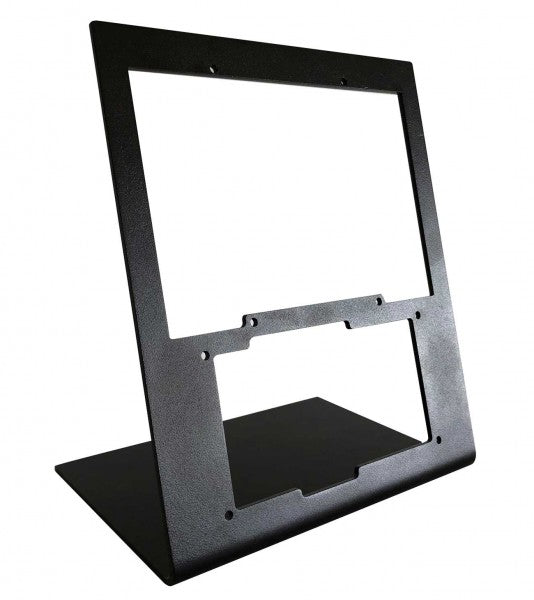
The RealSimGear - Desktop Stand for G1000 Suite offers an exceptional solution for flight simulation enthusiasts who demand stability and organization in their setup. Constructed from durable 3mm painted steel, this stand provides a stable, elevated position for the G1000 Suite's PFD, MFD, and audio panel. Its matte black finish complements any setup, while rubber non-slip feet and precise mounting compatibility ensure effortless integration. This stand is a must-have for those seeking a structured and ergonomic flight sim experience.
What sets the RealSimGear - Desktop Stand for G1000 Suite apart?
Purpose-Built for G1000 Suite This stand is specifically engineered to accommodate the G1000 PFD, MFD, and audio panel. Its tailored dimensions and secure mounting options make it a seamless addition to any flight sim rig, ensuring all three components are perfectly aligned for practical use.
Robust and Durable Construction Crafted from 3mm painted steel, the stand is built to withstand the demands of extended simulation sessions. Its sturdy design minimizes vibration and enhances the overall durability of your setup, providing peace of mind during intense flying scenarios.
Extensive Mounting Compatibility Featuring mounting holes compatible with Saitek/Logitech yokes, Honeycomb Alpha, and Bravo controls, this stand is designed to integrate effortlessly with popular hardware. Whether you're a seasoned pilot or a newcomer, the flexible compatibility simplifies hardware configuration.
Ergonomic Setup Support By elevating the G1000 Suite to an ideal height, this stand minimizes strain and enhances usability. It mirrors cockpit layouts found in actual aircraft, providing an organized and functional configuration for extended flight training or recreational use.
Pros and Cons
Pros
Cons
Perfectly accommodates PFD, MFD, and audio panel.
Higher cost compared to simpler stands.
Durable 3mm painted steel construction resists wear.
Designed exclusively for the G1000 Suite.
Compatible with Saitek/Logitech and Honeycomb systems.
Specifications
Specification
Value
Material
3mm painted steel
Finish
Matte black
Features
Non-slip rubber feet, mounting screws
Capacity
Holds G1000 PFD, MFD, and audio panel
Mounting Compatibility
Saitek/Logitech yokes, Honeycomb Alpha/Bravo
RealSimGear - Desktop Stand for G1000 Suite Compatibility
The RealSimGear - Desktop Stand for G1000 Suite is designed to perfectly accommodate the G1000 Suite's PFD, MFD, and audio panel. It features mounting holes that align with the Saitek/Logitech yoke mounting systems, as well as Honeycomb Alpha and Bravo throttle controls. This compatibility ensures seamless integration into existing setups, minimizing the need for additional hardware or customization. However, it is specifically tailored for the G1000 Suite, which limits its versatility for other configurations.
Designed for PC-based simulation setups, this stand works beautifully with platforms like X-Plane and Microsoft Flight Simulator. It does not directly support console gaming platforms, aligning with its primary focus on professional and enthusiast-grade PC configurations. This ensures an optimal experience when paired with popular flight simulation software.
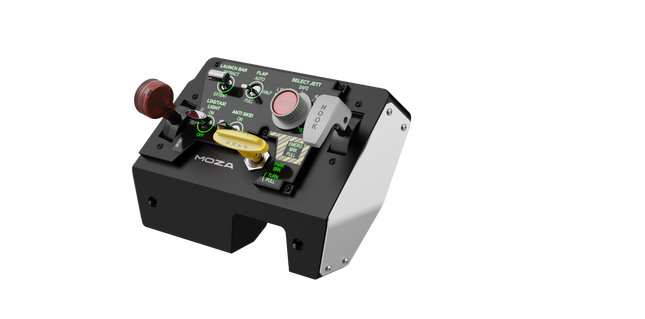
Moza MTLP Take-off Landing Panel apporte l'essence des opérations des chasseurs à réaction dans le cockpit domestique avec un système de contrôle robuste et tactile conçu pour les pilotes de simulation sérieux. Inspiré du panneau d'atterrissage du F/A-18, il offre une disposition intuitive des interrupteurs permettant des entrées rapides et instinctives sans dépendre de la confirmation visuelle. Le mécanisme authentique de frein de stationnement procure un rebond mécanique solide, digne d'un véritable chasseur. Avec 25 signaux d'interrupteurs programmables et des capteurs à effet Hall pour une précision optimale, ce panneau comble l'écart entre l'interaction virtuelle et physique du cockpit.
Qu'est-ce qui distingue le Moza MTLP Take-off Landing Panel ?
Conçu pour un contrôle intuitif Modélisé d'après le panneau d'atterrissage du F/A-18, ce système met l'accent sur une exploitation instinctive. La disposition des interrupteurs permet aux pilotes de gérer les fonctions critiques de l'avion au toucher, réduisant ainsi le besoin de quitter l'écran des yeux. Ce renforcement tactile est essentiel pour les environnements dynamiques comme les vols de combat et les atterrissages sur porte-avions.
Précision des capteurs à effet Hall Contrairement aux interrupteurs mécaniques standards, le MTLP intègre des capteurs à effet Hall dans des entrées clés comme les leviers du train d'atterrissage et du crochet d'appontage. Ces capteurs garantissent une fiabilité à long terme et une précision constante des entrées, éliminant ainsi toute usure ou dégradation au fil du temps.
Conception robuste pour une utilisation intensive La construction en alliage d'aluminium du levier de frein, du crochet d'appontage et du train d'atterrissage assure une durabilité maximale. Ces composants résistent à des sollicitations répétées et intenses, en faisant un investissement à long terme pour les passionnés de simulation exigeant une robustesse mécanique.
Intégration transparente avec l'écosystème Moza Le MTLP est conçu pour fonctionner en harmonie avec le Moza MTP Throttle Panel, formant un système de contrôle cohérent pour les chasseurs. Via le logiciel Moza Cockpit, les utilisateurs peuvent synchroniser les effets lumineux basés sur la télémétrie et personnaliser leurs configurations de boutons selon leur style de vol.
Avantages et inconvénients
Avantages
Inconvénients
Inspiré du panneau d'atterrissage du F/A-18
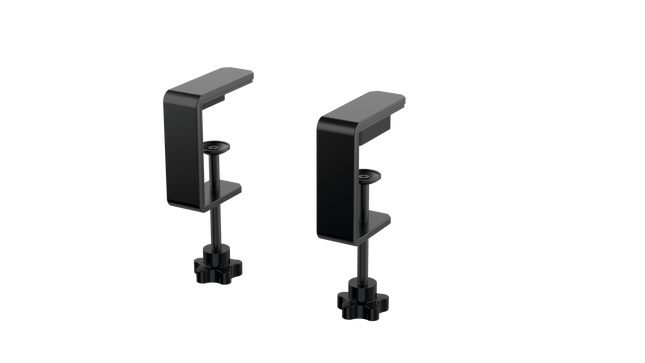
Pince de fixation de bureau vendue séparément
Capteurs à effet Hall pour une précision et une longévité accrues
Compatibilité limitée aux PC
25 signaux d'interrupteurs programmables pour un contrôle étendu
Compatible avec l'écosystème Moza pour une configuration complète de chasseur
Spécifications
Spécification
Valeur
Dimensions
196.5 × 134.7 × 149 mm
Matériau du boîtier
Matériaux composites
Matériau du levier de frein
Alliage d'aluminium
Poids
680g
Signaux d'interrupteurs
25
Éclairage télémétrique
Oui (aucun plug-in supplémentaire requis)
Plateforme prise en charge
PC
Pince de fixation de bureau
Accessoire optionnel
Accessoires inclus
Câble de données, manuel d'utilisation
Compatibilité du Moza MTLP Take-off Landing Panel
Compatible avec
Non compatible avec
Moza MTP Throttle Panel
Panneaux de gaz tiers
Logiciel Moza Cockpit pour personnalisation
Plates-formes consoles
Simulateurs de vol sur PC
MacOS
Conçu pour les simulateurs de vol sur PC, le MTLP s'intègre parfaitement avec le Moza MTP Throttle Panel pour créer un système de contrôle de style chasseur à réaction. Le panneau est configuré via le logiciel Moza Cockpit, permettant une personnalisation avancée, y compris des effets lumineux synchronisés avec la télémétrie. Toutefois, il ne prend pas en charge les panneaux de gaz tiers, ce qui signifie que ses performances optimales sont obtenues au sein de l'écosystème Moza.
Compatibilité exclusivement PC, garantissant la prise en charge des principaux simulateurs de vol, mais MacOS et les consoles ne sont pas pris en charge. Les passionnés de simulation utilisant Microsoft Flight Simulator 2020, Microsoft Flight Simulator 2024 et X-Plane 12 trouveront le panneau reconnu nativement, offrant une fonctionnalité plug-and-play directe via USB. Cependant, ceux recherchant une compatibilité avec Xbox ou PlayStation devront envisager d'autres solutions matérielles.
Wingflex A320 EFIS Cube puts Airbus navigation and display management exactly where your hand expects it, combining full-function EFIS and glareshield controls with high-contrast dual-colour displays in a compact 80% scale design. From adjusting barometric pressure to selecting navigation modes, every rotary movement and button press feels deliberate and satisfying. The synchronized backlighting, integrated stand and simple USB connectivity make it an excellent addition to a desktop Airbus cockpit without demanding the space of a full-size flight deck.
What Sets the Wingflex A320 EFIS Cube apart?
More Than Just an EFIS Panel Unlike many desktop EFIS units that focus solely on navigation display controls, the EFIS Cube also integrates important glareshield functions such as Master Warning, Master Caution and CHRONO controls. Having these frequently used functions within easy reach creates a cleaner cockpit workflow and reduces the need to return to the virtual cockpit during busy phases of flight.
Compact Size Without Sacrificing Functionality The 80% scale design makes the panel much easier to accommodate on a typical desktop while preserving the familiar Airbus control layout. Buttons, rotary selectors and push-pull controls remain comfortably spaced, allowing quick adjustments without making the panel feel cramped. It strikes an effective balance between space efficiency and comfortable day-to-day operation.
Consistent Lighting Across Your Cockpit The synchronized brightness system keeps the displays and backlighting aligned with supported simulator lighting, creating a cohesive appearance throughout the cockpit. Combined with Airbus-style fonts and dual-colour displays, important flight information remains crisp and easy to read whether flying during bright daylight or on a dark nighttime arrival.
Built for Modular Cockpit Expansion The EFIS Cube performs perfectly as a standalone controller but is equally suited to growing cockpit projects. It integrates neatly alongside the Wingflex FCU Cube and RMP Combo Cube, allowing sim pilots to expand their Airbus setup gradually while maintaining a consistent appearance, matching lighting and a tidy desktop footprint.
Pros and Cons
Pros
Cons
Integrated glareshield controls reduce additional hardware.
Reduced scale differs from full-size Airbus dimensions.
Dual-colour displays remain easy to read.
Designed specifically for Airbus aircraft.
Synchronized lighting creates consistent cockpit appearance.
Plug-and-play USB connection simplifies installation.
Compact footprint fits comfortably beneath most monitors.
Specifications
Specification
Value
Product
Wingflex A320 EFIS Cube
Scale
80% scale
Primary Function
Airbus Electronic Flight Instrument System control panel
Integrated Functions
EFIS controls and glareshield controls
Display Type
High-contrast dual-colour LCD displays
Display Fonts
Airbus-style fonts
Controls
Buttons, rotary knobs and switches
Lighting
Fully synchronized adjustable backlighting
Connection
USB
Installation
Plug-and-play
Stand
Integrated low-profile desktop stand
Primary Use
Airbus flight simulation
Wingflex A320 EFIS Cube Compatibility
Simulator
Compatible Aircraft
X-Plane
ToLiss A319, A320, A330, A340; Laminar A330
Microsoft Flight Simulator
Fenix A3xx, FlyByWire A320 & A380, iniBuilds A320, A321, A330, A340, A350, Aerosoft A340, Headwind A330
Prepar3D
FSLabs A32x
The Wingflex A320 EFIS Cube connects through USB and can be used either as a standalone Airbus EFIS controller or alongside the Wingflex FCU Cube and Wingflex RMP Combo Cube. Its synchronized brightness allows all compatible Cube modules to maintain a consistent appearance, while the integrated stand provides a comfortable operating angle for desktop cockpits.
The published compatibility list covers a wide selection of Airbus aircraft across the major PC flight simulators. It supports Fenix A3xx, ToLiss Airbus aircraft, FlyByWire A320 and A380, multiple iniBuilds Airbus models, Laminar A330, Aerosoft A340, Headwind A330 and FSLabs A32x. The panel is designed specifically for Airbus aircraft and is not intended for Boeing flight decks or other aircraft with different EFIS layouts.
The EFIS Cube is compatible with Microsoft Flight Simulator 2020 and 2024, X-Plane 11 and 12 and Prepar3D on Windows PCs. It uses a USB connection with plug-and-play operation and is not compatible with Xbox or PlayStation consoles, as dedicated cockpit hardware requires PC-based simulator support.
Wingflex A320 FCU Cube brings Airbus autopilot management into a compact desktop format with full autopilot control functionality and a durable all-aluminum construction. Every heading adjustment, altitude selection and autopilot engagement is handled through tactile knobs and switches that encourage proper cockpit workflows instead of constant mouse clicks. The synchronized dimmer, adjustable backlighting and plug-and-play USB connection make it equally suited to quick evening flights or long IFR sessions, all without demanding the space of a full-size glareshield.
What Sets the Wingflex A320 FCU Cube apart?
Compact Airbus Autopilot Without Sacrificing Core Controls At 80% scale, the FCU Cube preserves the control layout Airbus pilots expect while significantly reducing the space required on a desktop. Independent reviews consistently note that this balance makes it much easier to fit beneath standard monitors than full-size panels, yet the spacing remains comfortable enough for deliberate heading, speed and altitude adjustments during demanding approaches.
Switches That Reward Every Input The AP1, AP2 and A/THR buttons use dedicated axial switches with a 2.5 mm travel, while the remaining controls employ Alps switches with a 2.0 mm stroke. Pilots frequently comment that well-designed tactile controls encourage proper use of the autopilot throughout a flight instead of relying on keyboard shortcuts once the novelty wears off.
Solid Metal Construction Built for Frequent Flying The aluminum housing and matching aluminum control knobs give the FCU Cube a reassuring weight that keeps it planted during repeated adjustments. Reviewers often highlight the rigid construction because it avoids the flex sometimes found in lighter desktop panels, making heading changes and rotary inputs feel consistent throughout longer flying sessions.
Designed to Grow Into a Complete Airbus Cockpit The FCU Cube works well as a standalone autopilot controller, but it is equally at home alongside the Wingflex EFIS Cube and RMP Combo Cube. Shared brightness synchronization creates a unified appearance across the glareshield, allowing cockpit builders to expand their setup gradually instead of replacing hardware every time a new module is added.
Pros and Cons
Pros
Cons
Aluminum housing provides excellent structural rigidity.
Reduced scale differs from full-size Airbus dimensions.
Autopilot switches deliver satisfying tactile feedback.
Designed specifically for Airbus aircraft families.
Plug-and-play USB installation minimizes setup time.
Synchronized lighting complements other Cube modules.
Broad Airbus simulator compatibility across major platforms.
Specifications
Specification
Value
Product
Wingflex A320 FCU Cube
Scale
80% scale
Primary Function
Airbus Flight Control Unit (FCU)
Construction
Aviation-grade aluminum body and knobs
Connection
USB
Installation
Plug-and-play
Autopilot Switches
AP1, AP2 and A/THR axial switches
Autopilot Switch Travel
2.5 mm
Other Button Switches
Japan Alps switches with 2.0 mm travel
Lighting
Adjustable backlighting with synchronized dimmer knob
Primary Use
Airbus flight simulation autopilot control
Wingflex A320 FCU Cube Compatibility
Simulator
Compatible Aircraft
X-Plane
ToLiss A319, A320, A330, A340; Laminar A330
Microsoft Flight Simulator
Fenix A3xx, FlyByWire A320 & A380, iniBuilds A320, A321, A330, A340, A350, Aerosoft A340, Headwind A330
Prepar3D
FSLabs A32x
The FCU Cube connects through USB and operates as either a standalone Airbus autopilot controller or as part of the broader Wingflex Cube ecosystem. It supports brightness synchronization with the Wingflex EFIS Cube and RMP Combo Cube, creating a consistent glareshield appearance. Its compact dimensions also make it easy to integrate into desktop cockpits or modular simulator builds without requiring a full-width Airbus panel.
The published compatibility list covers a broad range of Airbus simulations across the leading platforms. It supports Fenix A3xx, ToLiss Airbus aircraft, FlyByWire A320 and A380, multiple iniBuilds Airbus models, Laminar A330, Aerosoft A340, Headwind A330 and FSLabs A32x. Unlike the RMP Combo Cube, the FCU Cube also supports the FlyByWire A380 and iniBuilds A350, making it one of the most widely compatible Airbus autopilot panels in the Wingflex lineup.
The FCU Cube is designed for Microsoft Flight Simulator, X-Plane and Prepar3D on Windows PCs. It communicates through USB and works with supported Airbus aircraft using Wingflex software integration. It is not compatible with Xbox or PlayStation consoles, as dedicated USB cockpit peripherals of this type require PC-based simulator support.
Wingflex A320 RMP Combo Cube squeezes four useful Airbus control sections into one compact unit, combining RMP, ATC, TCAS and warning-panel functions with high-contrast dual-colour LCD screens. Its physical knobs and illuminated controls give frequency changes and transponder entries a satisfying mechanical rhythm, without consuming the entire desk. The 80% scale and 13-degree tilt keep everything comfortably visible, while USB connectivity makes installation refreshingly direct. Apparently, proper radio management does not require a full cockpit shell and several kilometres of wiring.
What Sets the Wingflex A320 RMP Combo Cube apart?
Four Control Sections Earn Their Desk Space Rather than reproducing only the radio management panel, the unit combines RMP, ATC, TCAS and glareshield warning functions behind one compact face. This gives solo pilots considerably more usable control than a single-purpose radio panel. Hands-on coverage particularly values the integrated radio section because it places communication and surveillance controls beside the Airbus autopilot hardware, where they can be reached without returning to the virtual cockpit.
Compact Dimensions Without Tiny Controls The 80% scale reduces the panel’s footprint while retaining physical rotary controls and readable displays. Review coverage of the complete Cube system found the format notably easier to position beneath a conventional monitor than full-width Airbus hardware. The compromise is sensible for desktop pilots: it saves space without shrinking everything into fiddly miniature controls that require the fingertips of a concert pianist and the patience of an air-traffic controller.
Lighting That Behaves as One Cockpit System The RMP Combo Cube can synchronize its brightness with the Wingflex FCU Cube and EFIS Cube, producing consistent illumination across the complete glareshield arrangement. Independent reporting also notes that each module can still operate separately, so the RMP does not require the complete Cube set. That flexibility is useful for gradual cockpit builds, while synchronized backlighting prevents one panel glowing like a supermarket sign beside two carefully dimmed instruments.
Straightforward Setup, With Aircraft-Specific Boundaries User feedback describes the initial setup as notably simple, and the panel operates through a direct USB connection with Wingflex integration software. However, reports also show that behaviour may vary between aircraft and simulator versions, particularly when a specific function has not yet been implemented. It is therefore far less troublesome than custom wiring, but compatibility should still be checked by aircraft rather than assumed from the presence of an Airbus badge.
Pros and Cons
Pros
Cons
Four integrated sections reduce separate hardware requirements.
Reduced scale differs from full-size cockpit dimensions.
Dual-colour displays provide clear frequency information.
Aircraft support varies between simulator platforms.
Synchronized lighting complements other Wingflex Cube modules.
USB connection keeps desktop installation straightforward.
Angled enclosure improves visibility from seated positions.
Specifications
Specification
Value
Product
Wingflex A320 RMP Combo Cube
Scale
80% scale
Integrated Functions
RMP, ATC, TCAS and glareshield warning panel
Display Type
Dual-colour LCD screens
Display Background
Black
Viewing Angle
13 degrees
Connection
USB
Installation
Plug-and-play
Lighting
Synchronized brightness adjustment
Compatible Lighting Modules
Wingflex A320 FCU Cube and A320 EFIS Cube
Primary Use
Airbus flight simulation cockpit control
Wingflex A320 RMP Combo Cube Compatibility
Simulator
Compatible Aircraft
Status
X-Plane
ToLiss A319, A320, A330 and A340; Laminar A330
Supported
Microsoft Flight Simulator
Fenix A3xx; FlyByWire A320; iniBuilds A320, A321, A330 and A340; Aerosoft A340; Headwind A330
Supported
Prepar3D
FSLabs A32x
Supported
Microsoft Flight Simulator
FlyByWire A380
Not supported
Microsoft Flight Simulator
iniBuilds A350
Not supported
The panel connects through a single USB connection and can be used independently as a desktop controller. It also integrates with the Wingflex A320 FCU Cube and Wingflex A320 EFIS Cube, including synchronized brightness across the modules. Within the optional Cube console, the panels can share an internal USB hub and run to the computer through one external cable. No universal mounting compatibility with third-party cockpit frames is specified.
Aircraft support is integration-specific rather than universal. The panel supports ToLiss, Fenix, FSLabs, FlyByWire A320 and several iniBuilds aircraft, alongside the listed Laminar, Aerosoft and Headwind models. The FlyByWire A380 is not supported, and the iniBuilds A350 is not supported. Reports of differing behaviour between Microsoft Flight Simulator and X-Plane also show why pilots should use the published aircraft list instead of assuming every Airbus add-on will communicate correctly.
For gaming platforms, the RMP Combo Cube is intended for Windows PC flight simulation and works with supported aircraft in Microsoft Flight Simulator, X-Plane and Prepar3D. It relies on PC-side USB communication and Wingflex software for integration and firmware management. It is not listed as compatible with Xbox or PlayStation, so console editions of Microsoft Flight Simulator should not be treated as supported platforms.
Wingflex A320 Combo Cube places the Airbus glareshield essentials into one tidy desktop system, combining EFIS, FCU and multifunction RMP controls with high-contrast dual-colour displays. The knobs click and turn with enough purpose to make heading changes, radio tuning and barometric adjustments feel far better than poking at a virtual cockpit. USB connectivity keeps installation straightforward, while the 13-degree viewing angle brings the panels naturally into sight. It is compact Airbus hardware for pilots whose desks already resemble a mildly concerned electronics workshop.
What Sets the Wingflex A320 Combo Cube apart?
Three Core Panels Without a Full-Size Glareshield The bundle combines an EFIS, FCU and RMP-based multifunction panel in an 80% scale layout, saving roughly eleven centimetres compared with a full-size arrangement. Reviewers have praised that reduction because it preserves practical control spacing while fitting more comfortably beneath ordinary monitors. The result feels substantial enough for deliberate operation without demanding the sort of desk usually reserved for air-traffic control or an exceptionally ambitious accountant.
A Smarter Use of the Right-Hand Position Instead of supplying a second EFIS that a solo pilot may rarely touch, Wingflex fills the right side with a four-in-one panel covering radio management, transponder, TCAS and warning functions. Review feedback identifies this as one of the bundle’s most practical decisions, since it places genuinely useful controls within reach. It sacrifices strict two-seat symmetry, but gains considerably more day-to-day function for single-pilot desktop flying.
Clear Displays and Cohesive Night Lighting Dual-colour screens provide sharp contrast against their dark backgrounds, while synchronized brightness allows the EFIS, FCU and RMP sections to behave like one connected panel. Independent testing found the displays notably crisp and the backlighting pleasant in darker rooms. That matters during evening approaches, when deciphering fuzzy digits is an unnecessary challenge and the weather already has enough creative ways to ruin a carefully prepared arrival.
Simple Assembly With a Stable Optional Console When paired with the Cube Stand, the three modules connect through internal USB-C cables and a built-in hub, leaving a single cable running to the PC. Reviewers found assembly straightforward and noted that the broad base remained firmly planted while pressing buttons and turning encoders. The stand also gives the separate modules a cleaner, unified appearance, although it is an optional bundle choice rather than standard equipment with every configuration.
Pros and Cons
Pros
Cons
Compact layout preserves valuable desktop space.
Reduced scale differs from full-size cockpit dimensions.
Three modules cover major glareshield functions.
Optional console increases the complete setup footprint.
Dual-colour displays remain clear in low light.
RMP module combines four useful control sections.
USB installation requires minimal external interface hardware.
Specifications
Specification
Value
Product
Wingflex A320 Combo Cube
Included Modules
A320 EFIS Cube, A320 FCU Cube and A320 RMP Combo Cube
Scale
80% scale
Interface
USB
Installation
Plug-and-play
Display Type
Dual-colour LCD screens
Viewing Angle
13 degrees
FCU Construction
Aluminium body and knobs
RMP Functions
RMP, ATC, TCAS and side-panel controls
Lighting
Synchronized brightness across compatible Cube modules
Product Dimensions
52.0 × 18.5 × 16.5 cm
Package Dimensions
64.0 × 24.0 × 20.5 cm
Bundle Options
Three-module bundle, or bundle with Cube Stand
Glareshield Housing
Not included with the standard three-module bundle
Wingflex A320 Combo Cube Compatibility
Simulator
Aircraft With Full Bundle Support
Microsoft Flight Simulator
Fenix A3xx, FSLabs A32x, FlyByWire A320, iniBuilds A320, A321, A330 and A340, Aerosoft A340, Headwind A330
X-Plane
ToLiss A319, A320, A330 and A340; Laminar A330
Prepar3D
FSLabs A32x and other listed aircraft where supported through Wingflex Bridge
Aircraft
Compatibility Limitation
FlyByWire A380
EFIS and FCU supported; RMP Combo Cube not supported
iniBuilds A350
EFIS and FCU supported; RMP Combo Cube not supported
The three modules connect through USB and can operate as separate desktop units or within the optional Cube Stand. That stand contains an internal USB hub, allowing its three module connections to exit through one PC cable. The bundle pairs naturally with Airbus throttles, sidesticks, MCDUs and overhead panels, but it does not include a full glareshield enclosure and no standard mounting compatibility with third-party cockpit shells is specified.
Full compatibility depends on all three modules supporting the selected aircraft, because the EFIS and FCU lists are slightly broader than the RMP list. The complete bundle supports Fenix, ToLiss, FlyByWire A320, FSLabs, several iniBuilds aircraft, Aerosoft A340 and Headwind A330. The FlyByWire A380 and iniBuilds A350 are not fully supported because their RMP integration is currently excluded, even though the EFIS and FCU modules list them individually.
For software platforms, the Combo Cube is built for Microsoft Flight Simulator 2020 and 2024, X-Plane 11 and 12 and Prepar3D on Windows PC. It uses Wingflex Bridge for aircraft communication and firmware management. It is not listed as compatible with Xbox or PlayStation, because the required PC-side integration software and dedicated USB panel support are not available on those console platforms.