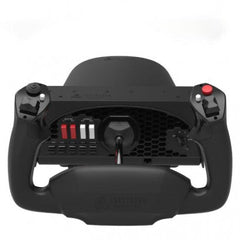
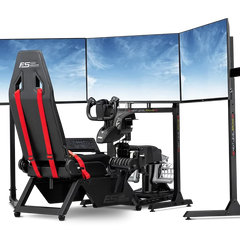
La MOZA AY90 Force Feedback Yoke Base è progettata per i piloti che desiderano sentire ogni salita, ogni flare e ogni raffica direttamente tra le mani, invece di lasciare che queste sensazioni vengano assorbite da una semplice molla. Con 4,2 Nm di coppia sull'asse di rollio e 90 N di Force Feedback push-pull, insieme a un asse di rollio da 180° con una corsa di ±90°, offre forze di controllo convincenti pur mantenendo dimensioni abbastanza compatte per installazioni su scrivania o in cockpit. Aggiungendo comandi configurabili, una vivace illuminazione RGB e una robusta scocca in materiale composito, si ottiene una base yoke pronta per tutto, dai circuiti di traffico ai lunghi voli di navigazione.
Cosa distingue la MOZA AY90 Force Feedback Yoke Base?
Force Feedback che cambia il modo di volare Molti sistemi yoke in questa fascia di prezzo utilizzano ancora molle o cinghie, mentre la AY90 offre un Force Feedback motorizzato che consente al pilota di percepire le variazioni di carico dell'aeromobile durante tutto il volo. Dalle vibrazioni della pista e dalle regolazioni del trim fino alla resistenza aerodinamica durante le virate strette, i comandi comunicano costantemente ciò che sta facendo l'aereo, rendendo il volo manuale molto più coinvolgente e informativo.
Dimensioni compatte senza una sensazione di compromesso Nonostante la notevole forza erogata, la AY90 mantiene un ingombro compatto che si adatta altrettanto bene a una scrivania o a un cockpit dedicato. Molti utenti apprezzano il fatto che eviti le dimensioni ingombranti spesso associate all'hardware con Force Feedback, semplificando l'installazione senza rinunciare a un'ampia corsa dei comandi e a una rassicurante sensazione di solidità durante le manovre più impegnative.
Comandi da cockpit integrati direttamente nella base Invece di considerare lo yoke esclusivamente come un asse di controllo, MOZA integra direttamente nella base interruttori a bilanciere, cursori, comandi rotativi e un hat switch a cinque direzioni. Questi ingressi aggiuntivi riducono la dipendenza dalla tastiera e mantengono a portata di mano le funzioni dell'aeromobile utilizzate più frequentemente, un vantaggio particolarmente utile quando si pilotano velivoli di aviazione generale che richiedono frequenti regolazioni di trim, illuminazione e avionica.
Progettata per crescere insieme al cockpit Il meccanismo Quick Release in alluminio e i punti di montaggio per le espansioni rendono la AY90 molto più flessibile rispetto ai sistemi yoke con impugnatura fissa. Consente di sostituire rapidamente lo yoke lasciando allo stesso tempo spazio per strumenti personalizzati, display e accessori tramite adattatori di terze parti. Per chi ama perfezionare gradualmente il proprio cockpit, questa flessibilità rende gli aggiornamenti futuri molto più semplici senza dover sostituire l'intera base.
Vantaggi e svantaggi
Vantaggi
Svantaggi
Il Force Feedback aggiunge forze di controllo convincenti durante tutto il volo.
Compatibile esclusivamente con PC.
La scocca compatta si adatta a installazioni su scrivania e in cockpit.
Richiede un alimentatore esterno.
Gli interruttori integrati riducono la dipendenza dalla tastiera.
Il Quick Release supporta futuri aggiornamenti dello yoke.
Specifiche
Specifica
Valore
Prodotto
MOZA AY90 Force Feedback Yoke Base
Dimensioni
325 × 252 × 111 mm
Peso
4,5 kg
Materiale della scocca
Materiale composito rinforzato con fibra di carbonio
Materiale del Quick Release
Lega di alluminio
Materiale dei copritasti
ABS
Corsa dell'asse di rollio
±90° (180° totali)
Coppia di rollio
4,2 Nm
Forza di beccheggio
90 N push-pull
Corsa di beccheggio
95 mm
Encoder del motore
Encoder magnetico a 15 bit
Hat switch a 5 direzioni
1
Interruttori a bilanciere
4
Interruttori a cursore
2
Ingresso di alimentazione
12 V 6 A
Opzioni di montaggio
Morsetto da scrivania, guida profilata, profilato in alluminio 80/20
Software di configurazione
MOZA Cockpit
Accessori inclusi
Alimentatore, cavo USB, manuale utente, adesivo
Compatibilità della MOZA AY90 Force Feedback Yoke Base
Categoria
Compatibilità
Piattaforma
PC
Montaggio
Morsetti da scrivania, guide profilate, profilati in alluminio 80/20
Software di configurazione
MOZA Cockpit
Collegamento dello yoke
Sistema Quick Release in alluminio MOZA
Espansione degli accessori
Supporta strumenti personalizzati, display e accessori di terze parti
La AY90 è progettata per integrarsi ordinatamente in un'ampia varietà di configurazioni per la simulazione di volo. Supporta il montaggio su scrivania con i morsetti inclusi, i cockpit realizzati con profilati in alluminio di tipo 80/20 e il sistema Quick Release in alluminio di MOZA, che consente di cambiare rapidamente lo yoke senza utilizzare attrezzi. I punti di espansione dedicati sulla parte superiore della base permettono inoltre di aggiungere strumenti, display e accessori personalizzati man mano che il cockpit viene ampliato. Non è progettata per sistemi di simulazione di volo su console.
La configurazione viene gestita tramite il software MOZA Cockpit, dove è possibile personalizzare ogni interruttore, comando rotativo e funzione di illuminazione. Gli ingressi programmabili permettono di adattare facilmente la base sia ai piccoli velivoli di aviazione generale sia ai turboelica di dimensioni maggiori. Poiché tutti i comandi possono essere rimappati liberamente, la AY90 si integra comodamente sia nelle configurazioni compatte da scrivania sia nei cockpit domestici più elaborati.
La MOZA AY90 Force Feedback Yoke Base è un dispositivo esclusivamente per PC compatibile con Microsoft Flight Simulator, Microsoft Flight Simulator 2024, X-Plane, DCS World, War Thunder e altri importanti simulatori di volo per PC che supportano hardware con Force Feedback. Non è compatibile con le console PlayStation o Xbox, risultando quindi particolarmente adatta agli ambienti dedicati alla simulazione di volo basati su PC.
Wingflex A320 EFIS Cube puts Airbus navigation and display management exactly where your hand expects it, combining full-function EFIS and glareshield controls with high-contrast dual-colour displays in a compact 80% scale design. From adjusting barometric pressure to selecting navigation modes, every rotary movement and button press feels deliberate and satisfying. The synchronized backlighting, integrated stand and simple USB connectivity make it an excellent addition to a desktop Airbus cockpit without demanding the space of a full-size flight deck.
What Sets the Wingflex A320 EFIS Cube apart?
More Than Just an EFIS Panel Unlike many desktop EFIS units that focus solely on navigation display controls, the EFIS Cube also integrates important glareshield functions such as Master Warning, Master Caution and CHRONO controls. Having these frequently used functions within easy reach creates a cleaner cockpit workflow and reduces the need to return to the virtual cockpit during busy phases of flight.
Compact Size Without Sacrificing Functionality The 80% scale design makes the panel much easier to accommodate on a typical desktop while preserving the familiar Airbus control layout. Buttons, rotary selectors and push-pull controls remain comfortably spaced, allowing quick adjustments without making the panel feel cramped. It strikes an effective balance between space efficiency and comfortable day-to-day operation.
Consistent Lighting Across Your Cockpit The synchronized brightness system keeps the displays and backlighting aligned with supported simulator lighting, creating a cohesive appearance throughout the cockpit. Combined with Airbus-style fonts and dual-colour displays, important flight information remains crisp and easy to read whether flying during bright daylight or on a dark nighttime arrival.
Built for Modular Cockpit Expansion The EFIS Cube performs perfectly as a standalone controller but is equally suited to growing cockpit projects. It integrates neatly alongside the Wingflex FCU Cube and RMP Combo Cube, allowing sim pilots to expand their Airbus setup gradually while maintaining a consistent appearance, matching lighting and a tidy desktop footprint.
Pros and Cons
Pros
Cons
Integrated glareshield controls reduce additional hardware.
Reduced scale differs from full-size Airbus dimensions.
Dual-colour displays remain easy to read.
Designed specifically for Airbus aircraft.
Synchronized lighting creates consistent cockpit appearance.
Plug-and-play USB connection simplifies installation.
Compact footprint fits comfortably beneath most monitors.
Specifications
Specification
Value
Product
Wingflex A320 EFIS Cube
Scale
80% scale
Primary Function
Airbus Electronic Flight Instrument System control panel
Integrated Functions
EFIS controls and glareshield controls
Display Type
High-contrast dual-colour LCD displays
Display Fonts
Airbus-style fonts
Controls
Buttons, rotary knobs and switches
Lighting
Fully synchronized adjustable backlighting
Connection
USB
Installation
Plug-and-play
Stand
Integrated low-profile desktop stand
Primary Use
Airbus flight simulation
Wingflex A320 EFIS Cube Compatibility
Simulator
Compatible Aircraft
X-Plane
ToLiss A319, A320, A330, A340; Laminar A330
Microsoft Flight Simulator
Fenix A3xx, FlyByWire A320 & A380, iniBuilds A320, A321, A330, A340, A350, Aerosoft A340, Headwind A330
Prepar3D
FSLabs A32x
The Wingflex A320 EFIS Cube connects through USB and can be used either as a standalone Airbus EFIS controller or alongside the Wingflex FCU Cube and Wingflex RMP Combo Cube. Its synchronized brightness allows all compatible Cube modules to maintain a consistent appearance, while the integrated stand provides a comfortable operating angle for desktop cockpits.
The published compatibility list covers a wide selection of Airbus aircraft across the major PC flight simulators. It supports Fenix A3xx, ToLiss Airbus aircraft, FlyByWire A320 and A380, multiple iniBuilds Airbus models, Laminar A330, Aerosoft A340, Headwind A330 and FSLabs A32x. The panel is designed specifically for Airbus aircraft and is not intended for Boeing flight decks or other aircraft with different EFIS layouts.
The EFIS Cube is compatible with Microsoft Flight Simulator 2020 and 2024, X-Plane 11 and 12 and Prepar3D on Windows PCs. It uses a USB connection with plug-and-play operation and is not compatible with Xbox or PlayStation consoles, as dedicated cockpit hardware requires PC-based simulator support.
Wingflex A320 FCU Cube brings Airbus autopilot management into a compact desktop format with full autopilot control functionality and a durable all-aluminum construction. Every heading adjustment, altitude selection and autopilot engagement is handled through tactile knobs and switches that encourage proper cockpit workflows instead of constant mouse clicks. The synchronized dimmer, adjustable backlighting and plug-and-play USB connection make it equally suited to quick evening flights or long IFR sessions, all without demanding the space of a full-size glareshield.
What Sets the Wingflex A320 FCU Cube apart?
Compact Airbus Autopilot Without Sacrificing Core Controls At 80% scale, the FCU Cube preserves the control layout Airbus pilots expect while significantly reducing the space required on a desktop. Independent reviews consistently note that this balance makes it much easier to fit beneath standard monitors than full-size panels, yet the spacing remains comfortable enough for deliberate heading, speed and altitude adjustments during demanding approaches.
Switches That Reward Every Input The AP1, AP2 and A/THR buttons use dedicated axial switches with a 2.5 mm travel, while the remaining controls employ Alps switches with a 2.0 mm stroke. Pilots frequently comment that well-designed tactile controls encourage proper use of the autopilot throughout a flight instead of relying on keyboard shortcuts once the novelty wears off.
Solid Metal Construction Built for Frequent Flying The aluminum housing and matching aluminum control knobs give the FCU Cube a reassuring weight that keeps it planted during repeated adjustments. Reviewers often highlight the rigid construction because it avoids the flex sometimes found in lighter desktop panels, making heading changes and rotary inputs feel consistent throughout longer flying sessions.
Designed to Grow Into a Complete Airbus Cockpit The FCU Cube works well as a standalone autopilot controller, but it is equally at home alongside the Wingflex EFIS Cube and RMP Combo Cube. Shared brightness synchronization creates a unified appearance across the glareshield, allowing cockpit builders to expand their setup gradually instead of replacing hardware every time a new module is added.
Pros and Cons
Pros
Cons
Aluminum housing provides excellent structural rigidity.
Reduced scale differs from full-size Airbus dimensions.
Autopilot switches deliver satisfying tactile feedback.
Designed specifically for Airbus aircraft families.
Plug-and-play USB installation minimizes setup time.
Synchronized lighting complements other Cube modules.
Broad Airbus simulator compatibility across major platforms.
Specifications
Specification
Value
Product
Wingflex A320 FCU Cube
Scale
80% scale
Primary Function
Airbus Flight Control Unit (FCU)
Construction
Aviation-grade aluminum body and knobs
Connection
USB
Installation
Plug-and-play
Autopilot Switches
AP1, AP2 and A/THR axial switches
Autopilot Switch Travel
2.5 mm
Other Button Switches
Japan Alps switches with 2.0 mm travel
Lighting
Adjustable backlighting with synchronized dimmer knob
Primary Use
Airbus flight simulation autopilot control
Wingflex A320 FCU Cube Compatibility
Simulator
Compatible Aircraft
X-Plane
ToLiss A319, A320, A330, A340; Laminar A330
Microsoft Flight Simulator
Fenix A3xx, FlyByWire A320 & A380, iniBuilds A320, A321, A330, A340, A350, Aerosoft A340, Headwind A330
Prepar3D
FSLabs A32x
The FCU Cube connects through USB and operates as either a standalone Airbus autopilot controller or as part of the broader Wingflex Cube ecosystem. It supports brightness synchronization with the Wingflex EFIS Cube and RMP Combo Cube, creating a consistent glareshield appearance. Its compact dimensions also make it easy to integrate into desktop cockpits or modular simulator builds without requiring a full-width Airbus panel.
The published compatibility list covers a broad range of Airbus simulations across the leading platforms. It supports Fenix A3xx, ToLiss Airbus aircraft, FlyByWire A320 and A380, multiple iniBuilds Airbus models, Laminar A330, Aerosoft A340, Headwind A330 and FSLabs A32x. Unlike the RMP Combo Cube, the FCU Cube also supports the FlyByWire A380 and iniBuilds A350, making it one of the most widely compatible Airbus autopilot panels in the Wingflex lineup.
The FCU Cube is designed for Microsoft Flight Simulator, X-Plane and Prepar3D on Windows PCs. It communicates through USB and works with supported Airbus aircraft using Wingflex software integration. It is not compatible with Xbox or PlayStation consoles, as dedicated USB cockpit peripherals of this type require PC-based simulator support.
Wingflex A320 RMP Combo Cube squeezes four useful Airbus control sections into one compact unit, combining RMP, ATC, TCAS and warning-panel functions with high-contrast dual-colour LCD screens. Its physical knobs and illuminated controls give frequency changes and transponder entries a satisfying mechanical rhythm, without consuming the entire desk. The 80% scale and 13-degree tilt keep everything comfortably visible, while USB connectivity makes installation refreshingly direct. Apparently, proper radio management does not require a full cockpit shell and several kilometres of wiring.
What Sets the Wingflex A320 RMP Combo Cube apart?
Four Control Sections Earn Their Desk Space Rather than reproducing only the radio management panel, the unit combines RMP, ATC, TCAS and glareshield warning functions behind one compact face. This gives solo pilots considerably more usable control than a single-purpose radio panel. Hands-on coverage particularly values the integrated radio section because it places communication and surveillance controls beside the Airbus autopilot hardware, where they can be reached without returning to the virtual cockpit.
Compact Dimensions Without Tiny Controls The 80% scale reduces the panel’s footprint while retaining physical rotary controls and readable displays. Review coverage of the complete Cube system found the format notably easier to position beneath a conventional monitor than full-width Airbus hardware. The compromise is sensible for desktop pilots: it saves space without shrinking everything into fiddly miniature controls that require the fingertips of a concert pianist and the patience of an air-traffic controller.
Lighting That Behaves as One Cockpit System The RMP Combo Cube can synchronize its brightness with the Wingflex FCU Cube and EFIS Cube, producing consistent illumination across the complete glareshield arrangement. Independent reporting also notes that each module can still operate separately, so the RMP does not require the complete Cube set. That flexibility is useful for gradual cockpit builds, while synchronized backlighting prevents one panel glowing like a supermarket sign beside two carefully dimmed instruments.
Straightforward Setup, With Aircraft-Specific Boundaries User feedback describes the initial setup as notably simple, and the panel operates through a direct USB connection with Wingflex integration software. However, reports also show that behaviour may vary between aircraft and simulator versions, particularly when a specific function has not yet been implemented. It is therefore far less troublesome than custom wiring, but compatibility should still be checked by aircraft rather than assumed from the presence of an Airbus badge.
Pros and Cons
Pros
Cons
Four integrated sections reduce separate hardware requirements.
Reduced scale differs from full-size cockpit dimensions.
Dual-colour displays provide clear frequency information.
Aircraft support varies between simulator platforms.
Synchronized lighting complements other Wingflex Cube modules.
USB connection keeps desktop installation straightforward.
Angled enclosure improves visibility from seated positions.
Specifications
Specification
Value
Product
Wingflex A320 RMP Combo Cube
Scale
80% scale
Integrated Functions
RMP, ATC, TCAS and glareshield warning panel
Display Type
Dual-colour LCD screens
Display Background
Black
Viewing Angle
13 degrees
Connection
USB
Installation
Plug-and-play
Lighting
Synchronized brightness adjustment
Compatible Lighting Modules
Wingflex A320 FCU Cube and A320 EFIS Cube
Primary Use
Airbus flight simulation cockpit control
Wingflex A320 RMP Combo Cube Compatibility
Simulator
Compatible Aircraft
Status
X-Plane
ToLiss A319, A320, A330 and A340; Laminar A330
Supported
Microsoft Flight Simulator
Fenix A3xx; FlyByWire A320; iniBuilds A320, A321, A330 and A340; Aerosoft A340; Headwind A330
Supported
Prepar3D
FSLabs A32x
Supported
Microsoft Flight Simulator
FlyByWire A380
Not supported
Microsoft Flight Simulator
iniBuilds A350
Not supported
The panel connects through a single USB connection and can be used independently as a desktop controller. It also integrates with the Wingflex A320 FCU Cube and Wingflex A320 EFIS Cube, including synchronized brightness across the modules. Within the optional Cube console, the panels can share an internal USB hub and run to the computer through one external cable. No universal mounting compatibility with third-party cockpit frames is specified.
Aircraft support is integration-specific rather than universal. The panel supports ToLiss, Fenix, FSLabs, FlyByWire A320 and several iniBuilds aircraft, alongside the listed Laminar, Aerosoft and Headwind models. The FlyByWire A380 is not supported, and the iniBuilds A350 is not supported. Reports of differing behaviour between Microsoft Flight Simulator and X-Plane also show why pilots should use the published aircraft list instead of assuming every Airbus add-on will communicate correctly.
For gaming platforms, the RMP Combo Cube is intended for Windows PC flight simulation and works with supported aircraft in Microsoft Flight Simulator, X-Plane and Prepar3D. It relies on PC-side USB communication and Wingflex software for integration and firmware management. It is not listed as compatible with Xbox or PlayStation, so console editions of Microsoft Flight Simulator should not be treated as supported platforms.
Wingflex A320 Combo Cube places the Airbus glareshield essentials into one tidy desktop system, combining EFIS, FCU and multifunction RMP controls with high-contrast dual-colour displays. The knobs click and turn with enough purpose to make heading changes, radio tuning and barometric adjustments feel far better than poking at a virtual cockpit. USB connectivity keeps installation straightforward, while the 13-degree viewing angle brings the panels naturally into sight. It is compact Airbus hardware for pilots whose desks already resemble a mildly concerned electronics workshop.
What Sets the Wingflex A320 Combo Cube apart?
Three Core Panels Without a Full-Size Glareshield The bundle combines an EFIS, FCU and RMP-based multifunction panel in an 80% scale layout, saving roughly eleven centimetres compared with a full-size arrangement. Reviewers have praised that reduction because it preserves practical control spacing while fitting more comfortably beneath ordinary monitors. The result feels substantial enough for deliberate operation without demanding the sort of desk usually reserved for air-traffic control or an exceptionally ambitious accountant.
A Smarter Use of the Right-Hand Position Instead of supplying a second EFIS that a solo pilot may rarely touch, Wingflex fills the right side with a four-in-one panel covering radio management, transponder, TCAS and warning functions. Review feedback identifies this as one of the bundle’s most practical decisions, since it places genuinely useful controls within reach. It sacrifices strict two-seat symmetry, but gains considerably more day-to-day function for single-pilot desktop flying.
Clear Displays and Cohesive Night Lighting Dual-colour screens provide sharp contrast against their dark backgrounds, while synchronized brightness allows the EFIS, FCU and RMP sections to behave like one connected panel. Independent testing found the displays notably crisp and the backlighting pleasant in darker rooms. That matters during evening approaches, when deciphering fuzzy digits is an unnecessary challenge and the weather already has enough creative ways to ruin a carefully prepared arrival.
Simple Assembly With a Stable Optional Console When paired with the Cube Stand, the three modules connect through internal USB-C cables and a built-in hub, leaving a single cable running to the PC. Reviewers found assembly straightforward and noted that the broad base remained firmly planted while pressing buttons and turning encoders. The stand also gives the separate modules a cleaner, unified appearance, although it is an optional bundle choice rather than standard equipment with every configuration.
Pros and Cons
Pros
Cons
Compact layout preserves valuable desktop space.
Reduced scale differs from full-size cockpit dimensions.
Three modules cover major glareshield functions.
Optional console increases the complete setup footprint.
Dual-colour displays remain clear in low light.
RMP module combines four useful control sections.
USB installation requires minimal external interface hardware.
Specifications
Specification
Value
Product
Wingflex A320 Combo Cube
Included Modules
A320 EFIS Cube, A320 FCU Cube and A320 RMP Combo Cube
Scale
80% scale
Interface
USB
Installation
Plug-and-play
Display Type
Dual-colour LCD screens
Viewing Angle
13 degrees
FCU Construction
Aluminium body and knobs
RMP Functions
RMP, ATC, TCAS and side-panel controls
Lighting
Synchronized brightness across compatible Cube modules
Product Dimensions
52.0 × 18.5 × 16.5 cm
Package Dimensions
64.0 × 24.0 × 20.5 cm
Bundle Options
Three-module bundle, or bundle with Cube Stand
Glareshield Housing
Not included with the standard three-module bundle
Wingflex A320 Combo Cube Compatibility
Simulator
Aircraft With Full Bundle Support
Microsoft Flight Simulator
Fenix A3xx, FSLabs A32x, FlyByWire A320, iniBuilds A320, A321, A330 and A340, Aerosoft A340, Headwind A330
X-Plane
ToLiss A319, A320, A330 and A340; Laminar A330
Prepar3D
FSLabs A32x and other listed aircraft where supported through Wingflex Bridge
Aircraft
Compatibility Limitation
FlyByWire A380
EFIS and FCU supported; RMP Combo Cube not supported
iniBuilds A350
EFIS and FCU supported; RMP Combo Cube not supported
The three modules connect through USB and can operate as separate desktop units or within the optional Cube Stand. That stand contains an internal USB hub, allowing its three module connections to exit through one PC cable. The bundle pairs naturally with Airbus throttles, sidesticks, MCDUs and overhead panels, but it does not include a full glareshield enclosure and no standard mounting compatibility with third-party cockpit shells is specified.
Full compatibility depends on all three modules supporting the selected aircraft, because the EFIS and FCU lists are slightly broader than the RMP list. The complete bundle supports Fenix, ToLiss, FlyByWire A320, FSLabs, several iniBuilds aircraft, Aerosoft A340 and Headwind A330. The FlyByWire A380 and iniBuilds A350 are not fully supported because their RMP integration is currently excluded, even though the EFIS and FCU modules list them individually.
For software platforms, the Combo Cube is built for Microsoft Flight Simulator 2020 and 2024, X-Plane 11 and 12 and Prepar3D on Windows PC. It uses Wingflex Bridge for aircraft communication and firmware management. It is not listed as compatible with Xbox or PlayStation, because the required PC-side integration software and dedicated USB panel support are not available on those console platforms.
Please note! Shipping of this item may take 7-10 business days!
Wingflex B777 CDU brings long-haul flight management onto a dedicated physical interface, combining 1:1 full-scale construction with plug-and-play USB connectivity. The illuminated aircraft-style keypad gives route entries, performance calculations and arrival changes a satisfyingly deliberate rhythm, while the slim enclosure avoids swallowing half the desk. Physical captain and first-officer selection adds useful flexibility, and the adjustable stand keeps the screen readable from several seating positions. It is considerably more convincing than wrestling with a tiny pop-out window somewhere between cruise altitude and dinner service.
What Sets the Wingflex B777 CDU apart?
Full-Scale Controls for Proper Boeing Workflows The 1:1 layout preserves the spacing, key placement and proportions expected from a Boeing 777 CDU. That makes frequent tasks such as route entry, performance setup and arrival amendments easier to complete through muscle memory. Independent video coverage also shows the unit functioning as a substantial desktop control rather than a reduced keypad, which should please pilots whose fingers have grown tired of negotiating tiny virtual buttons with a mouse.
Useful Support Beyond the Boeing 777 Despite its B777-specific face and operating style, the unit supports selected PMDG, iFly, Zibo, LevelUp and IXEG aircraft. This includes several 737 variants and the PMDG 747 V2 alongside the supported 777 family. That broader integration gives Boeing-focused pilots more value from one device, although the physical legends and layout naturally remain best matched to the 777 rather than every aircraft in the compatibility list.
One Unit Can Serve Either Cockpit Seat Physical left-and-right selection allows the CDU to represent the captain or first-officer position without requiring a second unit. This is particularly useful for compact home cockpits, shared training stations and desktop layouts where space disappears faster than fuel during a badly planned diversion. The multi-angle stand further improves placement flexibility, letting the display sit below a monitor, beside a throttle quadrant or within a developing cockpit structure.
Desktop-Friendly Construction Without a Wiring Project The USB interface combines the display and physical controls into one self-contained unit, avoiding the separate controller boards, video connections and custom wiring common in more elaborate cockpit components. Its 1.25 kg weight provides enough substance to remain planted during data entry, while the slim housing remains portable. Review footage also demonstrates straightforward stand assembly and operation with Microsoft Flight Simulator, making the unit approachable for pilots who prefer flying to cable archaeology.
Pros and Cons
Pros
Cons
Full-scale keypad supports familiar Boeing flight-management procedures.
Physical layout remains specifically tailored to Boeing aircraft.
Backlit keys improve operation in dark cockpit setups.
Compatibility is restricted to explicitly supported aircraft packages.
Physical switch selects captain or first-officer operation.
Adjustable stand provides several practical viewing positions.
USB connection reduces separate interface hardware requirements.
Specifications
Specification
Value
Product
Wingflex B777 CDU
Aircraft Style
Boeing 777 Control Display Unit
Scale
1:1 full scale
Construction
Aviation-grade materials
Interface
USB
Installation
Plug-and-play design
Keyboard
Aircraft-style internal structure with backlighting
Input Behaviour
Customisable random entry-delay effect
Cockpit Position Selection
Physical switching between left and right seats
Firmware
Supports online firmware upgrades
Stand
Multi-angle adjustable stand
Form Factor
Slim, ultra-thin design
Length
33 cm
Height
24 cm
Width
10 cm
Weight
1.25 kg
Supported Simulator Families
Microsoft Flight Simulator, X-Plane 11/12 and Prepar3D
Wingflex B777 CDU Compatibility
Platform
Compatible Aircraft
Microsoft Flight Simulator
PMDG 737NG 600, 700, 800 and 900; PMDG 777-300ER, 777-200ER and 777-200F; iFly 737 MAX
X-Plane 11/12
Zibo 737NG, LevelUp 737NG and IXEG 737-300 Classic
Prepar3D
PMDG 777, PMDG 737NGXu, PMDG 747 V2, iFly 737NG and iFly 737 MAX
The CDU connects through a USB interface and combines its screen, illuminated keypad and seat-selection controls in one enclosure. Its physical captain and first-officer switching allows one device to serve either CDU position, while the multi-angle desktop stand supports several installation positions. No standard cockpit mounting pattern or direct compatibility with third-party CDU frames is specified, so permanent cockpit installation may require a purpose-made bracket or shelf.
Software integration covers PMDG, iFly, Zibo, LevelUp and IXEG aircraft, including selected 737, 747 and 777 packages. The B777 layout is naturally best suited to PMDG 777 operations, although supported 737 software can also communicate with the unit. Aircraft not included in the published compatibility table, generic FMC implementations and unrelated Airbus packages should not be considered supported merely because they use a superficially similar flight-management interface.
For simulation platforms, the CDU supports Microsoft Flight Simulator on PC, X-Plane 11 and 12 and Prepar3D when used with a listed aircraft package. Independent review footage demonstrates operation in both Microsoft Flight Simulator 2020 and 2024. It is a PC-focused USB peripheral and is not listed for Xbox or PlayStation, so console versions of Microsoft Flight Simulator fall outside its published compatibility.
Attenzione! La spedizione di questo articolo può richiedere da 7 a 10 giorni lavorativi!
Wingflex B737NG CDU offre ai flussi di lavoro del cockpit Boeing un vero pannello fisico dedicato, combinando una costruzione in scala reale 1:1 con funzionamento plug-and-play tramite USB. La tastiera retroilluminata, il display nitido e la disposizione dei tasti in stile aeronautico rendono le modifiche alla rotta e l'inserimento dei dati di prestazione molto più soddisfacenti rispetto al continuo utilizzo del mouse. Le posizioni CDU di sinistra e di destra possono essere selezionate tramite comandi fisici, mentre il design sottile e il supporto regolabile lo rendono pratico anche su una semplice scrivania. Si tratta di un vero hardware da cockpit, ma fortunatamente non richiede di ricostruire l'intero flight deck.
Cosa distingue il Wingflex B737NG CDU?
Un'interfaccia a grandezza naturale che sviluppa una preziosa memoria muscolare Il layout 1:1 mantiene la spaziatura e la disposizione fisica tipiche di un CDU Boeing, rendendo più semplice eseguire ripetutamente le procedure FMC senza dover controllare continuamente la posizione delle mani. Le recensioni evidenziano in particolare il formato a grandezza naturale, che trasmette la sensazione di utilizzare un vero componente da cockpit piuttosto che una piccola tastiera da scrivania. Questo è particolarmente utile durante la preparazione alla partenza, quando l'inserimento della rotta, il controllo delle pagine delle prestazioni e la correzione dell'inevitabile route discontinuity richiedono già sufficiente attenzione.
Ampio supporto oltre un singolo add-on Boeing Molti CDU dedicati sono strettamente legati a un solo pacchetto di aeromobili, ma questa unità supporta gli aerei PMDG, iFly, Zibo, LevelUp e IXEG su tre diverse famiglie di simulatori. Inoltre, estende la compatibilità anche a specifici modelli PMDG del 747 e del 777. Questa ampia compatibilità offre agli appassionati Boeing la libertà di cambiare aeromobile senza lasciare un costoso display e una tastiera inutilizzati sulla scrivania.
Cambio fisico della postazione per configurazioni cockpit flessibili Comandi dedicati consentono di passare dalla posizione del comandante a quella del primo ufficiale senza modificare l'installazione o affidarsi esclusivamente ai menu software. Questa funzione è particolarmente utile nei cockpit domestici con una sola unità CDU, nelle postazioni di addestramento condivise e nelle configurazioni desktop dove acquistare due display sarebbe difficile da giustificare. Il supporto regolabile con più angolazioni permette inoltre di posizionare il display nel punto più comodo, sia sotto il monitor sia accanto al quadrante delle manette.
Pratico funzionamento USB con un'unica configurazione iniziale Il CDU utilizza una connessione USB e il software Bridge dedicato invece di richiedere una serie di schede separate per display, controller e interfaccia. La documentazione del produttore indica che gli utenti PMDG potrebbero dover completare una prima sessione completa con simulatore, aeromobile e software Bridge in esecuzione affinché tutti i parametri necessari siano disponibili. Dopo questa configurazione iniziale, il sistema è progettato per un utilizzo quotidiano senza dover riconfigurare i comandi prima di ogni volo.
Pro e contro
Pro
Contro
Tastiera a grandezza naturale ideale per le procedure FMC Boeing.
Gli aeromobili supportati richiedono l'integrazione con il software Bridge dedicato.
I tasti retroilluminati restano perfettamente leggibili nei cockpit poco illuminati.
La configurazione iniziale con PMDG richiede una sessione completa del simulatore.
I comandi fisici consentono di passare tra la postazione sinistra e destra.
Il supporto regolabile si adatta a diverse posizioni sulla scrivania.
Gli aggiornamenti firmware migliorano continuamente la compatibilità.
Specifiche
Specifica
Valore
Prodotto
Wingflex B737NG CDU
Scala
1:1 a grandezza naturale
Tipo di aeromobile
Boeing 737NG Control Display Unit
Costruzione
Materiali di qualità aeronautica
Interfaccia
USB
Installazione
Plug-and-play
Tastiera
Tastiera retroilluminata in stile aeronautico
Effetto di inserimento
Ritardo di input casuale personalizzabile
Selezione della posizione nel cockpit
Commutazione fisica tra la postazione sinistra e destra
Firmware
Supporta aggiornamenti firmware online
Supporto
Supporto regolabile con più angolazioni
Formato
Design sottile e ultrasottile
Famiglie di simulatori supportate
Microsoft Flight Simulator, X-Plane 11/12 e Prepar3D
Compatibilità del Wingflex B737NG CDU
Piattaforma
Aeromobili compatibili
Microsoft Flight Simulator
PMDG 737NG 600, 700, 800 e 900; PMDG 777-300ER, 777-200ER e 777-200F; iFly 737 MAX
X-Plane 11/12
Zibo 737NG, LevelUp 737NG e IXEG 737-300 Classic
Prepar3D
PMDG 737NGXu, PMDG 747 V2, PMDG 777, iFly 737NG e iFly 737 MAX
Il CDU si collega tramite USB ed è progettato per funzionare con il software Bridge del produttore, eliminando la necessità di schede video o controller dedicate. La funzione di selezione fisica della posizione consente l'utilizzo sia dal lato comandante che dal lato primo ufficiale, rendendo una singola unità perfettamente adatta anche ai cockpit compatti. Può essere posizionato sul supporto da scrivania regolabile con più angolazioni incluso, anche se non viene specificata la compatibilità con telai cockpit di terze parti o sistemi di montaggio standardizzati.
L'integrazione con gli aeromobili è limitata agli add-on esplicitamente supportati e non comprende tutti i Boeing o le simulazioni FMC generiche. Funziona con gli aeromobili PMDG, iFly, Zibo, LevelUp e IXEG elencati sopra, mentre altri prodotti Boeing, gli aeromobili predefiniti e i pacchetti avionici non supportati non devono essere considerati compatibili. Le installazioni PMDG potrebbero richiedere una prima sessione completa con simulatore, aeromobile e applicazione Bridge in esecuzione prima che la comunicazione venga stabilita correttamente.
Per quanto riguarda le piattaforme software, il CDU supporta Microsoft Flight Simulator per PC, X-Plane 11 e 12 e Prepar3D quando utilizzato con uno degli aeromobili compatibili indicati. Si tratta di una periferica USB per PC e non è compatibile con le console Xbox o PlayStation. Le versioni console di Microsoft Flight Simulator rientrano quindi al di fuori della compatibilità dichiarata, anche quando la relativa famiglia di aeromobili è disponibile sulla piattaforma.
Attenzione! La spedizione di questo articolo può richiedere da 7 a 10 giorni lavorativi!
Wingflex A320 MCDU trasforma una delle interfacce più importanti della cabina di pilotaggio in un dispositivo hardware dedicato, dotato di un display Full HD con pannello in vetro simulato e dimensioni Airbus 1:1 a grandezza naturale. Dall'inserimento del piano di volo alla gestione dei dati sulle prestazioni, ogni pressione dei tasti risulta precisa e soddisfacente, mentre il design leggero plug-and-play lo rende perfetto sia per un cockpit permanente sia per una postazione di addestramento portatile. La retroilluminazione sincronizzata e la logica operativa fedelmente riprodotta rendono le lunghe sessioni IFR molto più coinvolgenti rispetto all'utilizzo di un semplice CDU virtuale.
Cosa distingue il Wingflex A320 MCDU?
Progettato per il funzionamento Airbus a grandezza naturale Più che limitarsi a somigliare a un MCDU Airbus, questa unità riproduce il layout operativo e la logica che i piloti si aspettano di trovare a bordo dell'aeromobile. Le dimensioni 1:1 rendono naturali le procedure, la posizione dei tasti e la memoria muscolare, soprattutto durante i voli IFR più lunghi. Le community dedicate alla simulazione di volo sottolineano spesso come l'utilizzo di hardware dedicato per la programmazione dell'FMS riduca notevolmente la dipendenza dal mouse e renda il flusso di lavoro in cabina molto più fluido.
Eccellente leggibilità del display sia di giorno che di notte Il display Full HD mostra con estrema nitidezza le pagine del piano di volo, i calcoli delle prestazioni e le informazioni di sistema, rimanendo facilmente leggibile dalla normale posizione di pilotaggio. In combinazione con il pannello in vetro simulato e i controlli di luminosità sincronizzati, garantisce un'ottima visibilità in qualsiasi condizione di illuminazione della cabina. I piloti apprezzano particolarmente gli schermi luminosi e ben definiti, poiché riducono l'affaticamento visivo durante i voli più lunghi e rendono l'inserimento dei dati molto più confortevole.
Line Select Keys retroilluminati per un flusso di lavoro migliore Una delle caratteristiche più interessanti è rappresentata dai Line Select Keys illuminati, che semplificano notevolmente le operazioni notturne e l'utilizzo in cabine poco illuminate. Invece di cercare ogni singolo pulsante, tutte le selezioni rimangono chiaramente visibili, mantenendo al tempo stesso il design pulito tipico di Airbus. Gli utenti che volano regolarmente dopo il tramonto considerano i controlli retroilluminati uno di quei piccoli dettagli che migliorano sensibilmente l'esperienza d'uso quotidiana.
Portatile ma pronto per cockpit dedicati La struttura leggera plug-and-play rende l'MCDU ideale sia per il volo da scrivania sia per progetti di cockpit più complessi. Molti costruttori apprezzano l'hardware che funziona immediatamente senza installazioni complicate, ma che può anche essere integrato perfettamente in un cockpit Airbus in continua espansione. Le discussioni della community evidenziano spesso questo equilibrio tra portabilità e integrazione a lungo termine come un importante vantaggio per chi costruisce il proprio simulatore in modo graduale.
Pro e contro
Pro
Contro
Layout Airbus a grandezza naturale che migliora la familiarità con le procedure.
Progettato principalmente per la famiglia di aeromobili Airbus.
Il display Full HD offre pagine del Flight Management System estremamente nitide.
Richiede simulatori di volo compatibili per PC.
I Line Select Keys retroilluminati facilitano l'utilizzo in condizioni di scarsa illuminazione.
L'installazione plug-and-play semplifica la configurazione sulla scrivania.
Specifiche
Specifica
Valore
Prodotto
Wingflex A320 MCDU
Scala
Dimensioni Airbus A320 1:1 a grandezza naturale
Display
Display Full HD con pannello in vetro simulato
Connessione
Plug-and-play
Costruzione
Materiali di qualità aeronautica
Retroilluminazione dei tasti
Line Select Keys (LSK) retroilluminati
Controllo della luminosità
Luminosità regolabile del display e della tastiera con sincronizzazione nel simulatore
Logica operativa
Riproduce il funzionamento del MCDU Airbus A320
Utilizzo principale
Simulazione di volo e addestramento alle procedure di pilotaggio
Formato
Ultra sottile, leggero e portatile
Compatibilità del Wingflex A320 MCDU
Simulatore
Aeromobili supportati
X-Plane
ToLiss A319, A320, A330, A340; Laminar A330
Microsoft Flight Simulator
Fenix A3xx, FlyByWire A320, iniBuilds A340, Headwind A330
Prepar3D
FSLabs A32x
Il Wingflex A320 MCDU è stato progettato specificamente per la simulazione Airbus e supporta un'ampia selezione dei più popolari add-on per aeromobili. È compatibile con Fenix A3xx, FlyByWire A320, gli aeromobili Airbus di ToLiss, FSLabs, Headwind A330 e diversi modelli iniBuilds. Il design standardizzato plug-and-play consente una facile integrazione nei simulatori desktop e si adatta perfettamente anche a progetti di home cockpit più avanzati che utilizzano hardware dedicato Airbus.
La compatibilità è volutamente incentrata sugli aeromobili Airbus piuttosto che sui sistemi universali di gestione del volo. Sebbene funzioni con diverse piattaforme di simulazione, non è destinato all'hardware FMC Boeing né ad aeromobili con interfacce di gestione del volo completamente differenti. I costruttori che lo abbinano a quadrant di potenza Airbus, FCU e pannelli overhead otterranno il flusso di lavoro più coerente, poiché l'hardware segue in ogni aspetto la filosofia operativa Airbus.
L'MCDU è progettato per la simulazione di volo su PC e supporta Microsoft Flight Simulator, X-Plane e Prepar3D con aeromobili Airbus compatibili. Non è compatibile con le console Xbox o PlayStation, poiché tali piattaforme non supportano periferiche USB dedicate per cockpit di questo tipo. Per gli appassionati Airbus su PC, si integra perfettamente sia nelle configurazioni desktop compatte sia nei cockpit completi.
MOZA MB7F Flight Computer Display captures the look and workflow of the Boeing 737 CDU, giving home cockpit builders a satisfying way to manage routes, arrivals, and aircraft performance. The 5.1-inch high-resolution IPS display presents crisp text that remains easy to read during every phase of flight, while the die-cast aluminum front panel provides a solid feel every time you press a key. From pre-flight programming to descent planning, each button press and display update adds confidence to the experience without needing to reach for a mouse.
What Sets the MOZA MB7F Flight Computer Display apart?
Built Around Boeing 737 Workflows – Rather than serving as a generic keypad, the MB7F is designed around the layout and operating flow of the Boeing 737 CDU. Pilots who regularly fly PMDG and similar aircraft appreciate having dedicated hardware that keeps route programming, performance entries, and FMC changes within easy reach instead of relying on on-screen pop-up windows.
Excellent Mechanical Feel – The combination of heavy-actuation dome switches and rigid silicone keycaps gives every press a confident, positive response. Many cockpit builders value hardware that communicates each input through touch alone, making it easier to work through lengthy flight plans and data entries while keeping attention focused on the flight deck.
Useful Beyond Flight Planning – The integrated checklist pages and three built-in whiteboard pages transform the MB7F into more than a CDU replica. Frequencies, clearance notes, approach briefings, and operating reminders can all be stored directly on the unit, reducing the need for paper notes or additional displays during longer flights.
Designed to Grow With Your Cockpit – The included desktop stand offers an easy starting point, while standard 75 × 75 mm VESA compatibility makes permanent installation equally straightforward. Combined with synchronized lighting through MOZA Cockpit software, the display fits naturally into compact desktop setups and full Boeing-style cockpit builds alike.
Pros and Cons
Pros
Cons
Excellent tactile keys with minimal wobble.
Designed primarily for Boeing 737 aircraft.
Sharp IPS display keeps text easy to read.
PC platform only.
Integrated checklist and whiteboard functions.
Solid die-cast aluminum front panel.
Specifications
Specification
Value
Product Type
Boeing 737 Flight Computer Display (CDU)
Dimensions
277.9 × 145.5 × 32 mm
Weight
646 g
Display Size
5.1-inch IPS
Housing Material
Die-cast aluminum alloy, ABS, PC
Connection
USB Type-C 2.0
Rated Voltage
5 V
Rated Current
900 mA
Supported Platform
PC
Mounting Options
Desktop stand, 75 × 75 mm VESA mount
Included Accessories
Data cable, desktop stand
MOZA MB7F Flight Computer Display Compatibility
Hardware
Compatibility
MOZA Cockpit Software
Supports synchronized lighting and configuration
Mounting Systems
Desktop stand and 75 × 75 mm VESA mount
Connection
USB Type-C 2.0
Flight Simulator
Compatibility
Microsoft Flight Simulator
Supports PMDG and other Boeing 737 add-ons
X-Plane
Compatible with supported Boeing 737 add-ons
Designed for PC flight simulation, the MB7F integrates with MOZA Cockpit software for synchronized lighting and configuration. A USB Type-C connection keeps installation straightforward, while the included desktop stand and 75 × 75 mm VESA compatibility make it easy to move between a desktop setup and a dedicated cockpit.
The compact footprint and sturdy metal front panel make the MB7F well suited to multi-panel installations without placing excessive load on mounting frames. It works comfortably alongside yokes, throttles, radio panels, and other cockpit hardware, whether installed on a desk or an aluminum-profile simulator frame.
Compatible with Microsoft Flight Simulator and X-Plane, the MB7F is designed for PMDG and other leading Boeing 737 add-ons. PC is the supported platform; Mac systems and gaming consoles are not supported.
Esaurito,
Preordini disponibili. Spedizione prevista tra 2 e 2,5 settimane.
Honeycomb Echo Aviation Controller is one of those devices that makes you rethink how much hardware you actually need to fly properly. Everything sits in your hands—pitch, roll, yaw, throttle, trim—all within reach, anchored by a 16-bit Hall-effect thumbstick that feels smooth and consistent through every movement. Pair that with a complete all-in-one flight control layout, and you’ve got a compact cockpit that works just as well on a desk as it does on the couch. It’s clever, tactile, and surprisingly capable for its size.
What Sets the Honeycomb Echo Aviation Controller apart?
All-in-One Without Feeling Compromised – Many compact controllers try to do everything and end up feeling like a gamepad with extra buttons. The Echo stands out because each control has a defined purpose and physical identity. Users often mention how the dedicated trim wheel, levers, and rudder system make it feel closer to a proper flight control setup, rather than a simplified alternative.
Mechanical Rudder Integration – Instead of relying on twist input or triggers, the Echo uses mechanically linked rudder pedals with Hall-effect sensing. This is something pilots quickly notice, especially during coordinated turns or crosswind landings. The self-centering action gives a consistent feel that’s easier to manage than digital-style inputs found on many compact controllers.
Designed for Flexible Flying Spaces – Feedback from users consistently highlights how freeing it is to fly without a fixed rig. Whether sitting at a desk, relaxing on a couch, or traveling, the Echo adapts without needing mounts or external peripherals. It’s particularly appealing for sim pilots who don’t have space for a full yoke, throttle quadrant, and pedal setup.
Thoughtful Control Layout for MSFS – The layout feels intentionally designed around Microsoft Flight Simulator workflows. Common functions like gear, flaps, trim, and camera controls are placed where fingers naturally rest. Many users note that once muscle memory develops, cockpit interaction becomes quicker and more fluid compared to mapping everything onto a generic controller.
Pros and Cons
Pros
Cons
All flight controls integrated into one compact unit
Less tactile separation than full-size hardware setups
Hall-effect sensors provide smooth, drift-free input
Limited physical range compared to dedicated yokes
Wireless operation with long battery life
Portable design works without dedicated sim rig
Specifications
Specification
Value
Control Type
All-in-one flight controller (pitch, roll, yaw, throttle, trim, flaps, gear)
Primary Input
16-bit Hall-effect thumbstick
Rudder System
Mechanically linked Hall-effect rudder pedals
Throttle/Sliders
Four detented sliders with interchangeable caps
Connectivity
Wireless (2.4 GHz dongle) or USB-C wired
Battery
1200 mAh, up to 15 hours usage
System Compatibility
PC and Mac
Software Compatibility
Microsoft Flight Simulator, X-Plane 11/12, Prepar3D
Included Accessories
Travel case, lever caps, wireless dongle, USB cable
Warranty
2-year limited warranty
Honeycomb Echo Aviation Controller Compatibility
The Echo is built with flexibility in mind. It is compatible with PC and Mac systems and connects either through USB-C wired connection or a 2.4 GHz wireless dongle. Because it operates as a standalone controller, it does not require additional yokes, pedals, or throttle quadrants, making it ideal for compact setups or portable use. It is not designed to integrate directly with traditional hardware ecosystems like separate yokes or external rudder pedals.
Its all-in-one design means fewer cables and simpler setups, but it also means less modular expansion compared to full cockpit systems. Pilots who prefer mixing and matching hardware may find it less suited to complex multi-device configurations, as the Echo is intended to replace, rather than complement, those components.
On the software side, the controller is fully compatible with Microsoft Flight Simulator and also supports X-Plane 11, X-Plane 12, and Prepar3D. It is not designed for console use, focusing entirely on PC-based simulation platforms where full input mapping and customization are available.
Esaurito,
Preordini disponibili. Spedizione prevista tra 2 e 2,5 settimane.
WINCTRL URSA MINOR Airline Joystick L brings airline-style control to the desktop with a clever mix of tactile feedback and thoughtful engineering. The standout feature is the flight-data-linked vibration engine, which adds subtle physical cues during events like flap deployment, airflow changes, and touchdown. Pair that with non-contact magnetic resistance sensors on the X and Y axes, and the stick delivers smooth, stable inputs without the wear issues common in cheaper mechanisms. The result is a joystick that feels lively in hand yet technically grounded under the hood.
What Sets the WINCTRL URSA MINOR Airline Joystick L apart?
Flight Data Driven Vibration Feedback The URSA MINOR stands out with a vibration motor tied directly to in-sim flight data. Instead of generic rumble, the stick reacts to events like landing contact, airflow changes, or flap movement. Pilots online often mention how this adds subtle physical cues during phases like flare or speed changes, providing a tactile reminder of what the aircraft is doing without constantly glancing at instruments.
Robust Gimbal With Magnetic Sensors At the core of the stick is a glass-fiber-reinforced nylon gimbal running on ball bearings, paired with non-contact magnetic sensors for the primary axes. This combination helps maintain smooth motion over time without the jitter common in potentiometer-based designs. Enthusiasts frequently note that the stick movement feels stable across the entire travel range, particularly during small pitch adjustments on final approach.
Airliner-Inspired Grip Layout The grip design borrows cues from airline sidestick ergonomics, offering a balanced control layout that includes a PTT trigger, autopilot disconnect switch, and a concealed five-way switch beneath a magnetic cover. Pilots often highlight how practical this arrangement is for everyday flying tasks—radio calls, autopilot overrides, and camera views can all be handled without reaching for the keyboard.
Flexible Mounting and Maintenance Design The base includes anti-slip pads for desktop use along with pre-drilled mounting holes for cockpit rigs. A quick-release base cover allows access to internal adjustments without dismantling the entire unit. This detail is frequently appreciated by sim cockpit builders who prefer gear that can be tuned or serviced easily rather than permanently sealed hardware.
Pros and Cons
Pros
Cons
Flight-data vibration feedback adds tactile flight cues.
Plastic construction compared to metal joystick designs.
Magnetic sensors reduce wear and input drift.
Limited axis travel compared to extended bases.
Good button layout for airliner-style flying tasks.
Desk or cockpit mounting options included.
Specifications
Specification
Value
Product Model
URSA MINOR-Airline-Joystick L
Material
Industrial ABS plastic (PC + ABS)
Controller
32-bit ARM controller
X/Y Axis Movement Angle
±15°
Z Axis Rotation Angle
±20°
X/Y Sensors
Non-contact magnetic resistance sensors
Gimbal Construction
Glass fiber reinforced nylon with ball bearings
Operating Force (X/Y)
Approximately 6N
Rotation Torque (Z)
~4 kgf·cm
Throttle Axis Type
Long-travel sliding potentiometer
Throttle Axis Travel
38 mm
Buttons
14 buttons (250gf press force, 0.25 mm travel)
Special Controls
Hidden 5-way switch, PTT trigger, autopilot disconnect
Vibration Feature
Adjustable amplitude levels from 0–255
Mounting Options
Anti-slip desktop pads and cockpit mounting holes
Item Weight
3 kg
Included in Box
J5-BASE-BLACK + JGRIP-C1-R, Data Cable, Toolkit, Accessories Pack
WINCTRL URSA MINOR Airline Joystick L Compatibility
Platform
Compatibility
Connection Type
USB plug-and-play connection
Software Configuration
WW SIMAPP Pro software for button mapping
Mounting
Desktop use or cockpit mounting
The URSA MINOR Airline Joystick L connects via standard USB, allowing it to integrate easily with throttle quadrants, rudder pedals, and other flight hardware from many manufacturers. The base supports both desktop placement with anti-slip pads and cockpit mounting using pre-drilled holes, which is useful for sim rigs or permanent setups. Configuration is handled through WW SIMAPP Pro software, enabling button assignments and vibration adjustments directly from a visual interface.
Within a flight setup, the joystick works well alongside external throttles, radio panels, or pedal systems because it behaves as a standard USB HID controller. It does not require proprietary ecosystems and can coexist with other brands in the same cockpit. However, it is intended for PC-based simulation environments and does not integrate directly with console platforms.
In terms of simulators, the stick supports Microsoft Flight Simulator 2020, X-Plane, Prepar3D, and also space or combat titles like Star Citizen, Elite Dangerous, and War Thunder. Its plug-and-play USB design allows quick recognition in most PC simulation platforms. It is not designed for Xbox or PlayStation consoles, as those systems typically require licensed hardware and different firmware structures.
Esaurito,
Preordini disponibili. Spedizione prevista tra 2 e 2,5 settimane.
WINCTRL URSA MINOR Airline Joystick R brings airline-style control to the desktop with a clever mix of tactile feedback and thoughtful engineering. The standout feature is the flight-data-linked vibration engine, which adds subtle physical cues during events like flap deployment, airflow changes, and touchdown. Pair that with non-contact magnetic resistance sensors on the X and Y axes, and the stick delivers smooth, stable inputs without the wear issues common in cheaper mechanisms. The result is a joystick that feels lively in hand yet technically grounded under the hood.
What Sets the WINCTRL URSA MINOR Airline Joystick R apart?
Flight Data Driven Vibration Feedback The URSA MINOR stands out with a vibration motor tied directly to in-sim flight data. Instead of generic rumble, the stick reacts to events like landing contact, airflow changes, or flap movement. Pilots online often mention how this adds subtle physical cues during phases like flare or speed changes, providing a tactile reminder of what the aircraft is doing without constantly glancing at instruments.
Robust Gimbal With Magnetic Sensors At the core of the stick is a glass-fiber-reinforced nylon gimbal running on ball bearings, paired with non-contact magnetic sensors for the primary axes. This combination helps maintain smooth motion over time without the jitter common in potentiometer-based designs. Enthusiasts frequently note that the stick movement feels stable across the entire travel range, particularly during small pitch adjustments on final approach.
Airliner-Inspired Grip Layout The grip design borrows cues from airline sidestick ergonomics, offering a balanced control layout that includes a PTT trigger, autopilot disconnect switch, and a concealed five-way switch beneath a magnetic cover. Pilots often highlight how practical this arrangement is for everyday flying tasks—radio calls, autopilot overrides, and camera views can all be handled without reaching for the keyboard.
Flexible Mounting and Maintenance Design The base includes anti-slip pads for desktop use along with pre-drilled mounting holes for cockpit rigs. A quick-release base cover allows access to internal adjustments without dismantling the entire unit. This detail is frequently appreciated by sim cockpit builders who prefer gear that can be tuned or serviced easily rather than permanently sealed hardware.
Pros and Cons
Pros
Cons
Flight-data vibration feedback adds tactile flight cues.
Plastic construction compared to metal joystick designs.
Magnetic sensors reduce wear and input drift.
Limited axis travel compared to extended bases.
Good button layout for airliner-style flying tasks.
Desk or cockpit mounting options included.
Specifications
Specification
Value
Product Model
URSA MINOR-Airline-Joystick R
Material
Industrial ABS plastic (PC + ABS)
Controller
32-bit ARM controller
X/Y Axis Movement Angle
±15°
Z Axis Rotation Angle
±20°
X/Y Sensors
Non-contact magnetic resistance sensors
Gimbal Construction
Glass fiber reinforced nylon with ball bearings
Operating Force (X/Y)
Approximately 6N
Rotation Torque (Z)
~4 kgf·cm
Throttle Axis Type
Long-travel sliding potentiometer
Throttle Axis Travel
38 mm
Buttons
14 buttons (250gf press force, 0.25 mm travel)
Special Controls
Hidden 5-way switch, PTT trigger, autopilot disconnect
Vibration Feature
Adjustable amplitude levels from 0–255
Mounting Options
Anti-slip desktop pads and cockpit mounting holes
Item Weight
3 kg
Included in Box
J5-BASE-BLACK + JGRIP-C1-R, Data Cable, Toolkit, Accessories Pack
WINCTRL URSA MINOR Airline Joystick R Compatibility
Platform
Compatibility
Connection Type
USB plug-and-play connection
Software Configuration
WW SIMAPP Pro software for button mapping
Mounting
Desktop use or cockpit mounting
The URSA MINOR Airline Joystick R connects via standard USB, allowing it to integrate easily with throttle quadrants, rudder pedals, and other flight hardware from many manufacturers. The base supports both desktop placement with anti-slip pads and cockpit mounting using pre-drilled holes, which is useful for sim rigs or permanent setups. Configuration is handled through WW SIMAPP Pro software, enabling button assignments and vibration adjustments directly from a visual interface.
Within a flight setup, the joystick works well alongside external throttles, radio panels, or pedal systems because it behaves as a standard USB HID controller. It does not require proprietary ecosystems and can coexist with other brands in the same cockpit. However, it is intended for PC-based simulation environments and does not integrate directly with console platforms.
In terms of simulators, the stick supports Microsoft Flight Simulator 2020, X-Plane, Prepar3D, and also space or combat titles like Star Citizen, Elite Dangerous, and War Thunder. Its plug-and-play USB design allows quick recognition in most PC simulation platforms. It is not designed for Xbox or PlayStation consoles, as those systems typically require licensed hardware and different firmware structures.