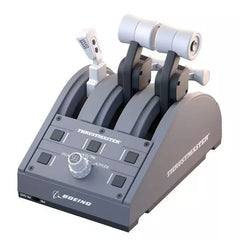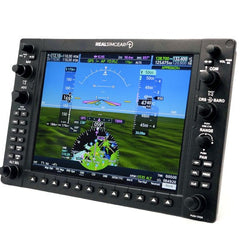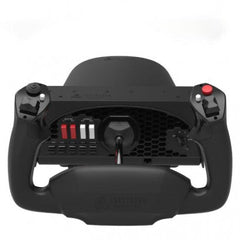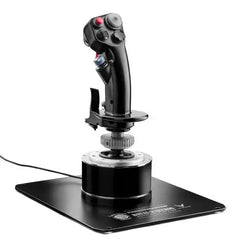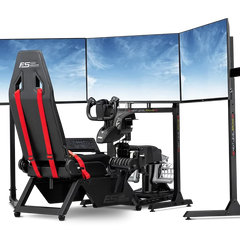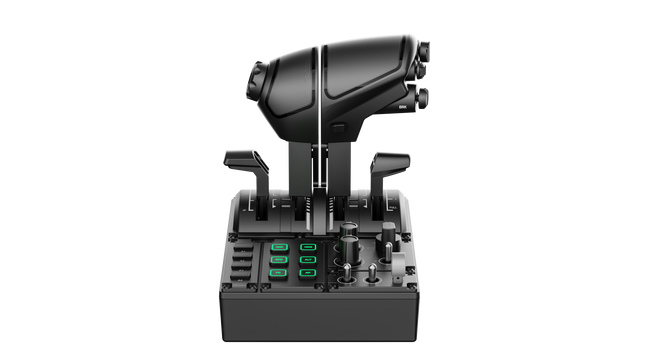
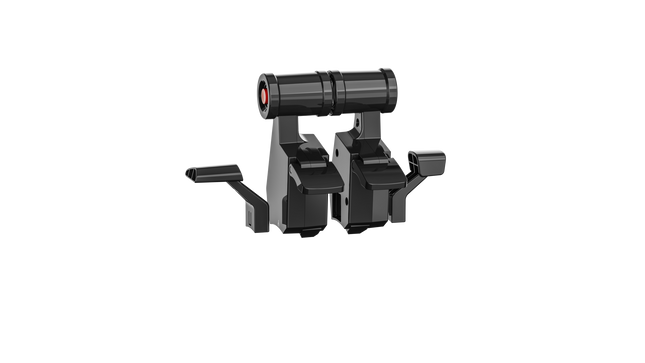
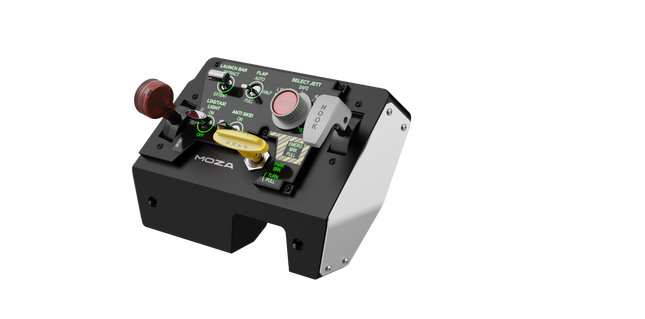
MOZA MTQ Throttle Panel är ett modulärt flight control-system byggt för piloter som söker taktil respons och mekanisk precision i varje throttle-rörelse. Med sitt modulära throttle lever-system och mångsidiga kontrollayout förvandlar det varje flight sim-setup till en cockpitliknande upplevelse. De tillfredsställande detents, metallkonstruktionen och den anpassningsbara RGB-belysningen ger varje spak en tydlig känsla—oavsett om du startar motorer i en Airbus eller aktiverar afterburners i ett stridsflygplan. Det är mekanisk tillfredsställelse kombinerad med funktionell mångsidighet.
Vad skiljer MOZA MTQ Throttle Panel?
Autentisk modulär spakupplevelse — Till skillnad från fasta throttles låter MTQ piloter växla mellan Airbus-, Boeing- och stridsflygplansspakar med ett skenbaserat monteringssystem. Varje spak har sina egna mekaniska detents, vilket gör att användaren kan känna övergångspunkter som revers thrust eller afterburner-lås. Den taktila precisionen i dessa detents har hyllats av sim-piloter för att ge fysisk tydlighet i throttle-kontroll.
Ergonomisk layout med genomtänkt design — Kontrollpanelen har 10 knappar, 3 vridreglage och 3 toggle-switchar, alla placerade inom naturliga handzoner. Entusiaster uppskattar att den undviker överbelastning och ger intuitiv åtkomst till viktiga flygfunktioner utan att bryta fokus. Tillägget av en dedikerad landställsspaksfunktion ökar realismen och gör övergångar mellan flygfaser smidigare och mer intuitiva.
Anpassningsbar RGB och mjukvaruintegration — MOZA Cockpit-programvaran ger full kontroll över RGB-ljusstyrka, färglogik och telemetriberäknade ljuseffekter. Feedback tyder på att belysningen inte bara ser imponerande ut i en mörk cockpit, utan också kan programmeras för att spegla flygstatus som landställsposition eller throttle-detentzoner, vilket gör belysningen funktionell snarare än enbart dekorativ.
Mekanisk feedback över flera axlar — MTQ har fyra axlar, var och en med unika taktila detents för funktioner som klaffar och luftbromsar. Känslan i varje axel är finjusterad för olika motståndsnivåer, och den virtuella knappdetenten på luftbromsarmen ger ett tillfredsställande klick vid aktivering. Piloter upplever att konsekvensen mellan axlarna gör denna panel lika användbar i kommersiell, militär och allmänflyg.
Fördelar och Nackdelar
Fördelar
Nackdelar
Utbytbara spakmoduler ger flexibla flygkonfigurationer.
Ingen fristående USB-anslutning; kräver MOZA-bas.
Utmärkta taktila detents på throttle- och klaffaxlar.
Begränsat stöd för tredjepartsekosystem.
Intuitiv layout med anpassningsbar RGB-belysning.
Hållbar mekanisk design med mjuk rörelsedämpning.
Specifikationer
Specifikation
Värde
Spaksystem
Modulära throttle-spakar med glidande skenmekanism
Throttle-typer inkluderade
TQF (stridsflygplan), TQA (Airbus), TQB (Boeing)
Axlar
Fyra oberoende axlar med detents
Knappar och kontroller
10 knappar, 3 vridreglage, 3 toggle-switchar, landställsspaksfunktion
RGB-belysning
Sex RGB-knappar, 16.7 miljoner färgalternativ
Anslutning
RJ11-anslutning till MOZA flight bases
Mjukvara
MOZA Cockpit med telemetriberäknade ljuseffekter
MOZA MTQ Throttle Panel kompatibilitet
Kompatibel hårdvara
Detaljer
MOZA Flight Bases (t.ex. AB6)
Direkt RJ11-anslutning för plug-and-play-integration
MOZA-ekosystemkomponenter
Sömlös funktion via MOZA Cockpit-programvara
Tredjepartssystem
Begränsat stöd; kan kräva adaptrar eller mjukvarumappning
MOZA MTQ Throttle Panel ansluts direkt till MOZA flight bases via RJ11, vilket minskar kabeltrassel och säkerställer låg latens. Dess modulära spakdesign gör den kompatibel med TQF-, TQA- och TQB throttle-varianter, som alla är designade för specifika flygplanstyper. Även om den främst är byggd för MOZA-ekosystemet har användare noterat begränsad kompatibilitet med tredjepartssystem—ofta krävs adaptrar eller anpassad mappning. MTQ integreras sömlöst med aluminiumcockpits och modulära riggar tack vare sin stabila och monteringsvänliga bas.
På mjukvarusidan fungerar MTQ tillsammans med MOZA Cockpit-programvara och integreras direkt med populära flygsimulatorer som Microsoft Flight Simulator 2020/2024, X-Plane 11/12 och DCS World. Den är fullt kompatibel med Windows-PC, men stöds inte på konsoler som Xbox eller PlayStation. Med sin modulära design och breda kompatibilitet i simulatorer är MTQ byggd för alla PC-piloter som kräver både flexibilitet och mekanisk precision.
Out of stock,
Förbeställningar tillgängliga. Levereras om 2–2,5 veckor.
Honeycomb Sierra TPM Module brings the tactile charm of classic general aviation straight to your desk, with a lockable metal throttle vernier that feels satisfyingly mechanical in hand and a high-resolution integrated trim wheel that lets you dial in attitude with fingertip finesse. Designed with single-prop aircraft like the Cessna 172 in mind, it combines all-metal construction, integrated flap and parking brake controls, and LED landing gear indicators into a compact module that slots neatly into a serious home cockpit.
What Sets the Honeycomb Sierra TPM Module apart?
True General Aviation Vernier Feel The lockable metal throttle vernier with fine-tune prop and mixture knobs doesn’t just look the part—it delivers that push-pull, twist-to-adjust sensation pilots associate with classic GA cockpits. Many users highlight how the incremental adjustment allows smoother power changes during climb and approach, especially in piston aircraft, compared to sliding lever-based throttles that can feel too abrupt for delicate engine management.
Integrated Cockpit Workflow Instead of scattering controls across separate panels, the Sierra TPM places trim, flaps, parking brake, and landing gear in one cohesive layout. The low-profile, high-resolution trim wheel earns particular praise for its smooth rotation and granular input, making pitch adjustments during cruise or final approach feel natural. It reduces reliance on keyboard shortcuts and keeps hands where they belong—on dedicated hardware.
Solid All-Metal Construction Built with Honeycomb-grade components and a durable all-metal chassis, this module has noticeable heft and rigidity. Enthusiasts frequently mention that it feels planted on the desk, with minimal flex during aggressive throttle movements. Compared to lighter plastic alternatives, the Sierra TPM maintains structural stability over time, which is especially appreciated in permanent or semi-permanent cockpit setups.
Seamless Integration with Honeycomb Ecosystem Designed to pair cleanly with Honeycomb yokes and mounting systems, the included dual mounting solution simplifies alignment and positioning. Users who already run Alpha or Bravo units often comment on how the design language and control spacing feel unified, creating a visually coherent and ergonomically consistent flight deck without mismatched modules.
Pros and Cons
Pros
Cons
Metal vernier throttle offers fine incremental control.
Designed primarily for single-engine GA aircraft.
Integrated trim wheel provides smooth pitch adjustments.
Requires desk space for full mounting solution.
All-metal chassis feels stable and durable.
LED gear indicators add clear visual feedback.
Specifications
Specification
Value
Product Name
Honeycomb Sierra TPM Module
EAN
4039621003998
Construction
All-metal construction with Honeycomb-grade components
Throttle Type
Lockable metal throttle vernier with prop and mixture knobs
Integrated Controls
Trim wheel, parking brake, flap lever, landing gear lever with LED indicators
Layout
General aviation style for single prop airplanes
Mounting
Dual mounting solution included
Connection
USB-C to USB-A cable
Compatibility
PC and Mac
Drivers
MSFS 2020 Driver, MSFS 2024 Driver
Included in the Box
Sierra TPM Module, Dual Mounting Solution, USB-C to USB-A Cable, Quick Start Guide (EFIGS)
Honeycomb Sierra TPM Module Compatibility
Platform
Compatibility
Operating Systems
PC and Mac
Connection Type
USB-C to USB-A (direct USB connection)
Primary Ecosystem Pairing
Honeycomb Alpha and Bravo hardware
The Sierra TPM Module connects via direct USB, making it straightforward to integrate into most desktop cockpit builds. It pairs especially well with Honeycomb Alpha yokes and Bravo throttle quadrants, sharing the same design philosophy and mounting ecosystem. Thanks to its dual mounting solution, it can be desk-mounted alongside other Honeycomb units for a unified layout. It is not intended for console setups and does not interface directly with standalone hardware without a compatible PC or Mac.
On the software side, it supports Microsoft Flight Simulator 2020 and Microsoft Flight Simulator 2024 through dedicated drivers, and it also works with simulators like X-Plane and Prepar3D on PC. It is not compatible with Xbox consoles, as it relies on standard USB PC/Mac drivers rather than console-certified firmware. For desktop sim pilots focused on general aviation, it slots cleanly into modern PC-based sim platforms.
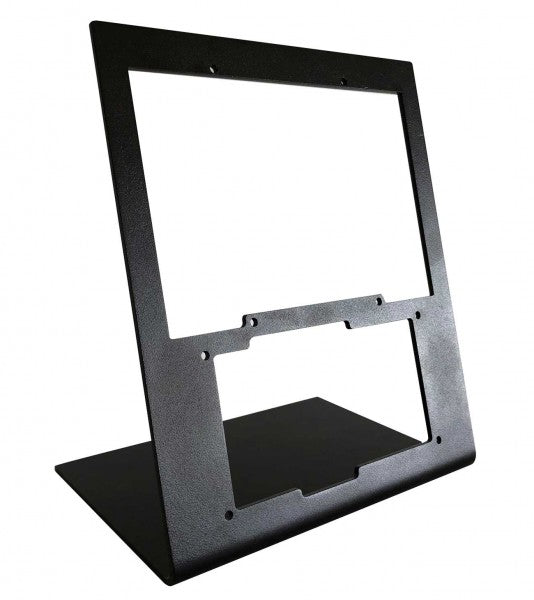
The RealSimGear - Desktop Stand for G1000 Suite offers an exceptional solution for flight simulation enthusiasts who demand stability and organization in their setup. Constructed from durable 3mm painted steel, this stand provides a stable, elevated position for the G1000 Suite's PFD, MFD, and audio panel. Its matte black finish complements any setup, while rubber non-slip feet and precise mounting compatibility ensure effortless integration. This stand is a must-have for those seeking a structured and ergonomic flight sim experience.
What sets the RealSimGear - Desktop Stand for G1000 Suite apart?
Purpose-Built for G1000 Suite This stand is specifically engineered to accommodate the G1000 PFD, MFD, and audio panel. Its tailored dimensions and secure mounting options make it a seamless addition to any flight sim rig, ensuring all three components are perfectly aligned for practical use.
Robust and Durable Construction Crafted from 3mm painted steel, the stand is built to withstand the demands of extended simulation sessions. Its sturdy design minimizes vibration and enhances the overall durability of your setup, providing peace of mind during intense flying scenarios.
Extensive Mounting Compatibility Featuring mounting holes compatible with Saitek/Logitech yokes, Honeycomb Alpha, and Bravo controls, this stand is designed to integrate effortlessly with popular hardware. Whether you're a seasoned pilot or a newcomer, the flexible compatibility simplifies hardware configuration.
Ergonomic Setup Support By elevating the G1000 Suite to an ideal height, this stand minimizes strain and enhances usability. It mirrors cockpit layouts found in actual aircraft, providing an organized and functional configuration for extended flight training or recreational use.
Pros and Cons
Pros
Cons
Perfectly accommodates PFD, MFD, and audio panel.
Higher cost compared to simpler stands.
Durable 3mm painted steel construction resists wear.
Designed exclusively for the G1000 Suite.
Compatible with Saitek/Logitech and Honeycomb systems.
Specifications
Specification
Value
Material
3mm painted steel
Finish
Matte black
Features
Non-slip rubber feet, mounting screws
Capacity
Holds G1000 PFD, MFD, and audio panel
Mounting Compatibility
Saitek/Logitech yokes, Honeycomb Alpha/Bravo
RealSimGear - Desktop Stand for G1000 Suite Compatibility
The RealSimGear - Desktop Stand for G1000 Suite is designed to perfectly accommodate the G1000 Suite's PFD, MFD, and audio panel. It features mounting holes that align with the Saitek/Logitech yoke mounting systems, as well as Honeycomb Alpha and Bravo throttle controls. This compatibility ensures seamless integration into existing setups, minimizing the need for additional hardware or customization. However, it is specifically tailored for the G1000 Suite, which limits its versatility for other configurations.
Designed for PC-based simulation setups, this stand works beautifully with platforms like X-Plane and Microsoft Flight Simulator. It does not directly support console gaming platforms, aligning with its primary focus on professional and enthusiast-grade PC configurations. This ensures an optimal experience when paired with popular flight simulation software.
Please note! The item may take 7-10 business days to ship!
Wingflex DAP 500 puts dedicated general aviation autopilot controls right where your hand expects them, combining fully customizable controls with plug-and-play USB connectivity for a clean desktop setup. Instead of reaching for on-screen knobs every few minutes, you can adjust heading, altitude and navigation modes through tactile buttons and encoders that feel purposeful. The aluminum stand, automatic aircraft configuration and ambient-light-controlled backlighting make it equally comfortable during a sunny VFR hop or a late-night IFR approach.
What Sets the Wingflex DAP 500 apart?
Designed Specifically for General Aviation While many autopilot panels focus on airliners, the DAP 500 is built around the aircraft most GA pilots actually fly. Its control layout suits piston singles, turboprops and light business aircraft, making routine autopilot adjustments feel intuitive. Pilots who regularly fly aircraft like the C172, TBM, Vision Jet or King Air often appreciate hardware that reflects their everyday flying instead of borrowing layouts from transport-category aircraft.
Flexible Controls That Adapt to Your Flying Style With twelve programmable push buttons, two pushable rotary encoders and an additional scroll-wheel encoder, the panel can be tailored well beyond its default assignments. Community discussions around configurable hardware consistently highlight this flexibility as a major advantage because it allows pilots to create workflows that match their preferred aircraft rather than forcing identical controls across every simulator.
Automatic Aircraft Profiles Reduce Setup Time WingFlex Bridge software automatically configures supported aircraft, helping users spend more time flying and less time assigning controls. Reviewers generally regard automatic profile detection as one of the biggest quality-of-life improvements in modern simulator hardware, particularly for pilots who regularly switch between multiple aircraft during the same week instead of flying a single favourite.
Built to Grow With Future Cockpit Expansions The DAP 500 is designed as part of a broader modular ecosystem, with support planned for additional DAP-series expansion panels. Combined with firmware updates delivered through OTA software, it offers a platform that can continue evolving without replacing the core autopilot unit. That modular philosophy appeals to cockpit builders who prefer expanding their simulator gradually rather than purchasing an entire panel stack in one go.
Pros and Cons
Pros
Cons
Automatic aircraft profiles simplify supported aircraft setup.
Designed primarily for general aviation aircraft.
Extensive programmable controls suit different flying styles.
Requires WingFlex Bridge for automatic configuration features.
Ambient light sensor adjusts backlighting automatically.
Aluminum stand provides stable desktop positioning.
OTA firmware updates add future functionality.
Specifications
Specification
Value
Product
Wingflex DAP 500 Digital Autopilot Panel
Primary Use
General aviation flight simulation
Connection
USB plug-and-play
Push Buttons
12
Pushable Rotary Encoders
2
Scroll-Wheel Encoder
1
Key Assignment
Fully user customizable
Configuration
Automatic via WingFlex Bridge software
Backlighting
Adjustable with ambient light sensor
Firmware
OTA firmware upgrade support
Construction
Aluminum alloy stand
Expandability
Supports future DAP-series auxiliary panels
Wingflex DAP 500 Compatibility
Simulator
Compatible Aircraft
X-Plane
Baron 58, King Air C90B, Citation XLS, Skyhawk G1000, Cirrus SR22, Vision SF50, Lancair Evolution, RV10
Microsoft Flight Simulator 2020
NXCub, XCub, King Air 350, Bonanza G36, C208B Grand Caravan EX, CJ4, C172 G1000, DA40 NG, Pilatus PC-6, TBM 930
Microsoft Flight Simulator 2024
TBM 930, Bonanza G36, King Air 350, C172 G1000, C208B Grand Caravan EX, C400 Corvalis, CJ4, DA62, DA40 NG, Draco X, Vision SF50, Archer, ES30, NXCub, PC-12 NGX, XCub
The DAP 500 connects through USB and uses WingFlex Bridge software to automatically configure supported aircraft profiles. It is designed for general aviation cockpits and works especially well alongside hardware such as G1000 panels, radio stacks, throttle quadrants and yokes. The panel also supports future DAP-series expansion modules, allowing users to gradually build a more complete general aviation cockpit instead of replacing existing hardware.
Compatibility is focused on aircraft equipped with autopilot systems commonly found in general aviation rather than commercial airliners. It supports a broad collection of Asobo, Laminar Research and Microsoft aircraft, including the C172 G1000, King Air, TBM 930, Vision Jet, DA62 and PC-12 NGX. It is not intended for Boeing or Airbus airliner autopilot systems, which use different control layouts and operating logic.
The DAP 500 is compatible with Microsoft Flight Simulator 2020, Microsoft Flight Simulator 2024 and X-Plane on PC. It connects as a USB peripheral and relies on WingFlex Bridge software for supported aircraft integration. It is not compatible with Xbox or PlayStation consoles, as those platforms do not support dedicated desktop flight simulation control panels of this type.
Moza MTLP Take-off Landing Panel ger essensen av stridsflygplansoperationer till hemmakopplingen med ett robust, taktilt kontrollsystem byggt för seriösa simpiloter. Designat efter F/A-18 landningspanelen, erbjuder det ett intuitivt switchlayout som möjliggör snabba, instinktiva inmatningar utan att förlita sig på visuell bekräftelse. Den autentiska parkeringsbroms-mekanismen ger ett fast, mekaniskt återkast som känns rakt ut från ett riktigt stridsflygplan. Med 25 programmerbara switchsignaler och Hall-effekt-sensorer för noggrannhet, överbryggar denna panel gapet mellan virtuell och praktisk cockpit-interaktion.
Vad skiljer Moza MTLP Take-off Landing Panel från andra?
Designad för Hands-On Control Modellerad efter F/A-18 landningspanelen, prioriterar denna uppsättning instinktiv användning. Switchlayouten gör det möjligt för piloter att hantera kritiska flygplansfunktioner genom känsla, vilket minskar behovet av att titta bort från skärmen. Denna typ av taktil förstärkning är avgörande för snabba miljöer som stridspiloter och landningar på hangarfartyg.
Hall Sensor Precision för Viktiga Funktioner Till skillnad från standard mekaniska switchar, integrerar MTLP Hall-effekt-sensorer i viktiga inmatningar som landningshjul och tailhook-spakar. Dessa sensorer ger långvarig tillförlitlighet och konsekvent inmatningsnoggrannhet, vilket eliminerar förslitningrelaterad driftslutning eller försämring över tid.
Byggd för Att Hantera Upprepad Användning Aluminiumlegeringskonstruktionen som används i broms-, tailhook- och landningshjulsspaken säkerställer hållbarhet. Dessa komponenter kan motstå upprepad, kraftig användning, vilket gör att panelen är en långsiktig investering för flygentusiaster som kräver mekanisk robusthet.
Sömlös Integration med Moza's Ekosystem MTLP är designad för att fungera enkelt med Moza MTP Throttle Panel, vilket skapar en sammanhängande kontrolluppsättning för stridsflygplan. Genom Moza Cockpit-programvaran kan användare synkronisera telemetri-styrda ljuseffekter och anpassa sina knappkonfigurationer för att matcha deras flygstil.
Fördelar och Nackdelar
Fördelar
Nackdelar
Modellerad efter F/A-18 landningspanelen
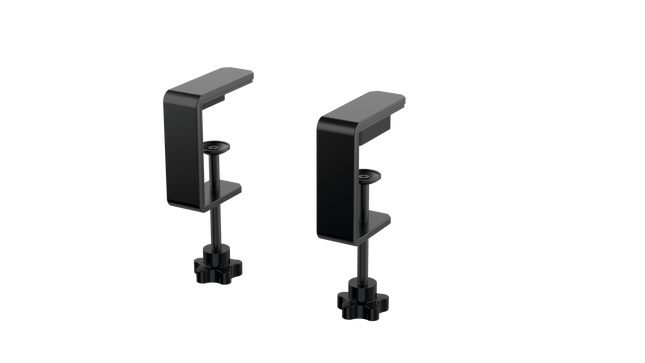
Desk clamp säljs separat
Hall-effekt sensorer för noggrannhet och lång livslängd
Begränsad till PC-kompatibilitet
25 programmerbara switchsignaler för omfattande kontroll
Kompatibel med Moza’s ekosystem för full stridsflygplansuppsättning
Specifikationer
Specifikation
Värde
Dimensioner
196.5 × 134.7 × 149 mm
Höljesmaterial
Kompositmaterial
Bromsspaks Material
Aluminiumlegering
Vikt
680g
Switchsignaler
25
Telemetriljus
Ja (inga extra plugins krävs)
Stödd Plattform
PC
Desk Clamp
Valfritt tillbehör
Inkluderade Tillbehör
Datakabel, användarmanual
Moza MTLP Take-off Landing Panel Kompatibilitet
Kompatibel med
Inte kompatibel med
Moza MTP Throttle Panel
Tredjeparts gasspakar
Moza Cockpit-programvara för anpassning
Spelplattformar
PC-baserade flygsimulatorer
MacOS
Designad för PC-baserade simulatorer, integreras MTLP sömlöst med Moza’s MTP Throttle Panel för att skapa en stridsflygplans-stil kontrolluppsättning. Panelen konfigureras via Moza Cockpit-programvara, vilket möjliggör omfattande anpassning, inklusive telemetri-länkade ljuseffekter. Den stöder dock inte tredjeparts gasspaks, vilket innebär att full funktionalitet bäst uppnås inom Moza ekosystemet.
PC-kompatibilitet säkerställer stöd för stora flygsimulatorer, men MacOS och spelkonsoler stöds inte. Flygsim-entusiaster som använder Microsoft Flight Simulator 2020, Microsoft Flight Simulator 2024 och X-Plane 12 kommer att hitta att panelen känns igen direkt, och erbjuder plug-and-play funktionalitet via USB. Dock, användare som söker stöd för Xbox eller PlayStation måste överväga alternativ hårdvara.
MOZA MFY Pro Yoke ger cockpiten en styrgeometri inspirerad av trafikflyg med ett brett, tryggt grepp och tillräckligt många fysiska reglage för att hålla händerna borta från tangentbordet. Den integrerade 4,3-tums pekskärmen visar flygdata, checklistor, tidsinformation och axelpositioner, medan 26 programmerbara utsignaler ger gott om utrymme för flygplansspecifika styrprofiler. Den kolfiberförstärkta kompositkonstruktionen håller vikten nere utan att kompromissa med stabiliteten, och Hall-effekt-joystickarna känns mjuka och kontrollerade snarare än som små spelkontroller som monterats dit i efterhand.
Vad utmärker MOZA MFY Pro Yoke?
En pekskärm som förtjänar sin plats i cockpiten Den 4,3 tum stora pekskärmen med en upplösning på 480 × 800 är betydligt mer än en dekorativ färgklick mitt på yoken. Den kan visa viktig flygdata, checklistor, en flygklocka och axelvärden i realtid utan att piloten behöver titta mellan flera skärmar. Det håller viktig information nära händerna och gör yoken särskilt praktisk i kompakta uppsättningar där varje centimeter instrumentpanel redan har lämnat in ett officiellt klagomål.
Geometri för trafikflyg i en lätt och robust konstruktion Formen hämtar inspiration från trafikflygplan snarare än kompakta reglage för allmänflyg, vilket ger båda händerna en bred och naturlig arbetsposition under stigning, inflygning och längre justeringar under marschflygning. Konstruktionen i kolfiberförstärkt komposit håller vikten på 1,2 kg samtidigt som den klarar belastningar på upp till 30 kg. Resultatet är en yoke som känns stabil vid bestämda styrutslag utan att belasta basen eller monteringslösningen i onödan.
Mer kontroll utan att behöva sträcka sig efter tangentbordet Två åttavägs hat switches, två Hall-effekt-joysticks, bumpers och multifunktionella avtryckare ger tillsammans 26 konfigurerbara utsignaler direkt på yoken. Avtryckarna och joystickarna kan användas som axlar eller knappar via MOZA Cockpit, vilket gör dem lämpliga för sidroder, kamerastyrning, push-to-talk, trim eller andra flygplansfunktioner. Flera profiler gör dessutom växlingen mellan trafikflygplan och lättare flygplan betydligt smidigare än att behöva mappa om allt inför varje flygning.
Snabba byten utan mekaniskt glapp Quick Release-systemet i aluminiumlegering gör det möjligt att ta av eller byta yoken utan verktyg samtidigt som anslutningen till en kompatibel MOZA-bas förblir stabil. Det är särskilt användbart för piloter som växlar mellan trafikflyg, allmänflyg och mer specialiserade styrformer. Ett Quick Release-system är bara användbart om det inte introducerar rörelse i kopplingen, och den styva konstruktionen är utformad för att förbli stabil även vid kraftiga rollkorrigeringar och Force Feedback-belastningar.
Fördelar och nackdelar
Fördelar
Nackdelar
Den integrerade pekskärmen håller flyginformationen direkt inom synfältet.
Pekskärmens funktioner är beroende av stöd i programvara och firmware.
26 programmerbara signaler stöder avancerade styrprofiler för olika flygplan.
Den trafikflygsinspirerade formen passar mindre bra för traditionella GA-flygplan.
Hall-effekt-joysticks ger mjuk och kontaktfri axelstyrning.
Det lätta komposithöljet klarar höga styrbelastningar.
Specifikationer
Specifikation
Värde
Produktnamn
MOZA MFY Pro Flight Yoke
Mått
142,5 × 202 × 313 mm
Vikt
1,2 kg
Höljesmaterial
Kolfiberförstärkt komposit
Material i Quick Release
Aluminiumlegering
Material i knappkåpor
ABS
Maximal belastning
Upp till 30 kg
Skärmstorlek
4,3 tum
Skärmupplösning
480 × 800
Totalt antal utsignaler
26
Åttavägs hat switches
2
Hall-effekt-joysticks
2
Bumpers
2
Avtryckare
2
Belysning
Anpassningsbar RGB-belysning med 16 miljoner färger
Konfigurationsprogramvara
MOZA Cockpit
Medföljande tillbehör
Användarmanual
Kompatibilitet för MOZA MFY Pro Yoke
Kategori
Kompatibilitet
Anslutning till yoke-bas
MOZA Quick Release-system i aluminiumlegering
Konfigurationsprogramvara
MOZA Cockpit
Tilldelningsbara reglage
Knappar, axlar, avtryckare, joysticks och profilmappningar
Skärmfunktioner
PFD-information, checklistor, flygklocka och axelvisningar
Styrprofiler
Flera flygplansspecifika mappningsprofiler
MFY Pro är konstruerad för att monteras med MOZA:s Quick Release-system i aluminiumlegering, vilket möjliggör verktygsfri installation på en kompatibel MOZA-yokebas. Formen, inspirerad av trafikflyg, passar särskilt bra för trafik- och transportflygplan, medan de 26 programmerbara utsignalerna även kan anpassas för turbopropflygplan och allmänflyg. Den fungerar inte som en fristående styrenhet och kräver därför en kompatibel bas för att ge roll- och pitchrörelser.
Ytterligare funktioner konfigureras via MOZA Cockpit, inklusive knapptilldelningar, axelbeteende, RGB-belysning, vyer på pekskärmen och flera mappningsprofiler. De två Hall-effekt-joystickarna och de multifunktionella avtryckarna kan konfigureras som antingen axlar eller knappar, vilket gör dem lämpliga för sidroderstyrning, kamerarörelser, trim, kommunikation eller avionikfunktioner. Yoken använder inte någon universell mekanisk infästning och är inte avsedd för direkt montering på yokebaser från andra tillverkare.
MFY Pro är en del av ett PC-baserat styrsystem för flygsimulering och är beroende av den anslutna MOZA-basen och programvaran MOZA Cockpit för konfiguration. De programmerbara reglagen kan tilldelas i flygsimulatorer för PC som stöder traditionell mappning av knappar och axlar. Den är inte utformad som en handkontroll för PlayStation eller Xbox, och funktionerna på den integrerade skärmen kräver kompatibel PC-programvara i stället för att fungera fristående från simulatorn.
Wingflex A320 EFIS Cube puts Airbus navigation and display management exactly where your hand expects it, combining full-function EFIS and glareshield controls with high-contrast dual-colour displays in a compact 80% scale design. From adjusting barometric pressure to selecting navigation modes, every rotary movement and button press feels deliberate and satisfying. The synchronized backlighting, integrated stand and simple USB connectivity make it an excellent addition to a desktop Airbus cockpit without demanding the space of a full-size flight deck.
What Sets the Wingflex A320 EFIS Cube apart?
More Than Just an EFIS Panel Unlike many desktop EFIS units that focus solely on navigation display controls, the EFIS Cube also integrates important glareshield functions such as Master Warning, Master Caution and CHRONO controls. Having these frequently used functions within easy reach creates a cleaner cockpit workflow and reduces the need to return to the virtual cockpit during busy phases of flight.
Compact Size Without Sacrificing Functionality The 80% scale design makes the panel much easier to accommodate on a typical desktop while preserving the familiar Airbus control layout. Buttons, rotary selectors and push-pull controls remain comfortably spaced, allowing quick adjustments without making the panel feel cramped. It strikes an effective balance between space efficiency and comfortable day-to-day operation.
Consistent Lighting Across Your Cockpit The synchronized brightness system keeps the displays and backlighting aligned with supported simulator lighting, creating a cohesive appearance throughout the cockpit. Combined with Airbus-style fonts and dual-colour displays, important flight information remains crisp and easy to read whether flying during bright daylight or on a dark nighttime arrival.
Built for Modular Cockpit Expansion The EFIS Cube performs perfectly as a standalone controller but is equally suited to growing cockpit projects. It integrates neatly alongside the Wingflex FCU Cube and RMP Combo Cube, allowing sim pilots to expand their Airbus setup gradually while maintaining a consistent appearance, matching lighting and a tidy desktop footprint.
Pros and Cons
Pros
Cons
Integrated glareshield controls reduce additional hardware.
Reduced scale differs from full-size Airbus dimensions.
Dual-colour displays remain easy to read.
Designed specifically for Airbus aircraft.
Synchronized lighting creates consistent cockpit appearance.
Plug-and-play USB connection simplifies installation.
Compact footprint fits comfortably beneath most monitors.
Specifications
Specification
Value
Product
Wingflex A320 EFIS Cube
Scale
80% scale
Primary Function
Airbus Electronic Flight Instrument System control panel
Integrated Functions
EFIS controls and glareshield controls
Display Type
High-contrast dual-colour LCD displays
Display Fonts
Airbus-style fonts
Controls
Buttons, rotary knobs and switches
Lighting
Fully synchronized adjustable backlighting
Connection
USB
Installation
Plug-and-play
Stand
Integrated low-profile desktop stand
Primary Use
Airbus flight simulation
Wingflex A320 EFIS Cube Compatibility
Simulator
Compatible Aircraft
X-Plane
ToLiss A319, A320, A330, A340; Laminar A330
Microsoft Flight Simulator
Fenix A3xx, FlyByWire A320 & A380, iniBuilds A320, A321, A330, A340, A350, Aerosoft A340, Headwind A330
Prepar3D
FSLabs A32x
The Wingflex A320 EFIS Cube connects through USB and can be used either as a standalone Airbus EFIS controller or alongside the Wingflex FCU Cube and Wingflex RMP Combo Cube. Its synchronized brightness allows all compatible Cube modules to maintain a consistent appearance, while the integrated stand provides a comfortable operating angle for desktop cockpits.
The published compatibility list covers a wide selection of Airbus aircraft across the major PC flight simulators. It supports Fenix A3xx, ToLiss Airbus aircraft, FlyByWire A320 and A380, multiple iniBuilds Airbus models, Laminar A330, Aerosoft A340, Headwind A330 and FSLabs A32x. The panel is designed specifically for Airbus aircraft and is not intended for Boeing flight decks or other aircraft with different EFIS layouts.
The EFIS Cube is compatible with Microsoft Flight Simulator 2020 and 2024, X-Plane 11 and 12 and Prepar3D on Windows PCs. It uses a USB connection with plug-and-play operation and is not compatible with Xbox or PlayStation consoles, as dedicated cockpit hardware requires PC-based simulator support.
Wingflex A320 FCU Cube brings Airbus autopilot management into a compact desktop format with full autopilot control functionality and a durable all-aluminum construction. Every heading adjustment, altitude selection and autopilot engagement is handled through tactile knobs and switches that encourage proper cockpit workflows instead of constant mouse clicks. The synchronized dimmer, adjustable backlighting and plug-and-play USB connection make it equally suited to quick evening flights or long IFR sessions, all without demanding the space of a full-size glareshield.
What Sets the Wingflex A320 FCU Cube apart?
Compact Airbus Autopilot Without Sacrificing Core Controls At 80% scale, the FCU Cube preserves the control layout Airbus pilots expect while significantly reducing the space required on a desktop. Independent reviews consistently note that this balance makes it much easier to fit beneath standard monitors than full-size panels, yet the spacing remains comfortable enough for deliberate heading, speed and altitude adjustments during demanding approaches.
Switches That Reward Every Input The AP1, AP2 and A/THR buttons use dedicated axial switches with a 2.5 mm travel, while the remaining controls employ Alps switches with a 2.0 mm stroke. Pilots frequently comment that well-designed tactile controls encourage proper use of the autopilot throughout a flight instead of relying on keyboard shortcuts once the novelty wears off.
Solid Metal Construction Built for Frequent Flying The aluminum housing and matching aluminum control knobs give the FCU Cube a reassuring weight that keeps it planted during repeated adjustments. Reviewers often highlight the rigid construction because it avoids the flex sometimes found in lighter desktop panels, making heading changes and rotary inputs feel consistent throughout longer flying sessions.
Designed to Grow Into a Complete Airbus Cockpit The FCU Cube works well as a standalone autopilot controller, but it is equally at home alongside the Wingflex EFIS Cube and RMP Combo Cube. Shared brightness synchronization creates a unified appearance across the glareshield, allowing cockpit builders to expand their setup gradually instead of replacing hardware every time a new module is added.
Pros and Cons
Pros
Cons
Aluminum housing provides excellent structural rigidity.
Reduced scale differs from full-size Airbus dimensions.
Autopilot switches deliver satisfying tactile feedback.
Designed specifically for Airbus aircraft families.
Plug-and-play USB installation minimizes setup time.
Synchronized lighting complements other Cube modules.
Broad Airbus simulator compatibility across major platforms.
Specifications
Specification
Value
Product
Wingflex A320 FCU Cube
Scale
80% scale
Primary Function
Airbus Flight Control Unit (FCU)
Construction
Aviation-grade aluminum body and knobs
Connection
USB
Installation
Plug-and-play
Autopilot Switches
AP1, AP2 and A/THR axial switches
Autopilot Switch Travel
2.5 mm
Other Button Switches
Japan Alps switches with 2.0 mm travel
Lighting
Adjustable backlighting with synchronized dimmer knob
Primary Use
Airbus flight simulation autopilot control
Wingflex A320 FCU Cube Compatibility
Simulator
Compatible Aircraft
X-Plane
ToLiss A319, A320, A330, A340; Laminar A330
Microsoft Flight Simulator
Fenix A3xx, FlyByWire A320 & A380, iniBuilds A320, A321, A330, A340, A350, Aerosoft A340, Headwind A330
Prepar3D
FSLabs A32x
The FCU Cube connects through USB and operates as either a standalone Airbus autopilot controller or as part of the broader Wingflex Cube ecosystem. It supports brightness synchronization with the Wingflex EFIS Cube and RMP Combo Cube, creating a consistent glareshield appearance. Its compact dimensions also make it easy to integrate into desktop cockpits or modular simulator builds without requiring a full-width Airbus panel.
The published compatibility list covers a broad range of Airbus simulations across the leading platforms. It supports Fenix A3xx, ToLiss Airbus aircraft, FlyByWire A320 and A380, multiple iniBuilds Airbus models, Laminar A330, Aerosoft A340, Headwind A330 and FSLabs A32x. Unlike the RMP Combo Cube, the FCU Cube also supports the FlyByWire A380 and iniBuilds A350, making it one of the most widely compatible Airbus autopilot panels in the Wingflex lineup.
The FCU Cube is designed for Microsoft Flight Simulator, X-Plane and Prepar3D on Windows PCs. It communicates through USB and works with supported Airbus aircraft using Wingflex software integration. It is not compatible with Xbox or PlayStation consoles, as dedicated USB cockpit peripherals of this type require PC-based simulator support.