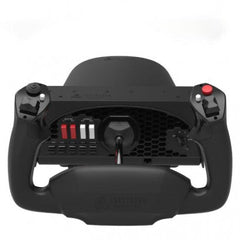
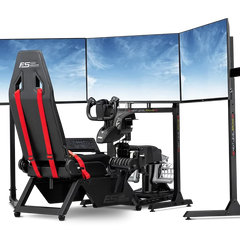
MOZA AY90 Force Feedback Yoke Base är utvecklad för piloter som vill känna varje stigning, varje utplaning och varje vindby direkt i händerna, istället för att låta känslan försvinna i en fjädermekanism. Med 4,2 Nm rullmoment och 90 N push-pull Force Feedback tillsammans med en 180° rullaxel med ±90° rörelse levererar den övertygande styrkrafter samtidigt som den är tillräckligt kompakt för både skrivbords- och cockpitinstallationer. Lägg till programmerbara reglage, tydlig RGB-belysning och ett robust komposithölje, så får du en yoke-bas som är redo för allt från trafikvarv till längre navigeringsflygningar.
Vad utmärker MOZA AY90 Force Feedback Yoke Base?
Force Feedback som förändrar sättet du flyger på Många yoke-system i den här prisklassen använder fortfarande fjädrar eller remmar, men AY90 levererar motordriven Force Feedback som låter piloten känna hur flygplanets belastning förändras under hela flygningen. Från vibrationer på start- och landningsbanan och trimjusteringar till aerodynamiskt motstånd under branta svängar kommunicerar reglagen hela tiden vad flygplanet gör, vilket gör manuell flygning betydligt mer engagerande och informativ.
Kompakt storlek utan märkbara kompromisser Trots den höga kraftutvecklingen behåller AY90 ett kompakt format som fungerar lika bra på ett skrivbord som i en dedikerad cockpit. Många användare uppskattar att den undviker de stora dimensioner som ofta förknippas med Force Feedback-hårdvara, vilket gör den enklare att installera samtidigt som den erbjuder generös rörelse och en tryggt stabil känsla under krävande manövrer.
Cockpitreglage integrerade direkt i basen Istället för att behandla yoken enbart som en styraxel integrerar MOZA vippströmbrytare, skjutreglage, vridreglage och en femvägs hat switch direkt i basen. Dessa extra reglage minskar behovet av tangentbordet och håller ofta använda flygplansfunktioner nära till hands, vilket är särskilt användbart vid flygning med allmänflygplan där trim, belysning och avionik ofta behöver justeras.
Utvecklad för att växa tillsammans med din cockpit Quick Release-mekanismen i aluminium och monteringspunkterna för expansion gör AY90 betydligt mer flexibel än yoke-system med fast handtag. Den stödjer snabba byten av yoke och lämnar samtidigt utrymme för anpassade instrument, skärmar och tillbehör via adaptrar från tredje part. För cockpitbyggare som vill utveckla sin rigg över tid gör denna flexibilitet framtida uppgraderingar betydligt enklare utan att hela basen behöver bytas ut.
Fördelar och nackdelar
Fördelar
Nackdelar
Force Feedback ger övertygande styrkrafter under hela flygningen.
Endast kompatibel med PC.
Det kompakta höljet passar både skrivbords- och cockpitinstallationer.
Kräver extern strömförsörjning.
Integrerade reglage minskar behovet av tangentbordet.
Quick Release stödjer framtida uppgraderingar av yoken.
Specifikationer
Specifikation
Värde
Produkt
MOZA AY90 Force Feedback Yoke Base
Mått
325 × 252 × 111 mm
Vikt
4,5 kg
Material i höljet
Kolfiberförstärkt komposit
Material i Quick Release
Aluminiumlegering
Material i knappkåpor
ABS
Rullaxelns rörelse
±90° (180° totalt)
Rullmoment
4,2 Nm
Pitch-kraft
90 N push-pull
Pitch-rörelse
95 mm
Motorencoder
15-bitars magnetisk encoder
Femvägs hat switch
1
Vippströmbrytare
4
Skjutreglage
2
Strömingång
12 V 6 A
Monteringsalternativ
Skrivbordsklämma, profilskena, 80/20-aluminiumprofil
Konfigurationsprogramvara
MOZA Cockpit
Medföljande tillbehör
Nätadapter, USB-kabel, användarmanual, klistermärke
Kompatibilitet för MOZA AY90 Force Feedback Yoke Base
Kategori
Kompatibilitet
Plattform
PC
Montering
Skrivbordsklämmor, profilskenor, 80/20-aluminiumprofiler
Konfigurationsprogramvara
MOZA Cockpit
Yoke-anslutning
MOZA:s Quick Release-system i aluminium
Tillbehörsutbyggnad
Stöd för anpassade instrument, skärmar och tillbehör från tredje part
AY90 är utformad för att passa smidigt in i en mängd olika flygsimulatoruppsättningar. Den stödjer skrivbordsmontering med de medföljande skrivbordsklämmorna, cockpits byggda av aluminiumprofiler av 80/20-typ samt MOZA:s Quick Release-system i aluminium för snabba byten av yoke utan verktyg. Dedikerade expansionspunkter på ovansidan av basen gör det dessutom möjligt att lägga till fler instrument, skärmar och anpassade tillbehör i takt med att cockpiten byggs ut. Den är inte avsedd för flygsimulatorer på konsol.
Konfigurationen hanteras via MOZA Cockpit-programvaran, där varje strömbrytare, vridreglage och belysningsfunktion kan anpassas. De programmerbara reglagen gör det enkelt att konfigurera basen för allt från lätta allmänflygplan till större turbopropflygplan. Eftersom alla reglage kan mappas om helt fritt integreras AY90 lika väl i kompakta skrivbordsuppsättningar som i mer avancerade hemmabyggda cockpits.
MOZA AY90 Force Feedback Yoke Base är en enhet endast för PC och är kompatibel med Microsoft Flight Simulator, Microsoft Flight Simulator 2024, X-Plane, DCS World, War Thunder och andra större flygsimulatorer för PC som har stöd för Force Feedback-hårdvara. Den är inte kompatibel med PlayStation- eller Xbox-konsoler, vilket gör den bäst lämpad för dedikerade PC-baserade flygsimulatormiljöer.
Wingflex A320 EFIS Cube puts Airbus navigation and display management exactly where your hand expects it, combining full-function EFIS and glareshield controls with high-contrast dual-colour displays in a compact 80% scale design. From adjusting barometric pressure to selecting navigation modes, every rotary movement and button press feels deliberate and satisfying. The synchronized backlighting, integrated stand and simple USB connectivity make it an excellent addition to a desktop Airbus cockpit without demanding the space of a full-size flight deck.
What Sets the Wingflex A320 EFIS Cube apart?
More Than Just an EFIS Panel Unlike many desktop EFIS units that focus solely on navigation display controls, the EFIS Cube also integrates important glareshield functions such as Master Warning, Master Caution and CHRONO controls. Having these frequently used functions within easy reach creates a cleaner cockpit workflow and reduces the need to return to the virtual cockpit during busy phases of flight.
Compact Size Without Sacrificing Functionality The 80% scale design makes the panel much easier to accommodate on a typical desktop while preserving the familiar Airbus control layout. Buttons, rotary selectors and push-pull controls remain comfortably spaced, allowing quick adjustments without making the panel feel cramped. It strikes an effective balance between space efficiency and comfortable day-to-day operation.
Consistent Lighting Across Your Cockpit The synchronized brightness system keeps the displays and backlighting aligned with supported simulator lighting, creating a cohesive appearance throughout the cockpit. Combined with Airbus-style fonts and dual-colour displays, important flight information remains crisp and easy to read whether flying during bright daylight or on a dark nighttime arrival.
Built for Modular Cockpit Expansion The EFIS Cube performs perfectly as a standalone controller but is equally suited to growing cockpit projects. It integrates neatly alongside the Wingflex FCU Cube and RMP Combo Cube, allowing sim pilots to expand their Airbus setup gradually while maintaining a consistent appearance, matching lighting and a tidy desktop footprint.
Pros and Cons
Pros
Cons
Integrated glareshield controls reduce additional hardware.
Reduced scale differs from full-size Airbus dimensions.
Dual-colour displays remain easy to read.
Designed specifically for Airbus aircraft.
Synchronized lighting creates consistent cockpit appearance.
Plug-and-play USB connection simplifies installation.
Compact footprint fits comfortably beneath most monitors.
Specifications
Specification
Value
Product
Wingflex A320 EFIS Cube
Scale
80% scale
Primary Function
Airbus Electronic Flight Instrument System control panel
Integrated Functions
EFIS controls and glareshield controls
Display Type
High-contrast dual-colour LCD displays
Display Fonts
Airbus-style fonts
Controls
Buttons, rotary knobs and switches
Lighting
Fully synchronized adjustable backlighting
Connection
USB
Installation
Plug-and-play
Stand
Integrated low-profile desktop stand
Primary Use
Airbus flight simulation
Wingflex A320 EFIS Cube Compatibility
Simulator
Compatible Aircraft
X-Plane
ToLiss A319, A320, A330, A340; Laminar A330
Microsoft Flight Simulator
Fenix A3xx, FlyByWire A320 & A380, iniBuilds A320, A321, A330, A340, A350, Aerosoft A340, Headwind A330
Prepar3D
FSLabs A32x
The Wingflex A320 EFIS Cube connects through USB and can be used either as a standalone Airbus EFIS controller or alongside the Wingflex FCU Cube and Wingflex RMP Combo Cube. Its synchronized brightness allows all compatible Cube modules to maintain a consistent appearance, while the integrated stand provides a comfortable operating angle for desktop cockpits.
The published compatibility list covers a wide selection of Airbus aircraft across the major PC flight simulators. It supports Fenix A3xx, ToLiss Airbus aircraft, FlyByWire A320 and A380, multiple iniBuilds Airbus models, Laminar A330, Aerosoft A340, Headwind A330 and FSLabs A32x. The panel is designed specifically for Airbus aircraft and is not intended for Boeing flight decks or other aircraft with different EFIS layouts.
The EFIS Cube is compatible with Microsoft Flight Simulator 2020 and 2024, X-Plane 11 and 12 and Prepar3D on Windows PCs. It uses a USB connection with plug-and-play operation and is not compatible with Xbox or PlayStation consoles, as dedicated cockpit hardware requires PC-based simulator support.
Wingflex A320 FCU Cube brings Airbus autopilot management into a compact desktop format with full autopilot control functionality and a durable all-aluminum construction. Every heading adjustment, altitude selection and autopilot engagement is handled through tactile knobs and switches that encourage proper cockpit workflows instead of constant mouse clicks. The synchronized dimmer, adjustable backlighting and plug-and-play USB connection make it equally suited to quick evening flights or long IFR sessions, all without demanding the space of a full-size glareshield.
What Sets the Wingflex A320 FCU Cube apart?
Compact Airbus Autopilot Without Sacrificing Core Controls At 80% scale, the FCU Cube preserves the control layout Airbus pilots expect while significantly reducing the space required on a desktop. Independent reviews consistently note that this balance makes it much easier to fit beneath standard monitors than full-size panels, yet the spacing remains comfortable enough for deliberate heading, speed and altitude adjustments during demanding approaches.
Switches That Reward Every Input The AP1, AP2 and A/THR buttons use dedicated axial switches with a 2.5 mm travel, while the remaining controls employ Alps switches with a 2.0 mm stroke. Pilots frequently comment that well-designed tactile controls encourage proper use of the autopilot throughout a flight instead of relying on keyboard shortcuts once the novelty wears off.
Solid Metal Construction Built for Frequent Flying The aluminum housing and matching aluminum control knobs give the FCU Cube a reassuring weight that keeps it planted during repeated adjustments. Reviewers often highlight the rigid construction because it avoids the flex sometimes found in lighter desktop panels, making heading changes and rotary inputs feel consistent throughout longer flying sessions.
Designed to Grow Into a Complete Airbus Cockpit The FCU Cube works well as a standalone autopilot controller, but it is equally at home alongside the Wingflex EFIS Cube and RMP Combo Cube. Shared brightness synchronization creates a unified appearance across the glareshield, allowing cockpit builders to expand their setup gradually instead of replacing hardware every time a new module is added.
Pros and Cons
Pros
Cons
Aluminum housing provides excellent structural rigidity.
Reduced scale differs from full-size Airbus dimensions.
Autopilot switches deliver satisfying tactile feedback.
Designed specifically for Airbus aircraft families.
Plug-and-play USB installation minimizes setup time.
Synchronized lighting complements other Cube modules.
Broad Airbus simulator compatibility across major platforms.
Specifications
Specification
Value
Product
Wingflex A320 FCU Cube
Scale
80% scale
Primary Function
Airbus Flight Control Unit (FCU)
Construction
Aviation-grade aluminum body and knobs
Connection
USB
Installation
Plug-and-play
Autopilot Switches
AP1, AP2 and A/THR axial switches
Autopilot Switch Travel
2.5 mm
Other Button Switches
Japan Alps switches with 2.0 mm travel
Lighting
Adjustable backlighting with synchronized dimmer knob
Primary Use
Airbus flight simulation autopilot control
Wingflex A320 FCU Cube Compatibility
Simulator
Compatible Aircraft
X-Plane
ToLiss A319, A320, A330, A340; Laminar A330
Microsoft Flight Simulator
Fenix A3xx, FlyByWire A320 & A380, iniBuilds A320, A321, A330, A340, A350, Aerosoft A340, Headwind A330
Prepar3D
FSLabs A32x
The FCU Cube connects through USB and operates as either a standalone Airbus autopilot controller or as part of the broader Wingflex Cube ecosystem. It supports brightness synchronization with the Wingflex EFIS Cube and RMP Combo Cube, creating a consistent glareshield appearance. Its compact dimensions also make it easy to integrate into desktop cockpits or modular simulator builds without requiring a full-width Airbus panel.
The published compatibility list covers a broad range of Airbus simulations across the leading platforms. It supports Fenix A3xx, ToLiss Airbus aircraft, FlyByWire A320 and A380, multiple iniBuilds Airbus models, Laminar A330, Aerosoft A340, Headwind A330 and FSLabs A32x. Unlike the RMP Combo Cube, the FCU Cube also supports the FlyByWire A380 and iniBuilds A350, making it one of the most widely compatible Airbus autopilot panels in the Wingflex lineup.
The FCU Cube is designed for Microsoft Flight Simulator, X-Plane and Prepar3D on Windows PCs. It communicates through USB and works with supported Airbus aircraft using Wingflex software integration. It is not compatible with Xbox or PlayStation consoles, as dedicated USB cockpit peripherals of this type require PC-based simulator support.
Wingflex A320 RMP Combo Cube squeezes four useful Airbus control sections into one compact unit, combining RMP, ATC, TCAS and warning-panel functions with high-contrast dual-colour LCD screens. Its physical knobs and illuminated controls give frequency changes and transponder entries a satisfying mechanical rhythm, without consuming the entire desk. The 80% scale and 13-degree tilt keep everything comfortably visible, while USB connectivity makes installation refreshingly direct. Apparently, proper radio management does not require a full cockpit shell and several kilometres of wiring.
What Sets the Wingflex A320 RMP Combo Cube apart?
Four Control Sections Earn Their Desk Space Rather than reproducing only the radio management panel, the unit combines RMP, ATC, TCAS and glareshield warning functions behind one compact face. This gives solo pilots considerably more usable control than a single-purpose radio panel. Hands-on coverage particularly values the integrated radio section because it places communication and surveillance controls beside the Airbus autopilot hardware, where they can be reached without returning to the virtual cockpit.
Compact Dimensions Without Tiny Controls The 80% scale reduces the panel’s footprint while retaining physical rotary controls and readable displays. Review coverage of the complete Cube system found the format notably easier to position beneath a conventional monitor than full-width Airbus hardware. The compromise is sensible for desktop pilots: it saves space without shrinking everything into fiddly miniature controls that require the fingertips of a concert pianist and the patience of an air-traffic controller.
Lighting That Behaves as One Cockpit System The RMP Combo Cube can synchronize its brightness with the Wingflex FCU Cube and EFIS Cube, producing consistent illumination across the complete glareshield arrangement. Independent reporting also notes that each module can still operate separately, so the RMP does not require the complete Cube set. That flexibility is useful for gradual cockpit builds, while synchronized backlighting prevents one panel glowing like a supermarket sign beside two carefully dimmed instruments.
Straightforward Setup, With Aircraft-Specific Boundaries User feedback describes the initial setup as notably simple, and the panel operates through a direct USB connection with Wingflex integration software. However, reports also show that behaviour may vary between aircraft and simulator versions, particularly when a specific function has not yet been implemented. It is therefore far less troublesome than custom wiring, but compatibility should still be checked by aircraft rather than assumed from the presence of an Airbus badge.
Pros and Cons
Pros
Cons
Four integrated sections reduce separate hardware requirements.
Reduced scale differs from full-size cockpit dimensions.
Dual-colour displays provide clear frequency information.
Aircraft support varies between simulator platforms.
Synchronized lighting complements other Wingflex Cube modules.
USB connection keeps desktop installation straightforward.
Angled enclosure improves visibility from seated positions.
Specifications
Specification
Value
Product
Wingflex A320 RMP Combo Cube
Scale
80% scale
Integrated Functions
RMP, ATC, TCAS and glareshield warning panel
Display Type
Dual-colour LCD screens
Display Background
Black
Viewing Angle
13 degrees
Connection
USB
Installation
Plug-and-play
Lighting
Synchronized brightness adjustment
Compatible Lighting Modules
Wingflex A320 FCU Cube and A320 EFIS Cube
Primary Use
Airbus flight simulation cockpit control
Wingflex A320 RMP Combo Cube Compatibility
Simulator
Compatible Aircraft
Status
X-Plane
ToLiss A319, A320, A330 and A340; Laminar A330
Supported
Microsoft Flight Simulator
Fenix A3xx; FlyByWire A320; iniBuilds A320, A321, A330 and A340; Aerosoft A340; Headwind A330
Supported
Prepar3D
FSLabs A32x
Supported
Microsoft Flight Simulator
FlyByWire A380
Not supported
Microsoft Flight Simulator
iniBuilds A350
Not supported
The panel connects through a single USB connection and can be used independently as a desktop controller. It also integrates with the Wingflex A320 FCU Cube and Wingflex A320 EFIS Cube, including synchronized brightness across the modules. Within the optional Cube console, the panels can share an internal USB hub and run to the computer through one external cable. No universal mounting compatibility with third-party cockpit frames is specified.
Aircraft support is integration-specific rather than universal. The panel supports ToLiss, Fenix, FSLabs, FlyByWire A320 and several iniBuilds aircraft, alongside the listed Laminar, Aerosoft and Headwind models. The FlyByWire A380 is not supported, and the iniBuilds A350 is not supported. Reports of differing behaviour between Microsoft Flight Simulator and X-Plane also show why pilots should use the published aircraft list instead of assuming every Airbus add-on will communicate correctly.
For gaming platforms, the RMP Combo Cube is intended for Windows PC flight simulation and works with supported aircraft in Microsoft Flight Simulator, X-Plane and Prepar3D. It relies on PC-side USB communication and Wingflex software for integration and firmware management. It is not listed as compatible with Xbox or PlayStation, so console editions of Microsoft Flight Simulator should not be treated as supported platforms.
Wingflex A320 Combo Cube places the Airbus glareshield essentials into one tidy desktop system, combining EFIS, FCU and multifunction RMP controls with high-contrast dual-colour displays. The knobs click and turn with enough purpose to make heading changes, radio tuning and barometric adjustments feel far better than poking at a virtual cockpit. USB connectivity keeps installation straightforward, while the 13-degree viewing angle brings the panels naturally into sight. It is compact Airbus hardware for pilots whose desks already resemble a mildly concerned electronics workshop.
What Sets the Wingflex A320 Combo Cube apart?
Three Core Panels Without a Full-Size Glareshield The bundle combines an EFIS, FCU and RMP-based multifunction panel in an 80% scale layout, saving roughly eleven centimetres compared with a full-size arrangement. Reviewers have praised that reduction because it preserves practical control spacing while fitting more comfortably beneath ordinary monitors. The result feels substantial enough for deliberate operation without demanding the sort of desk usually reserved for air-traffic control or an exceptionally ambitious accountant.
A Smarter Use of the Right-Hand Position Instead of supplying a second EFIS that a solo pilot may rarely touch, Wingflex fills the right side with a four-in-one panel covering radio management, transponder, TCAS and warning functions. Review feedback identifies this as one of the bundle’s most practical decisions, since it places genuinely useful controls within reach. It sacrifices strict two-seat symmetry, but gains considerably more day-to-day function for single-pilot desktop flying.
Clear Displays and Cohesive Night Lighting Dual-colour screens provide sharp contrast against their dark backgrounds, while synchronized brightness allows the EFIS, FCU and RMP sections to behave like one connected panel. Independent testing found the displays notably crisp and the backlighting pleasant in darker rooms. That matters during evening approaches, when deciphering fuzzy digits is an unnecessary challenge and the weather already has enough creative ways to ruin a carefully prepared arrival.
Simple Assembly With a Stable Optional Console When paired with the Cube Stand, the three modules connect through internal USB-C cables and a built-in hub, leaving a single cable running to the PC. Reviewers found assembly straightforward and noted that the broad base remained firmly planted while pressing buttons and turning encoders. The stand also gives the separate modules a cleaner, unified appearance, although it is an optional bundle choice rather than standard equipment with every configuration.
Pros and Cons
Pros
Cons
Compact layout preserves valuable desktop space.
Reduced scale differs from full-size cockpit dimensions.
Three modules cover major glareshield functions.
Optional console increases the complete setup footprint.
Dual-colour displays remain clear in low light.
RMP module combines four useful control sections.
USB installation requires minimal external interface hardware.
Specifications
Specification
Value
Product
Wingflex A320 Combo Cube
Included Modules
A320 EFIS Cube, A320 FCU Cube and A320 RMP Combo Cube
Scale
80% scale
Interface
USB
Installation
Plug-and-play
Display Type
Dual-colour LCD screens
Viewing Angle
13 degrees
FCU Construction
Aluminium body and knobs
RMP Functions
RMP, ATC, TCAS and side-panel controls
Lighting
Synchronized brightness across compatible Cube modules
Product Dimensions
52.0 × 18.5 × 16.5 cm
Package Dimensions
64.0 × 24.0 × 20.5 cm
Bundle Options
Three-module bundle, or bundle with Cube Stand
Glareshield Housing
Not included with the standard three-module bundle
Wingflex A320 Combo Cube Compatibility
Simulator
Aircraft With Full Bundle Support
Microsoft Flight Simulator
Fenix A3xx, FSLabs A32x, FlyByWire A320, iniBuilds A320, A321, A330 and A340, Aerosoft A340, Headwind A330
X-Plane
ToLiss A319, A320, A330 and A340; Laminar A330
Prepar3D
FSLabs A32x and other listed aircraft where supported through Wingflex Bridge
Aircraft
Compatibility Limitation
FlyByWire A380
EFIS and FCU supported; RMP Combo Cube not supported
iniBuilds A350
EFIS and FCU supported; RMP Combo Cube not supported
The three modules connect through USB and can operate as separate desktop units or within the optional Cube Stand. That stand contains an internal USB hub, allowing its three module connections to exit through one PC cable. The bundle pairs naturally with Airbus throttles, sidesticks, MCDUs and overhead panels, but it does not include a full glareshield enclosure and no standard mounting compatibility with third-party cockpit shells is specified.
Full compatibility depends on all three modules supporting the selected aircraft, because the EFIS and FCU lists are slightly broader than the RMP list. The complete bundle supports Fenix, ToLiss, FlyByWire A320, FSLabs, several iniBuilds aircraft, Aerosoft A340 and Headwind A330. The FlyByWire A380 and iniBuilds A350 are not fully supported because their RMP integration is currently excluded, even though the EFIS and FCU modules list them individually.
For software platforms, the Combo Cube is built for Microsoft Flight Simulator 2020 and 2024, X-Plane 11 and 12 and Prepar3D on Windows PC. It uses Wingflex Bridge for aircraft communication and firmware management. It is not listed as compatible with Xbox or PlayStation, because the required PC-side integration software and dedicated USB panel support are not available on those console platforms.
Please note! Shipping of this item may take 7-10 business days!
Wingflex B777 CDU brings long-haul flight management onto a dedicated physical interface, combining 1:1 full-scale construction with plug-and-play USB connectivity. The illuminated aircraft-style keypad gives route entries, performance calculations and arrival changes a satisfyingly deliberate rhythm, while the slim enclosure avoids swallowing half the desk. Physical captain and first-officer selection adds useful flexibility, and the adjustable stand keeps the screen readable from several seating positions. It is considerably more convincing than wrestling with a tiny pop-out window somewhere between cruise altitude and dinner service.
What Sets the Wingflex B777 CDU apart?
Full-Scale Controls for Proper Boeing Workflows The 1:1 layout preserves the spacing, key placement and proportions expected from a Boeing 777 CDU. That makes frequent tasks such as route entry, performance setup and arrival amendments easier to complete through muscle memory. Independent video coverage also shows the unit functioning as a substantial desktop control rather than a reduced keypad, which should please pilots whose fingers have grown tired of negotiating tiny virtual buttons with a mouse.
Useful Support Beyond the Boeing 777 Despite its B777-specific face and operating style, the unit supports selected PMDG, iFly, Zibo, LevelUp and IXEG aircraft. This includes several 737 variants and the PMDG 747 V2 alongside the supported 777 family. That broader integration gives Boeing-focused pilots more value from one device, although the physical legends and layout naturally remain best matched to the 777 rather than every aircraft in the compatibility list.
One Unit Can Serve Either Cockpit Seat Physical left-and-right selection allows the CDU to represent the captain or first-officer position without requiring a second unit. This is particularly useful for compact home cockpits, shared training stations and desktop layouts where space disappears faster than fuel during a badly planned diversion. The multi-angle stand further improves placement flexibility, letting the display sit below a monitor, beside a throttle quadrant or within a developing cockpit structure.
Desktop-Friendly Construction Without a Wiring Project The USB interface combines the display and physical controls into one self-contained unit, avoiding the separate controller boards, video connections and custom wiring common in more elaborate cockpit components. Its 1.25 kg weight provides enough substance to remain planted during data entry, while the slim housing remains portable. Review footage also demonstrates straightforward stand assembly and operation with Microsoft Flight Simulator, making the unit approachable for pilots who prefer flying to cable archaeology.
Pros and Cons
Pros
Cons
Full-scale keypad supports familiar Boeing flight-management procedures.
Physical layout remains specifically tailored to Boeing aircraft.
Backlit keys improve operation in dark cockpit setups.
Compatibility is restricted to explicitly supported aircraft packages.
Physical switch selects captain or first-officer operation.
Adjustable stand provides several practical viewing positions.
USB connection reduces separate interface hardware requirements.
Specifications
Specification
Value
Product
Wingflex B777 CDU
Aircraft Style
Boeing 777 Control Display Unit
Scale
1:1 full scale
Construction
Aviation-grade materials
Interface
USB
Installation
Plug-and-play design
Keyboard
Aircraft-style internal structure with backlighting
Input Behaviour
Customisable random entry-delay effect
Cockpit Position Selection
Physical switching between left and right seats
Firmware
Supports online firmware upgrades
Stand
Multi-angle adjustable stand
Form Factor
Slim, ultra-thin design
Length
33 cm
Height
24 cm
Width
10 cm
Weight
1.25 kg
Supported Simulator Families
Microsoft Flight Simulator, X-Plane 11/12 and Prepar3D
Wingflex B777 CDU Compatibility
Platform
Compatible Aircraft
Microsoft Flight Simulator
PMDG 737NG 600, 700, 800 and 900; PMDG 777-300ER, 777-200ER and 777-200F; iFly 737 MAX
X-Plane 11/12
Zibo 737NG, LevelUp 737NG and IXEG 737-300 Classic
Prepar3D
PMDG 777, PMDG 737NGXu, PMDG 747 V2, iFly 737NG and iFly 737 MAX
The CDU connects through a USB interface and combines its screen, illuminated keypad and seat-selection controls in one enclosure. Its physical captain and first-officer switching allows one device to serve either CDU position, while the multi-angle desktop stand supports several installation positions. No standard cockpit mounting pattern or direct compatibility with third-party CDU frames is specified, so permanent cockpit installation may require a purpose-made bracket or shelf.
Software integration covers PMDG, iFly, Zibo, LevelUp and IXEG aircraft, including selected 737, 747 and 777 packages. The B777 layout is naturally best suited to PMDG 777 operations, although supported 737 software can also communicate with the unit. Aircraft not included in the published compatibility table, generic FMC implementations and unrelated Airbus packages should not be considered supported merely because they use a superficially similar flight-management interface.
For simulation platforms, the CDU supports Microsoft Flight Simulator on PC, X-Plane 11 and 12 and Prepar3D when used with a listed aircraft package. Independent review footage demonstrates operation in both Microsoft Flight Simulator 2020 and 2024. It is a PC-focused USB peripheral and is not listed for Xbox or PlayStation, so console versions of Microsoft Flight Simulator fall outside its published compatibility.
Observera! Leveransen av denna produkt kan ta 7–10 arbetsdagar!
Wingflex B737NG CDU ger Boeing-cockpitets arbetsflöden ett riktigt fysiskt hem genom att kombinera en konstruktion i full skala (1:1) med plug-and-play via USB. Det bakgrundsbelysta tangentbordet, den skarpa skärmen och tangentlayouten i flygplansstil gör ruttändringar och inmatning av prestandadata betydligt mer tillfredsställande än att ständigt använda musen. Vänster och höger CDU-position kan väljas med fysiska reglage, medan det slimmade chassit och det justerbara stativet gör enheten praktisk även på skrivbordet. Det är seriös cockpithårdvara – men lyckligtvis utan att du behöver bygga om hela flight decket.
Vad utmärker Wingflex B737NG CDU?
Ett gränssnitt i full skala som bygger upp värdefullt muskelminne Layouten i skala 1:1 bevarar avstånd och placering precis som på en Boeing CDU, vilket gör återkommande FMC-procedurer enklare att utföra utan att ständigt behöva kontrollera handens position. Tester och recensioner lyfter särskilt fram fullskalestorleken eftersom den känns som riktig cockpithårdvara snarare än ett nedskalat skrivbordstangentbord. Det märks särskilt under förberedelserna inför avgång, då inmatning av rutten, kontroll av prestandasidorna och korrigering av den oundvikliga route discontinuity redan kräver tillräckligt med uppmärksamhet.
Brett stöd som sträcker sig bortom ett enda Boeing-tillägg Många dedikerade CDU:er är knutna till ett enda flygplanspaket, men den här enheten stöder flygplan från PMDG, iFly, Zibo, LevelUp och IXEG över tre olika simulatorfamiljer. Den stöder dessutom utvalda PMDG-versioner av både 747 och 777. Denna breda kompatibilitet ger Boeing-entusiaster friheten att växla mellan olika flygplan utan att lämna en dyr skärm och ett tangentbord oanvända på skrivbordet.
Fysisk växling mellan cockpitpositioner för flexibla installationer Dedikerade reglage gör det möjligt att växla mellan kaptenens och styrmannens position utan att behöva bygga om installationen eller förlita sig helt på mjukvarumenyer. Det är särskilt användbart i hemmacockpits med endast en CDU, delade träningsstationer och skrivbordsuppsättningar där två enheter skulle vara svåra att motivera. Det justerbara stativet med flera vinklar gör det dessutom enkelt att placera skärmen bekvämt, oavsett om den står under en bildskärm eller bredvid ett throttle quadrant.
Smidig USB-anslutning med en engångsinstallation CDU:n använder en USB-anslutning och tillhörande bridge-programvara istället för att kräva separata kretskort för skärm, styrning och gränssnitt. Tillverkarens dokumentation anger att PMDG-användare kan behöva genomföra en fullständig första simulatorsession med simulatorn, flygplanet och bridge-programvaran igång innan alla nödvändiga parametrar blir tillgängliga. Efter denna första konfiguration är systemet utformat för daglig användning utan att behöva konfigurera om mappningar inför varje flygning.
Fördelar och nackdelar
Fördelar
Nackdelar
Tangentbord i full skala stöder välbekanta Boeing FMC-arbetsflöden.
Flygplan som stöds kräver integration med dedikerad bridge-programvara.
Bakgrundsbelysta tangenter är lätta att läsa i mörka cockpits.
Den första PMDG-konfigurationen kräver en fullständig simulatorsession.
Fysiska reglage växlar mellan vänster och höger sittplats.
Justerbart stativ passar olika visningsvinklar på skrivbordet.
Firmwareuppdateringar möjliggör kontinuerliga kompatibilitetsförbättringar.
Specifikationer
Specifikation
Värde
Produkt
Wingflex B737NG CDU
Skala
1:1 i full skala
Flygplanstyp
Boeing 737NG Control Display Unit
Konstruktion
Material i flygkvalitet
Gränssnitt
USB
Installation
Plug-and-play
Tangentbord
Bakgrundsbelyst tangentbord i flygplansstil
Inmatningseffekt
Anpassningsbar slumpmässig inmatningsfördröjning
Val av cockpitposition
Fysisk växling mellan vänster och höger sittplats
Firmware
Stöd för firmwareuppdateringar online
Stativ
Justerbart stativ med flera vinklar
Formfaktor
Slank, ultratunn design
Simulatorfamiljer som stöds
Microsoft Flight Simulator, X-Plane 11/12 och Prepar3D
Wingflex B737NG CDU Kompatibilitet
Plattform
Kompatibla flygplan
Microsoft Flight Simulator
PMDG 737NG 600, 700, 800 och 900; PMDG 777-300ER, 777-200ER och 777-200F; iFly 737 MAX
X-Plane 11/12
Zibo 737NG, LevelUp 737NG och IXEG 737-300 Classic
Prepar3D
PMDG 737NGXu, PMDG 747 V2, PMDG 777, iFly 737NG och iFly 737 MAX
CDU:n ansluts via USB och är utformad för att fungera tillsammans med tillverkarens bridge-programvara, vilket innebär att den inte kräver något separat grafikkort eller styrkort. Den fysiska funktionen för val av sittplats stöder både kaptenens och styrmannens position, vilket gör en enda enhet praktisk även i ett kompakt hemmacockpit. Den kan placeras på det medföljande justerbara skrivbordsstativet med flera vinklar, även om ingen kompatibilitet med cockpitramar från tredje part eller standardiserade monteringssystem anges.
Flygplansstödet är begränsat till de uttryckligen stödda tilläggen och omfattar inte alla Boeing-flygplan eller generiska FMC-simuleringar. Den fungerar med de ovan listade PMDG-, iFly-, Zibo-, LevelUp- och IXEG-flygplanen, medan andra Boeing-produkter, standardflygplan och ej stödda avionikpaket inte ska betraktas som kompatibla. PMDG-installationer kan kräva en inledande fullständig simulatorsession med både flygplanet och bridge-applikationen igång innan normal kommunikation etableras.
När det gäller mjukvaruplattformar stöder CDU:n Microsoft Flight Simulator för PC, X-Plane 11 och 12 samt Prepar3D tillsammans med ett kompatibelt flygplanspaket. Den är en USB-enhet för PC och är inte kompatibel med Xbox eller PlayStation. Konsolversionerna av Microsoft Flight Simulator omfattas därför inte av den officiella kompatibiliteten, även om motsvarande flygplansfamilj finns tillgänglig på plattformen.
Observera! Leveransen av denna produkt kan ta 7–10 arbetsdagar!
Wingflex A320 MCDU förvandlar ett av de viktigaste gränssnitten i cockpit till dedikerad hårdvara, med en Full HD-skärm med simulerad glaspanel och Airbus-dimensioner i full skala (1:1). Från att mata in flygplaner till att hantera prestandadata känns varje knapptryckning exakt och tillfredsställande, medan den lätta plug-and-play-konstruktionen gör den lika lämplig för ett permanent cockpitbygge som för en portabel träningsuppsättning. Den synkroniserade bakgrundsbelysningen och den noggrant återskapade funktionslogiken gör långa IFR-flygningar betydligt mer engagerande än att enbart använda en virtuell CDU.
Vad utmärker Wingflex A320 MCDU?
Byggd för Airbus-användning i full skala Istället för att bara se ut som en Airbus MCDU följer denna enhet samma layout och funktionslogik som piloter förväntar sig från det verkliga flygplanet. 1:1-dimensionerna gör procedurer, knappplaceringar och muskelminne naturliga, särskilt under längre IFR-flygningar. Flygsimuleringscommunityn framhåller ofta att dedikerad hårdvara för FMS-programmering minskar behovet av musanvändning avsevärt och ger ett smidigare arbetsflöde i cockpit.
Utmärkt skärmläsbarhet både dag och natt Full HD-skärmen visar flygplanssidor, prestandaberäkningar och systeminformation med hög skärpa och är lätt att läsa från en normal sittposition. Tillsammans med den simulerade glaspanelen och den synkroniserade ljusstyrkekontrollen bibehålls utmärkt synlighet under varierande ljusförhållanden i cockpit. Piloter uppskattar ofta ljusstarka och skarpa skärmar eftersom de minskar ögontrötthet under längre flygningar och gör datainmatning betydligt bekvämare.
Bakgrundsbelysta Line Select Keys förbättrar arbetsflödet En av de mest framträdande funktionerna är de upplysta Line Select Keys, som gör nattflygningar och svagt belysta cockpitmiljöer betydligt enklare att hantera. Istället för att behöva leta efter enskilda knappar är varje val tydligt synligt samtidigt som den rena Airbus-designen bevaras. Användare som regelbundet flyger efter mörkrets inbrott betraktar ofta de upplysta reglagen som en liten detalj som ger en stor förbättring av den dagliga användarupplevelsen.
Portabel men redo för dedikerade cockpits Den lätta plug-and-play-konstruktionen gör MCDU:n lika lämplig för flygning vid skrivbordet som för större cockpitprojekt. Många cockpitbyggare uppskattar hårdvara som fungerar direkt utan komplicerad installation men som samtidigt enkelt kan integreras i ett växande Airbus-cockpit längre fram. Diskussioner i communityn lyfter ofta fram denna balans mellan portabilitet och långsiktig cockpitintegration som en viktig fördel för piloter som bygger ut sin simulator steg för steg.
Fördelar och nackdelar
Fördelar
Nackdelar
Airbus-layout i full skala ger bättre procedurvana.
Utvecklad främst för Airbus-flygplansfamiljen.
Full HD-skärm visar Flight Management-sidor med hög skärpa.
Kräver kompatibla flygsimulatorer för PC.
Bakgrundsbelysta Line Select Keys underlättar användning i svagt ljus.
Plug-and-play-installation gör skrivbordsuppsättningen enkel.
Specifikationer
Specifikation
Värde
Produkt
Wingflex A320 MCDU
Skala
Airbus A320-dimensioner i full skala (1:1)
Skärm
Full HD-skärm med simulerad glaspanel
Anslutning
Plug-and-play
Konstruktion
Material i flygkvalitet
Tangentbelysning
Bakgrundsbelysta Line Select Keys (LSK)
Ljusstyrkekontroll
Justerbar ljusstyrka för skärm och knappsats med synkronisering i simulatorn
Funktionslogik
Återskapar funktionerna hos Airbus A320 MCDU
Primärt användningsområde
Flygsimulering och träning av pilotprocedurer
Formfaktor
Ultratunn, lätt och portabel
Wingflex A320 MCDU Kompatibilitet
Simulator
Flygplan som stöds
X-Plane
ToLiss A319, A320, A330, A340; Laminar A330
Microsoft Flight Simulator
Fenix A3xx, FlyByWire A320, iniBuilds A340, Headwind A330
Prepar3D
FSLabs A32x
Wingflex A320 MCDU är utvecklad specifikt för Airbus-simulering och stöder ett omfattande urval av populära flygplanstillägg. Den är kompatibel med Fenix A3xx, FlyByWire A320, Airbus-flygplan från ToLiss, FSLabs, Headwind A330 samt flera modeller från iniBuilds. Den standardiserade plug-and-play-designen gör den enkel att integrera i skrivbordssimulatorer samtidigt som den passar naturligt i större hemmacockpitprojekt med dedikerad Airbus-hårdvara.
Kompatibiliteten är medvetet fokuserad på Airbus-flygplan snarare än universella Flight Management Systems. Även om den fungerar med flera simulatorplattformar är den inte avsedd för Boeing FMC-hårdvara eller flygplan med helt andra flight management-gränssnitt. Cockpitbyggare som kombinerar den med Airbus-throttlekvadranter, FCU:er och overheadpaneler får det mest sammanhängande arbetsflödet, eftersom hårdvaran följer Airbus operativa filosofi genomgående.
MCDU:n är avsedd för PC-baserad flygsimulering och stöder Microsoft Flight Simulator, X-Plane och Prepar3D med kompatibla Airbus-flygplan. Den är inte kompatibel med Xbox- eller PlayStation-konsoler, eftersom dessa plattformar inte stöder den här typen av dedikerad USB-cockpithårdvara. För Airbus-entusiaster på PC integreras den naturligt i både kompakta skrivbordsuppsättningar och kompletta flight deck-byggen.
MOZA MB7F Flight Computer Display fångar utseendet och arbetsflödet hos Boeing 737 CDU och ger hemmacockpitbyggare ett tillfredsställande sätt att hantera rutter, ankomster och flygplansprestanda. Den 5.1-inch högupplösta IPS-displayen visar skarp text som är lätt att läsa under varje fas av flygningen, medan frontpanelen i pressgjuten aluminium ger en solid känsla varje gång du trycker på en knapp. Från förprogrammering före flygning till planering av nedstigning ger varje knapptryckning och displayuppdatering mer förtroende till upplevelsen utan att du behöver sträcka dig efter en mus.
Vad skiljer MOZA MB7F Flight Computer Display från mängden?
Byggd kring Boeing 737-arbetsflöden – I stället för att fungera som ett generiskt tangentbord är MB7F utformad kring layouten och arbetsflödet hos Boeing 737 CDU. Piloter som regelbundet flyger PMDG och liknande flygplan uppskattar dedikerad hårdvara som håller ruttprogrammering, prestandainmatningar och FMC-ändringar nära till hands i stället för att förlita sig på popup-fönster på skärmen.
```
``` Utmärkt mekanisk känsla – Kombinationen av tungaktiverade kupolbrytare och styva silikonknappkåpor ger varje tryck en trygg och tydlig respons. Många cockpitbyggare värdesätter hårdvara som förmedlar varje inmatning enbart genom beröring, vilket gör det enklare att arbeta igenom långa flygplaner och datainmatningar samtidigt som fokus hålls på flightdecken.
```
``` Användbar utöver flygplanering – De integrerade checklistesidorna och tre inbyggda whiteboard-sidorna gör MB7F till mer än en CDU-replika. Frekvenser, klareringsanteckningar, inflygningsgenomgångar och operativa påminnelser kan alla sparas direkt på enheten, vilket minskar behovet av pappersanteckningar eller extra skärmar under längre flygningar.
```
``` Utformad för att växa med din cockpit – Det medföljande skrivbordsstativet erbjuder en enkel startpunkt, medan standardkompatibilitet med 75 × 75 mm VESA gör permanent installation lika okomplicerad. Tillsammans med synkroniserad belysning via MOZA Cockpit software passar displayen naturligt i både kompakta skrivbordsuppsättningar och fullskaliga Boeing-inspirerade cockpitbyggen.
För- och nackdelar
Fördelar
Nackdelar
Utmärkta taktila knappar med minimalt glapp.
Främst utformad för Boeing 737-flygplan.
Skarp IPS-display som håller texten lättläst.
Endast PC-plattform.
Integrerade checklist- och whiteboardfunktioner.
Solid frontpanel i pressgjuten aluminium.
Specifikationer
Specifikation
Värde
Produkttyp
Boeing 737 Flight Computer Display (CDU)
Mått
277.9 × 145.5 × 32 mm
Vikt
646 g
Displaystorlek
5.1-inch IPS
Material i hölje
Pressgjuten aluminiumlegering, ABS, PC
Anslutning
USB Type-C 2.0
Märkspänning
5 V
Märkström
900 mA
Plattform som stöds
PC
Monteringsalternativ
Skrivbordsstativ, 75 × 75 mm VESA-fäste
Medföljande tillbehör
Datakabel, skrivbordsstativ
Kompatibilitet för MOZA MB7F Flight Computer Display
Hårdvara
Kompatibilitet
MOZA Cockpit Software
Stöder synkroniserad belysning och konfiguration
Monteringssystem
Skrivbordsstativ och 75 × 75 mm VESA-fäste
Anslutning
USB Type-C 2.0
Flygsimulator
Kompatibilitet
Microsoft Flight Simulator
Stöder PMDG och andra Boeing 737-tillägg
X-Plane
Kompatibel med Boeing 737-tillägg som stöds
Utformad för PC-flygsimulering, integreras MB7F med MOZA Cockpit software för synkroniserad belysning och konfiguration. En USB Type-C-anslutning gör installationen enkel, medan det medföljande skrivbordsstativet och 75 × 75 mm VESA-kompatibiliteten gör det lätt att växla mellan en skrivbordsuppsättning och en dedikerad cockpit.
Det kompakta formatet och den robusta frontpanelen i metall gör MB7F väl lämpad för installationer med flera paneler utan att belasta monteringsramar för mycket. Den fungerar bekvämt tillsammans med styrhorn, gasreglage, radiopaneler och annan cockpithårdvara, oavsett om den installeras på ett skrivbord eller en simulatorram i aluminiumprofil.
Kompatibel med Microsoft Flight Simulator och X-Plane, MB7F är utformad för PMDG och andra ledande Boeing 737-tillägg. PC är den plattform som stöds; Mac-system och spelkonsoler stöds inte.
Out of stock,
Förbeställningar tillgängliga. Levereras om 2–2,5 veckor.
Honeycomb Echo Aviation Controller is one of those devices that makes you rethink how much hardware you actually need to fly properly. Everything sits in your hands—pitch, roll, yaw, throttle, trim—all within reach, anchored by a 16-bit Hall-effect thumbstick that feels smooth and consistent through every movement. Pair that with a complete all-in-one flight control layout, and you’ve got a compact cockpit that works just as well on a desk as it does on the couch. It’s clever, tactile, and surprisingly capable for its size.
What Sets the Honeycomb Echo Aviation Controller apart?
All-in-One Without Feeling Compromised – Many compact controllers try to do everything and end up feeling like a gamepad with extra buttons. The Echo stands out because each control has a defined purpose and physical identity. Users often mention how the dedicated trim wheel, levers, and rudder system make it feel closer to a proper flight control setup, rather than a simplified alternative.
Mechanical Rudder Integration – Instead of relying on twist input or triggers, the Echo uses mechanically linked rudder pedals with Hall-effect sensing. This is something pilots quickly notice, especially during coordinated turns or crosswind landings. The self-centering action gives a consistent feel that’s easier to manage than digital-style inputs found on many compact controllers.
Designed for Flexible Flying Spaces – Feedback from users consistently highlights how freeing it is to fly without a fixed rig. Whether sitting at a desk, relaxing on a couch, or traveling, the Echo adapts without needing mounts or external peripherals. It’s particularly appealing for sim pilots who don’t have space for a full yoke, throttle quadrant, and pedal setup.
Thoughtful Control Layout for MSFS – The layout feels intentionally designed around Microsoft Flight Simulator workflows. Common functions like gear, flaps, trim, and camera controls are placed where fingers naturally rest. Many users note that once muscle memory develops, cockpit interaction becomes quicker and more fluid compared to mapping everything onto a generic controller.
Pros and Cons
Pros
Cons
All flight controls integrated into one compact unit
Less tactile separation than full-size hardware setups
Hall-effect sensors provide smooth, drift-free input
Limited physical range compared to dedicated yokes
Wireless operation with long battery life
Portable design works without dedicated sim rig
Specifications
Specification
Value
Control Type
All-in-one flight controller (pitch, roll, yaw, throttle, trim, flaps, gear)
Primary Input
16-bit Hall-effect thumbstick
Rudder System
Mechanically linked Hall-effect rudder pedals
Throttle/Sliders
Four detented sliders with interchangeable caps
Connectivity
Wireless (2.4 GHz dongle) or USB-C wired
Battery
1200 mAh, up to 15 hours usage
System Compatibility
PC and Mac
Software Compatibility
Microsoft Flight Simulator, X-Plane 11/12, Prepar3D
Included Accessories
Travel case, lever caps, wireless dongle, USB cable
Warranty
2-year limited warranty
Honeycomb Echo Aviation Controller Compatibility
The Echo is built with flexibility in mind. It is compatible with PC and Mac systems and connects either through USB-C wired connection or a 2.4 GHz wireless dongle. Because it operates as a standalone controller, it does not require additional yokes, pedals, or throttle quadrants, making it ideal for compact setups or portable use. It is not designed to integrate directly with traditional hardware ecosystems like separate yokes or external rudder pedals.
Its all-in-one design means fewer cables and simpler setups, but it also means less modular expansion compared to full cockpit systems. Pilots who prefer mixing and matching hardware may find it less suited to complex multi-device configurations, as the Echo is intended to replace, rather than complement, those components.
On the software side, the controller is fully compatible with Microsoft Flight Simulator and also supports X-Plane 11, X-Plane 12, and Prepar3D. It is not designed for console use, focusing entirely on PC-based simulation platforms where full input mapping and customization are available.
Out of stock,
Förbeställningar tillgängliga. Levereras om 2–2,5 veckor.
WINCTRL URSA MINOR Airline Joystick L brings airline-style control to the desktop with a clever mix of tactile feedback and thoughtful engineering. The standout feature is the flight-data-linked vibration engine, which adds subtle physical cues during events like flap deployment, airflow changes, and touchdown. Pair that with non-contact magnetic resistance sensors on the X and Y axes, and the stick delivers smooth, stable inputs without the wear issues common in cheaper mechanisms. The result is a joystick that feels lively in hand yet technically grounded under the hood.
What Sets the WINCTRL URSA MINOR Airline Joystick L apart?
Flight Data Driven Vibration Feedback The URSA MINOR stands out with a vibration motor tied directly to in-sim flight data. Instead of generic rumble, the stick reacts to events like landing contact, airflow changes, or flap movement. Pilots online often mention how this adds subtle physical cues during phases like flare or speed changes, providing a tactile reminder of what the aircraft is doing without constantly glancing at instruments.
Robust Gimbal With Magnetic Sensors At the core of the stick is a glass-fiber-reinforced nylon gimbal running on ball bearings, paired with non-contact magnetic sensors for the primary axes. This combination helps maintain smooth motion over time without the jitter common in potentiometer-based designs. Enthusiasts frequently note that the stick movement feels stable across the entire travel range, particularly during small pitch adjustments on final approach.
Airliner-Inspired Grip Layout The grip design borrows cues from airline sidestick ergonomics, offering a balanced control layout that includes a PTT trigger, autopilot disconnect switch, and a concealed five-way switch beneath a magnetic cover. Pilots often highlight how practical this arrangement is for everyday flying tasks—radio calls, autopilot overrides, and camera views can all be handled without reaching for the keyboard.
Flexible Mounting and Maintenance Design The base includes anti-slip pads for desktop use along with pre-drilled mounting holes for cockpit rigs. A quick-release base cover allows access to internal adjustments without dismantling the entire unit. This detail is frequently appreciated by sim cockpit builders who prefer gear that can be tuned or serviced easily rather than permanently sealed hardware.
Pros and Cons
Pros
Cons
Flight-data vibration feedback adds tactile flight cues.
Plastic construction compared to metal joystick designs.
Magnetic sensors reduce wear and input drift.
Limited axis travel compared to extended bases.
Good button layout for airliner-style flying tasks.
Desk or cockpit mounting options included.
Specifications
Specification
Value
Product Model
URSA MINOR-Airline-Joystick L
Material
Industrial ABS plastic (PC + ABS)
Controller
32-bit ARM controller
X/Y Axis Movement Angle
±15°
Z Axis Rotation Angle
±20°
X/Y Sensors
Non-contact magnetic resistance sensors
Gimbal Construction
Glass fiber reinforced nylon with ball bearings
Operating Force (X/Y)
Approximately 6N
Rotation Torque (Z)
~4 kgf·cm
Throttle Axis Type
Long-travel sliding potentiometer
Throttle Axis Travel
38 mm
Buttons
14 buttons (250gf press force, 0.25 mm travel)
Special Controls
Hidden 5-way switch, PTT trigger, autopilot disconnect
Vibration Feature
Adjustable amplitude levels from 0–255
Mounting Options
Anti-slip desktop pads and cockpit mounting holes
Item Weight
3 kg
Included in Box
J5-BASE-BLACK + JGRIP-C1-R, Data Cable, Toolkit, Accessories Pack
WINCTRL URSA MINOR Airline Joystick L Compatibility
Platform
Compatibility
Connection Type
USB plug-and-play connection
Software Configuration
WW SIMAPP Pro software for button mapping
Mounting
Desktop use or cockpit mounting
The URSA MINOR Airline Joystick L connects via standard USB, allowing it to integrate easily with throttle quadrants, rudder pedals, and other flight hardware from many manufacturers. The base supports both desktop placement with anti-slip pads and cockpit mounting using pre-drilled holes, which is useful for sim rigs or permanent setups. Configuration is handled through WW SIMAPP Pro software, enabling button assignments and vibration adjustments directly from a visual interface.
Within a flight setup, the joystick works well alongside external throttles, radio panels, or pedal systems because it behaves as a standard USB HID controller. It does not require proprietary ecosystems and can coexist with other brands in the same cockpit. However, it is intended for PC-based simulation environments and does not integrate directly with console platforms.
In terms of simulators, the stick supports Microsoft Flight Simulator 2020, X-Plane, Prepar3D, and also space or combat titles like Star Citizen, Elite Dangerous, and War Thunder. Its plug-and-play USB design allows quick recognition in most PC simulation platforms. It is not designed for Xbox or PlayStation consoles, as those systems typically require licensed hardware and different firmware structures.
Out of stock,
Förbeställningar tillgängliga. Levereras om 2–2,5 veckor.
WINCTRL URSA MINOR Airline Joystick R brings airline-style control to the desktop with a clever mix of tactile feedback and thoughtful engineering. The standout feature is the flight-data-linked vibration engine, which adds subtle physical cues during events like flap deployment, airflow changes, and touchdown. Pair that with non-contact magnetic resistance sensors on the X and Y axes, and the stick delivers smooth, stable inputs without the wear issues common in cheaper mechanisms. The result is a joystick that feels lively in hand yet technically grounded under the hood.
What Sets the WINCTRL URSA MINOR Airline Joystick R apart?
Flight Data Driven Vibration Feedback The URSA MINOR stands out with a vibration motor tied directly to in-sim flight data. Instead of generic rumble, the stick reacts to events like landing contact, airflow changes, or flap movement. Pilots online often mention how this adds subtle physical cues during phases like flare or speed changes, providing a tactile reminder of what the aircraft is doing without constantly glancing at instruments.
Robust Gimbal With Magnetic Sensors At the core of the stick is a glass-fiber-reinforced nylon gimbal running on ball bearings, paired with non-contact magnetic sensors for the primary axes. This combination helps maintain smooth motion over time without the jitter common in potentiometer-based designs. Enthusiasts frequently note that the stick movement feels stable across the entire travel range, particularly during small pitch adjustments on final approach.
Airliner-Inspired Grip Layout The grip design borrows cues from airline sidestick ergonomics, offering a balanced control layout that includes a PTT trigger, autopilot disconnect switch, and a concealed five-way switch beneath a magnetic cover. Pilots often highlight how practical this arrangement is for everyday flying tasks—radio calls, autopilot overrides, and camera views can all be handled without reaching for the keyboard.
Flexible Mounting and Maintenance Design The base includes anti-slip pads for desktop use along with pre-drilled mounting holes for cockpit rigs. A quick-release base cover allows access to internal adjustments without dismantling the entire unit. This detail is frequently appreciated by sim cockpit builders who prefer gear that can be tuned or serviced easily rather than permanently sealed hardware.
Pros and Cons
Pros
Cons
Flight-data vibration feedback adds tactile flight cues.
Plastic construction compared to metal joystick designs.
Magnetic sensors reduce wear and input drift.
Limited axis travel compared to extended bases.
Good button layout for airliner-style flying tasks.
Desk or cockpit mounting options included.
Specifications
Specification
Value
Product Model
URSA MINOR-Airline-Joystick R
Material
Industrial ABS plastic (PC + ABS)
Controller
32-bit ARM controller
X/Y Axis Movement Angle
±15°
Z Axis Rotation Angle
±20°
X/Y Sensors
Non-contact magnetic resistance sensors
Gimbal Construction
Glass fiber reinforced nylon with ball bearings
Operating Force (X/Y)
Approximately 6N
Rotation Torque (Z)
~4 kgf·cm
Throttle Axis Type
Long-travel sliding potentiometer
Throttle Axis Travel
38 mm
Buttons
14 buttons (250gf press force, 0.25 mm travel)
Special Controls
Hidden 5-way switch, PTT trigger, autopilot disconnect
Vibration Feature
Adjustable amplitude levels from 0–255
Mounting Options
Anti-slip desktop pads and cockpit mounting holes
Item Weight
3 kg
Included in Box
J5-BASE-BLACK + JGRIP-C1-R, Data Cable, Toolkit, Accessories Pack
WINCTRL URSA MINOR Airline Joystick R Compatibility
Platform
Compatibility
Connection Type
USB plug-and-play connection
Software Configuration
WW SIMAPP Pro software for button mapping
Mounting
Desktop use or cockpit mounting
The URSA MINOR Airline Joystick R connects via standard USB, allowing it to integrate easily with throttle quadrants, rudder pedals, and other flight hardware from many manufacturers. The base supports both desktop placement with anti-slip pads and cockpit mounting using pre-drilled holes, which is useful for sim rigs or permanent setups. Configuration is handled through WW SIMAPP Pro software, enabling button assignments and vibration adjustments directly from a visual interface.
Within a flight setup, the joystick works well alongside external throttles, radio panels, or pedal systems because it behaves as a standard USB HID controller. It does not require proprietary ecosystems and can coexist with other brands in the same cockpit. However, it is intended for PC-based simulation environments and does not integrate directly with console platforms.
In terms of simulators, the stick supports Microsoft Flight Simulator 2020, X-Plane, Prepar3D, and also space or combat titles like Star Citizen, Elite Dangerous, and War Thunder. Its plug-and-play USB design allows quick recognition in most PC simulation platforms. It is not designed for Xbox or PlayStation consoles, as those systems typically require licensed hardware and different firmware structures.